
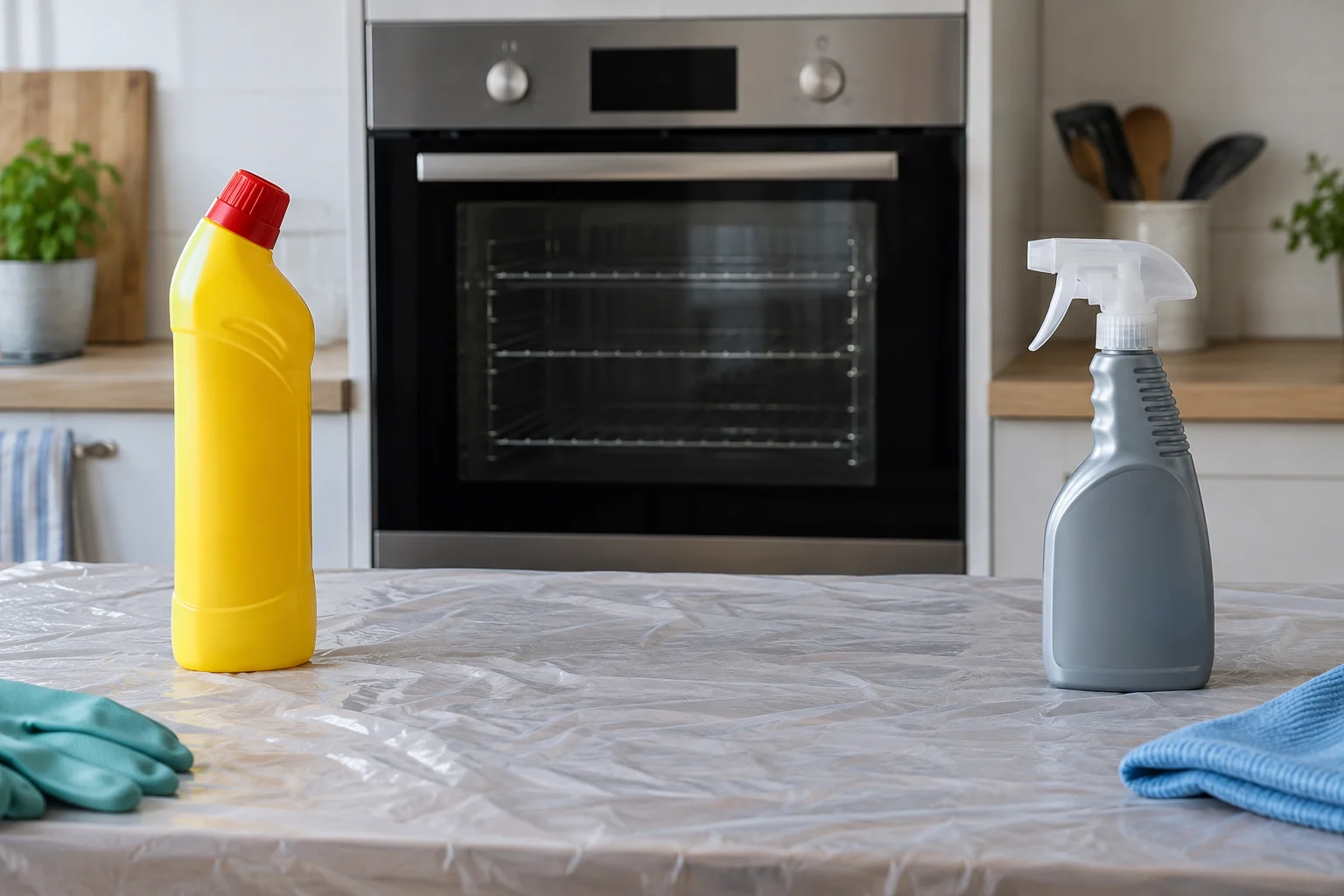
Use one oven-cleaning product at a time, exactly as its label directs. Do not add bleach, vinegar, ammonia, another oven cleaner or a homemade mixture to strengthen it. The result can be a hazardous reaction, and mixing products also makes it impossible to follow either product’s contact and rinsing instructions reliably. If the first method has not worked, remove it fully as directed and reassess the surface before choosing another approach.
This is not an obscure laboratory warning. The UK Health and Safety Executive explains that some chlorine-releasing cleaning products can give off harmful gas when mixed with acids or ammonia-containing products. The same guidance stresses the value of using products according to their manufacturers’ instructions. You do not need to identify every ingredient in a cupboard to act safely: keep cleaners separate.
Why an oven makes mixing particularly tempting
Baked-on grease can be stubborn. Someone may leave an oven cleaner on a patch, wipe it once, then try vinegar or a second product because the mark remains. Residue often stays in corners, around rack supports and behind the lip of the door. A new liquid poured onto that area can contact the old product even when the main surface appears wiped. The confined cavity also puts a person close to any vapour while they lean in to scrub.
Products can have different purposes. A detergent lifts grease; an acidic cleaner may target mineral deposits; a strong oven cleaner may be formulated for a specific hard surface. Combining them does not necessarily combine their benefits. It can cancel useful action, make an unstable mixture or spread a corrosive product onto a component it was not meant to touch. The sensible route is to identify the soil and choose one compatible method.
Some online demonstrations show bubbling as proof of cleaning power. Effervescence can be visually striking, but it says little about whether the burnt food has been removed safely. Avoid deliberately creating a reaction in the oven. A quiet, controlled wipe with one approved product is easier to assess and rinse than a foaming mixture migrating into hinges and seals.
Make one product the whole plan
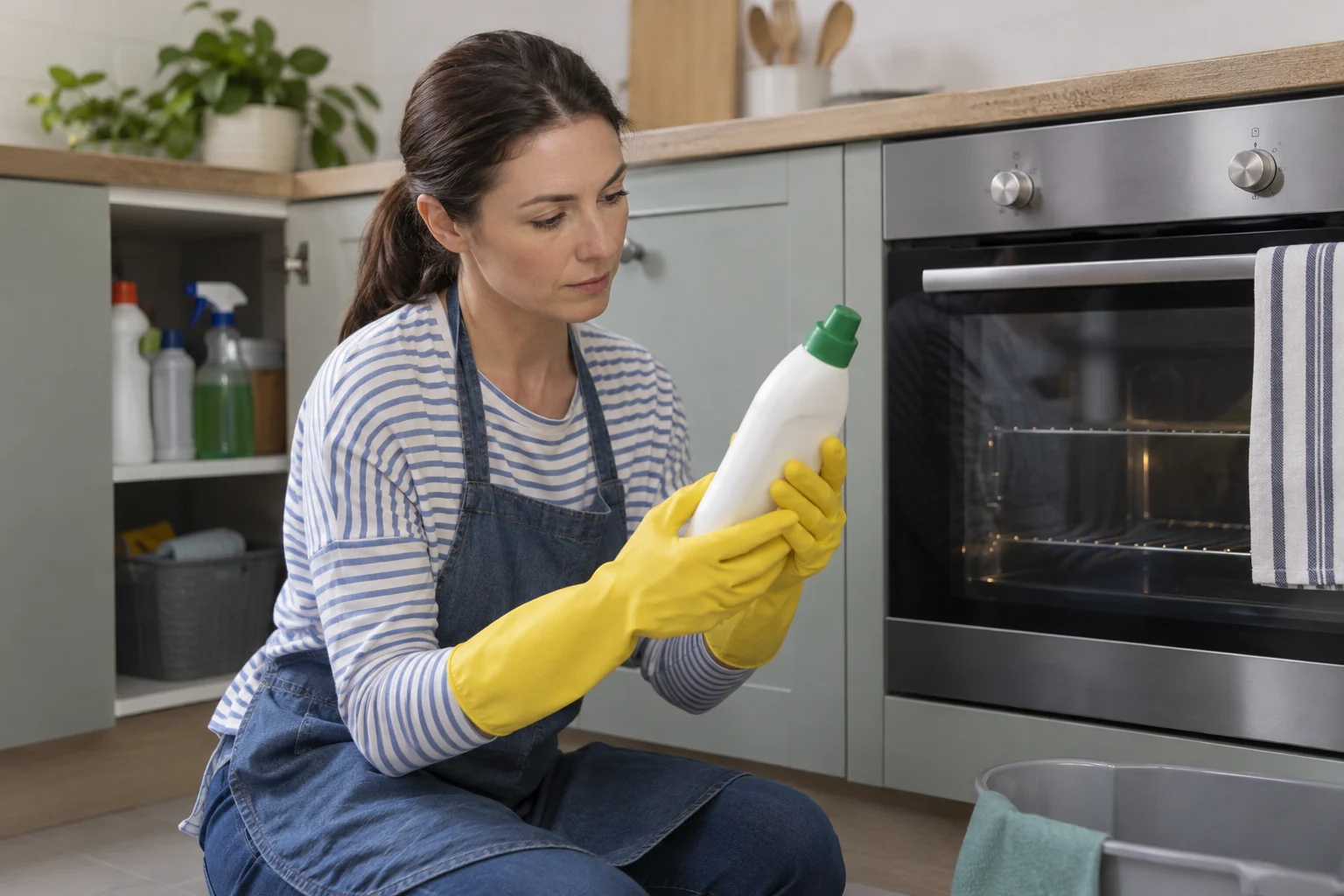
Before opening a bottle, read the label and the oven manual. Check the intended surfaces, exclusions, required protection, ventilation, contact time and removal process. Do you have the right gloves and a clean supply of water and cloths for rinsing? Can you keep other people and pets away during the job? If the answer is no, postpone the cleaning or use a different method that the appliance maker approves.
Move unrelated bottles away from the work area. Keep the cleaner in its original container with its label. Never decant it into a drinks bottle or an unmarked spray bottle. If you use a bucket, make sure it has been emptied and rinsed of earlier products. A cloth carrying residue from a different chemical can create the same problem on a smaller scale, so use clean tools for each job.
Apply only where the label permits and follow the stated dose and time. More product does not guarantee a better result. Do not leave it longer than directed while you run another errand. Set a timer and stay aware of the kitchen. Work with the oven cool if required, and avoid electrical parts, vents and specialist liners that the product excludes.
Changing methods without creating a mixture
If the first treatment does not lift the deposit, finish that treatment completely. Wipe and rinse according to its label, using fresh cloths and water as needed. Check creases and shelf rails without pushing liquid into inaccessible gaps. Let the area dry if instructed. Only then consider whether another method is compatible with the appliance. If the residue is hard carbon, a different product may still be inappropriate for the finish.
Do not assume a splash of vinegar “neutralises” an alkaline product or that bicarbonate “balances” an acid. Kitchen cleaning is not a controlled titration, and the mixture can leave both soil and new residue behind. Follow the product’s stated removal process. When directions are missing or conflicting, contact the manufacturer rather than improvising. A label may also give a helpline for product-specific questions.
The same rule applies to routine maintenance. A homeowner may alternate different methods on different days, but each session must end with complete removal of its product. Store bottles separately as their labels require. That makes it easier for another household member to know what was last used and prevents accidental mixing through a shared cloth or basin.
If products have already been mixed
Stop cleaning and move away from the oven. Keep children, pets and other people away from the area. Do not bend over the cavity to sniff the mixture and do not add a third chemical to try to fix it. Follow the emergency directions on the product labels. If there are fumes or symptoms such as coughing, eye irritation or breathing difficulty, seek urgent medical advice through the appropriate UK service; call emergency services for severe breathing problems. Tell responders which products were involved and keep the containers available without re-entering an unsafe area to retrieve them.
Avoid making the incident worse by scrubbing or spraying water into a reaction while close to it. Product-specific first-aid instructions and professional advice should guide what happens next. Once the immediate issue has been resolved, the oven may need assessment before use. A strong smell alone is not a reliable measure that all residue is gone.
For authoritative background, see the HSE guidance on safe use of cleaning substances. It describes the hazards from incompatible cleaning products and emphasises following manufacturer instructions. The details of an individual incident, however, depend on the actual products, amounts and exposure.

When the oven remains dirty
Repeated chemical experiments are rarely a good answer to a heavily soiled oven. Check whether a removable tray can be cleaned separately, whether the oven has an approved cleaning cycle, and whether the mark is actually damage rather than residue. An inaccessible part or a failing finish is not a reason to use a stronger mixture. If you need help with a substantial build-up, ask about the scope of a professional oven cleaning service, including any specialist liners or parts.
Keeping chemicals separate is a practical habit: one labelled product, one approved surface, one complete rinse. If you are uncertain what has already been used in the oven, pause until you can establish that the previous product has been removed. A clean oven is useful, but there is no benefit in reaching it through an avoidable exposure or a damaged appliance.
Consider leaving a brief note for anyone else who uses the kitchen while a treatment is in progress. It need only say which product is on the oven, when it was applied and when you expect to rinse it. That prevents someone from unknowingly starting dinner or adding their preferred cleaner to a still-treated surface. Remove the note after the product has been fully rinsed and the oven is ready for use. The habit is particularly useful in a shared home, where no one person can assume they know what the last cleaner was.