
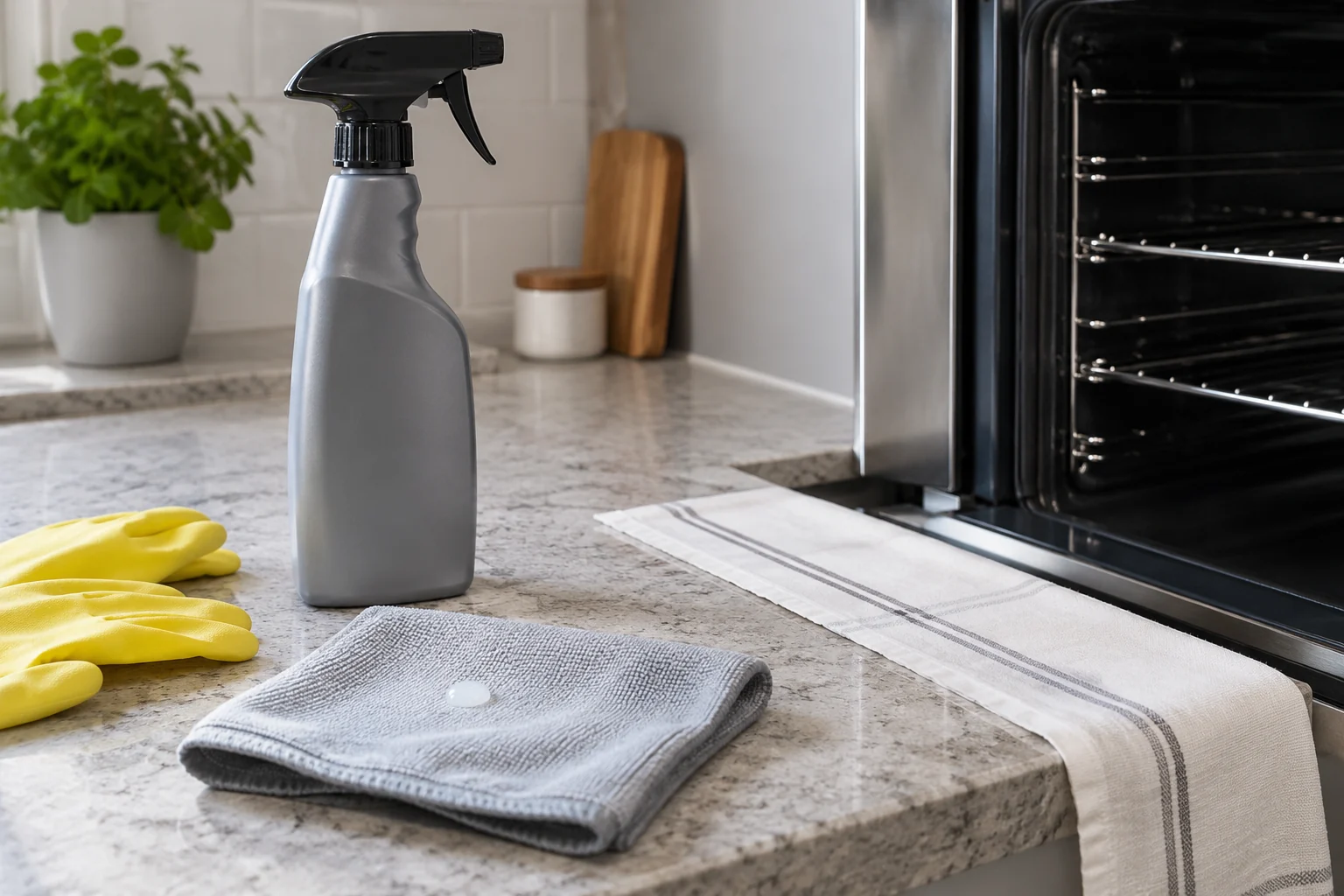
If oven cleaner lands on a handle, worktop, seal or other surface outside its approved area, stop the job and read the product label immediately. Keep people and pets away, use the protection the label specifies, and follow its spill and first-aid directions. Do not rub the splash into the material or add another chemical to “neutralise” it. The right next step depends on both the cleaner and the surface.
A small splash can look harmless at first. Some finishes change colour only after a delay; other materials trap liquid at an edge. Taking a calm, product-specific approach is better than scrubbing quickly with whatever is nearest. Keep the original container available so you can identify the product if you need advice.
Identify the product and the affected material
Read the cleaner label for information on accidental contact, rinsing and surfaces to avoid. A caustic gel, aerosol and mild detergent may have very different handling instructions. The label may also give a customer helpline or point to a safety data sheet. Do not rely on the colour or smell of the liquid to identify it, particularly if more than one bottle is in the kitchen.
Then work out what was splashed. Oven handles can be painted, coated, stainless or plastic. Worktops may be laminate, sealed timber, stone or a composite material. Door seals are not ordinary wipeable plastic, and joints around controls may lead into the appliance. If you do not know the material, record the brand and model of the oven or worktop and ask the manufacturer for guidance. A method appropriate for glass may damage a neighbouring metal trim.
Keep children, pets and food away while you assess the spill. Do not continue spraying the main oven cavity. Put the cleaner upright on a stable protected surface and close it as directed. If the splash is near an electrical control, do not operate it or push water into an opening. The appliance manual may describe what to do after liquid reaches that area; otherwise seek qualified advice.
Follow the label rather than an internet remedy
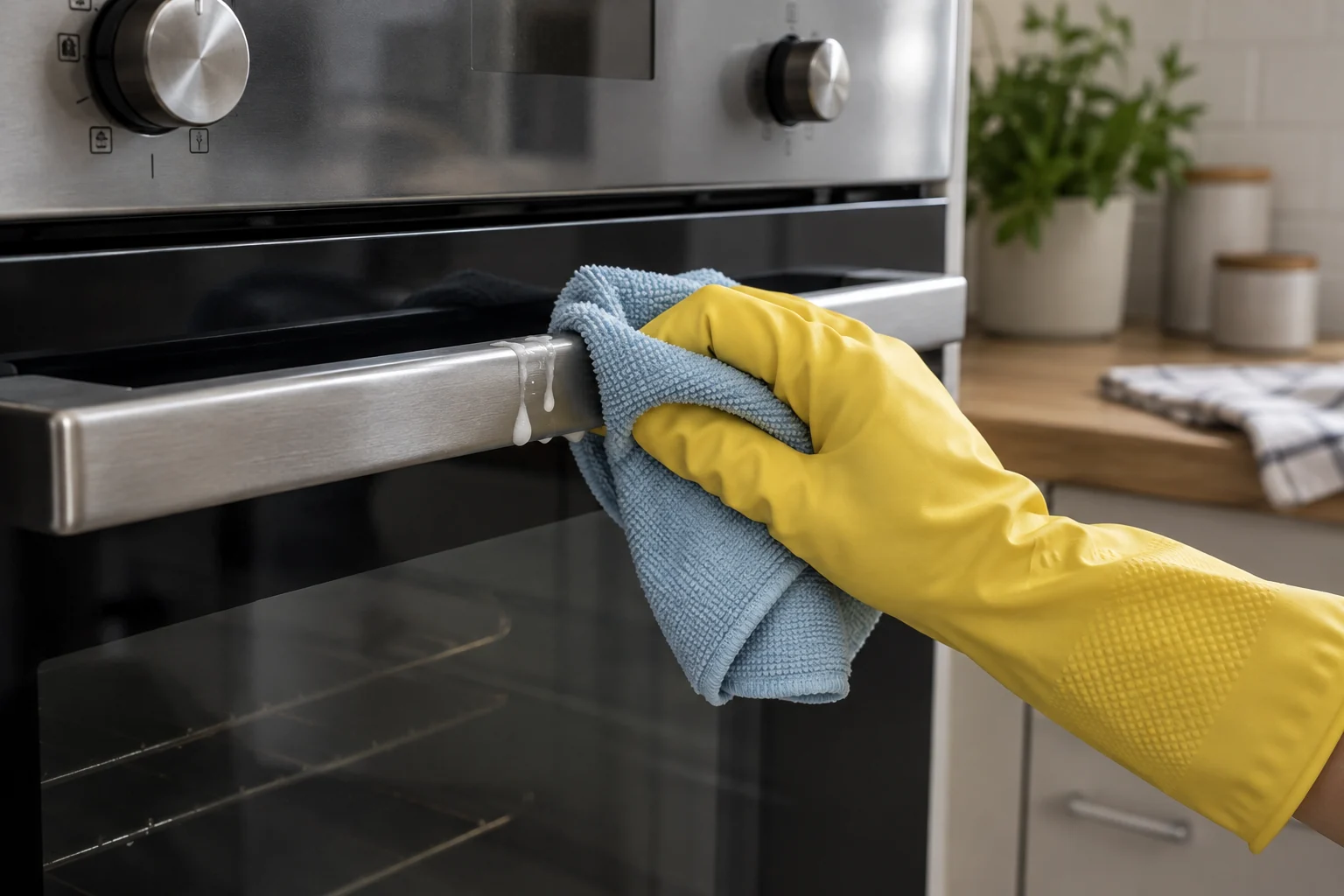
If the label directs immediate wiping or rinsing, do so with the specified protective equipment. Blot or lift the material instead of spreading it over a larger area. Use fresh cloths and dispose of them as the product directs. Do not use a shared kitchen sponge that will later touch dishes. If the label says to flush a particular surface, keep the flow controlled so it does not reach electrical parts, seams or another vulnerable material.
Avoid vinegar, bicarbonate, bleach or another cleaner as a corrective step. Combining chemicals on the worktop can create a new hazard and may make the original product harder to remove. Water is often part of a label’s removal process, but the amount and method must still be suitable for the affected surface. A timber edge or electrical control cannot simply be treated like a removable ceramic tile.
The UK Health and Safety Executive warns that incompatible cleaning products can react and that some mixtures release harmful gases. Its cleaning substances guidance reinforces the need to use products according to their instructions. If you are unsure whether a second product has already been used in the area, keep them separate and seek advice before continuing.
If there has been skin, eye or breathing exposure
Treat contact with a person as a first-aid issue, not a surface-cleaning task. Follow the product’s emergency instructions and seek appropriate medical advice. If someone has severe breathing difficulty, collapse or another serious symptom, call emergency services. Do not delay help while trying to finish the oven. Keep the product name and packaging available for the person giving advice, without re-entering an unsafe area to retrieve them.
For skin or eye contact, the label may give specific instructions about removing contaminated clothing and rinsing. Use those instructions promptly. Do not apply a household chemical to the skin to counteract another chemical. If fumes are present, leave the area and keep others away. Reaching into the oven to smell the source is not a useful check and can increase exposure.
The advice here cannot identify an unknown product or judge an individual exposure. The exact cleaner, concentration, amount and symptoms matter. That is why the original label and professional guidance take precedence over a general blog article. Once the immediate safety question is settled, you can return to assessing the appliance and surrounding surface.
Check for damage only after the area is safe
When the product has been removed as directed and the surface is dry, inspect it in clear light. Look for colour change, dullness, roughness, lifting paint, softened plastic or a warped seal. Photograph the affected area before trying any polishing or repair product. A cosmetic mark and a functional fault are different: a damaged door seal or loose control deserves attention even if the stain itself is small.
Do not scrape a discoloured patch in an attempt to expose a clean layer beneath. That can enlarge the damage. If a finish is changing, stop and contact the surface or appliance manufacturer for material-specific advice. Keep a note of the cleaner used and how long it was in contact. Those details make a repair or replacement enquiry more useful.
If the splash reached a gap behind trim or a control, there may be residue you cannot inspect. Avoid using the oven until the appropriate service guidance has been obtained. Cleaning the visible front does not prove that the inaccessible area is dry or free of product. The same caution applies if a door seal has been soaked or displaced.
Prevent another splash during the next clean
Before restarting, revisit whether the chosen cleaner is suitable for that oven at all. A thick application in a cramped area may be hard to control. Consider a smaller area, a cloth application if the label allows, and protective coverings that will not themselves react with the product. Keep doors and shelves positioned as the manual directs so liquid cannot run unexpectedly. Always have clean cloths and the required rinsing supplies ready before applying anything.
If the oven has widespread grime and several vulnerable finishes, a professional oven clean may be worth discussing. Describe any existing splash damage and ask what is within the cleaning service’s scope. A cleaner can assess accessible soil, but a damaged control, seal or coating may require a separate repair. Do not hide the incident; knowing which product was used helps avoid another incompatible treatment.
The safest response to an accidental splash is straightforward: stop, identify the product, follow its label, protect people first and assess the surface only after removal. Quick improvisation can turn a small spot into a larger problem. Precise information about the cleaner and material makes the next decision much easier.
Keep the product label and any photographs with your appliance records. If a mark develops later, those details help distinguish an old chip from a new chemical effect. They also help anyone asked to repair or replace the part decide what information they need from the manufacturer.