
Clean an oven when you can keep children and pets out of the work area from preparation through final rinsing and drying. Choose a time when another adult can supervise them elsewhere, or when they are not at home. Read the product label and oven manual first, make the kitchen safe to work in, and put every bottle and used cloth away immediately afterwards. A half-finished job beside an active family kitchen is harder to manage than a shorter, well-planned session.
The same approach applies even if you use only mild washing-up liquid. A hot door, loose racks and a wet floor can cause trouble independently of strong cleaning chemicals. Think about access and storage before you begin, not after a child or pet has wandered in.
Choose a realistic window
Estimate the whole task: cooling the oven, moving racks, applying an approved cleaner, waiting the instructed time, wiping and rinsing, drying parts and putting them back. A product may need the kitchen kept clear while it works. If you have only ten minutes before dinner, a quick wipe of a cool spill may be sensible; a full cavity clean is unlikely to be. Plan cooking around the appliance being unavailable until the instructions say it is ready.
Try to arrange a closed door or another reliable barrier between the cleaning area and the rest of the home. A stair gate may slow a toddler but will not necessarily keep a cat away from a worktop or a dog from a bucket on the floor. Another adult supervising elsewhere is often the simplest arrangement. If that is not possible, postpone a chemical clean rather than dividing your attention between a cleaner and a curious child.
Ventilation belongs in the plan too. Follow the cleaner label, open suitable windows and operate extraction where directed. If the weather makes it impossible to maintain the recommended airflow, select a different time or approved method. Keep doors and windows arranged so pets cannot escape or gain access to the kitchen by another route.
Secure the supplies before touching the oven
Keep products in their original, labelled containers. Put them where children and pets cannot reach them, preferably in a closed or locked cupboard appropriate to the product’s storage directions. Do not leave a bottle on the floor or on a low shelf while fetching gloves. Avoid pouring cleaner into an unmarked jug, food container or drinks bottle. If someone else enters the kitchen, the original label tells them what is in the container.
Collect gloves, cloths, a protected container for loose crumbs and any other supplies before applying a product. Set them on a stable work surface. If racks are removed, put them somewhere they cannot fall, scratch the floor or block the route out. A tray balanced on the edge of a bath or sink is especially easy to knock. Keep food, utensils and pet bowls away from the cleaning area.
Read the label for protective equipment, contact time, ventilation and removal. The appliance manual may exclude certain liners, seals, heating parts and controls. A “natural” household ingredient does not remove the need to check compatibility. Never mix cleaners, including vinegar or bleach with a commercial oven product. Separate products also make it easier to account for what has been used if there is an accidental spill.
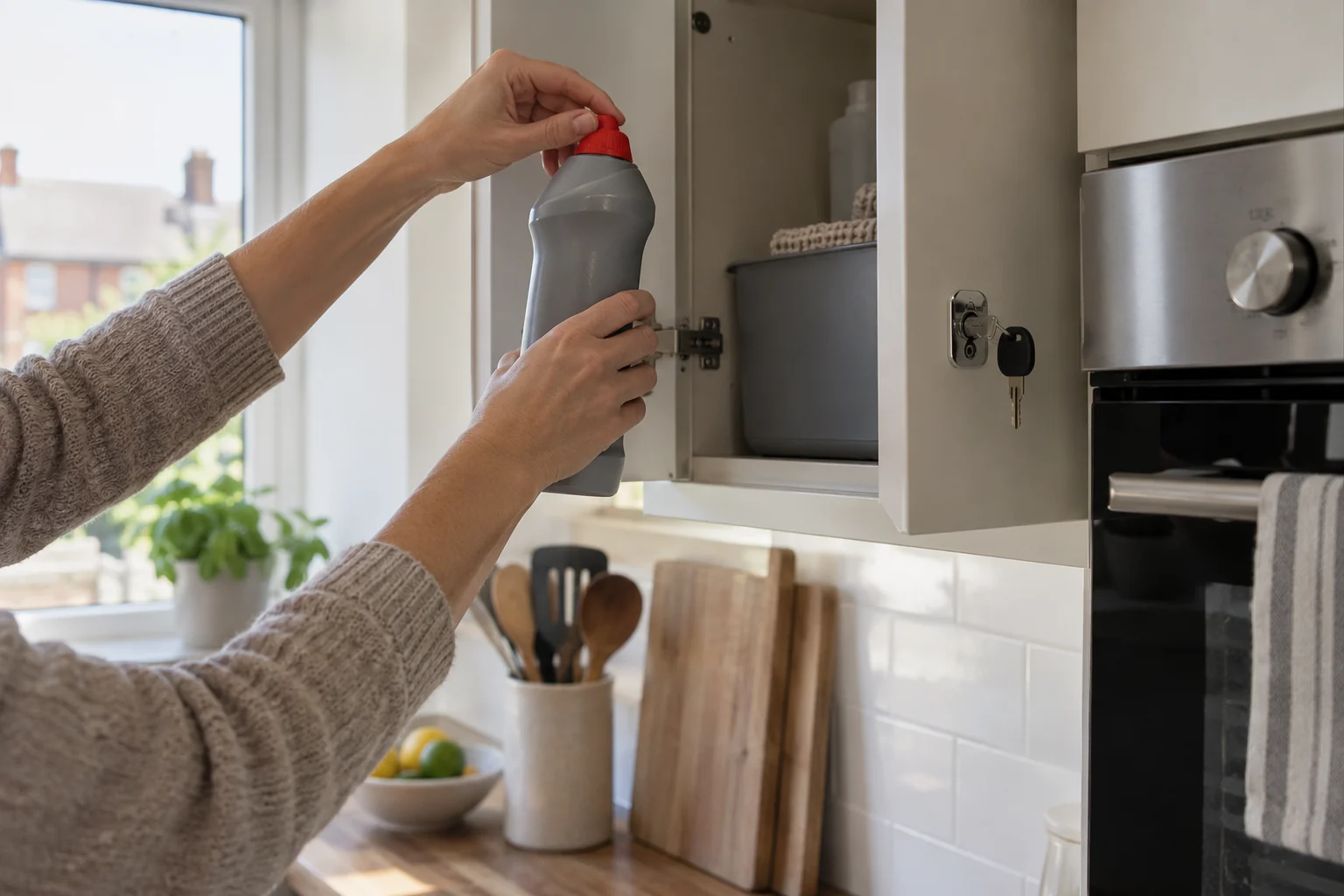
Control the work area while cleaning
Keep the oven off and cool unless the product and appliance directions explicitly require another condition. A child may reach for a door left open at their height, so do not rely on “I will only be a minute.” If a door must stay open, control access for that entire period. Avoid leaving a bowl of used solution where a pet could drink it, and keep damp cloths away from mouths and paws.
Apply the product only to its approved surfaces and use the amount specified. Overapplication means more run-off and more residue to remove. Work in sections if the label permits so you can see where cleaner remains. Set a timer for dwell time; while you wait, do not let the kitchen return to ordinary use. A note on the closed door can remind another adult that the oven is being cleaned, but it is no substitute for keeping children away.
If you are interrupted, close the product and secure the area before attending to anything else. Do not leave an open bottle, loose rack or wet floor behind. It can be better to finish removing the product as directed and resume the remaining cleaning another day. The oven does not need to be spotless in one attempt.
Finish as carefully as you started
Rinse and wipe according to the product label. Replace water and cloths so you are removing residue, not spreading it. Check accessible corners, the door edge and any removable parts without flooding openings or hinges. Dry the surfaces and refit racks as the oven manual directs. Do not switch the appliance on just to hurry the drying process unless that is part of its stated procedure.
Inspect the floor, worktop and handle for drips. A pet may be more interested in a cloth or sponge than in the oven itself, so place used materials in the disposal or laundry location specified by the label immediately. Wash reusable cloths separately as appropriate and keep them out of reach until dealt with. Close and store every container before removing the barrier to the kitchen.
If a child or pet may have swallowed or touched a cleaning chemical, follow the product emergency instructions and seek medical or veterinary advice promptly. Keep the container and label available to identify the substance. Do not try a home remedy or wait for symptoms to decide whether to ask for help. The exact response depends on the product and exposure.
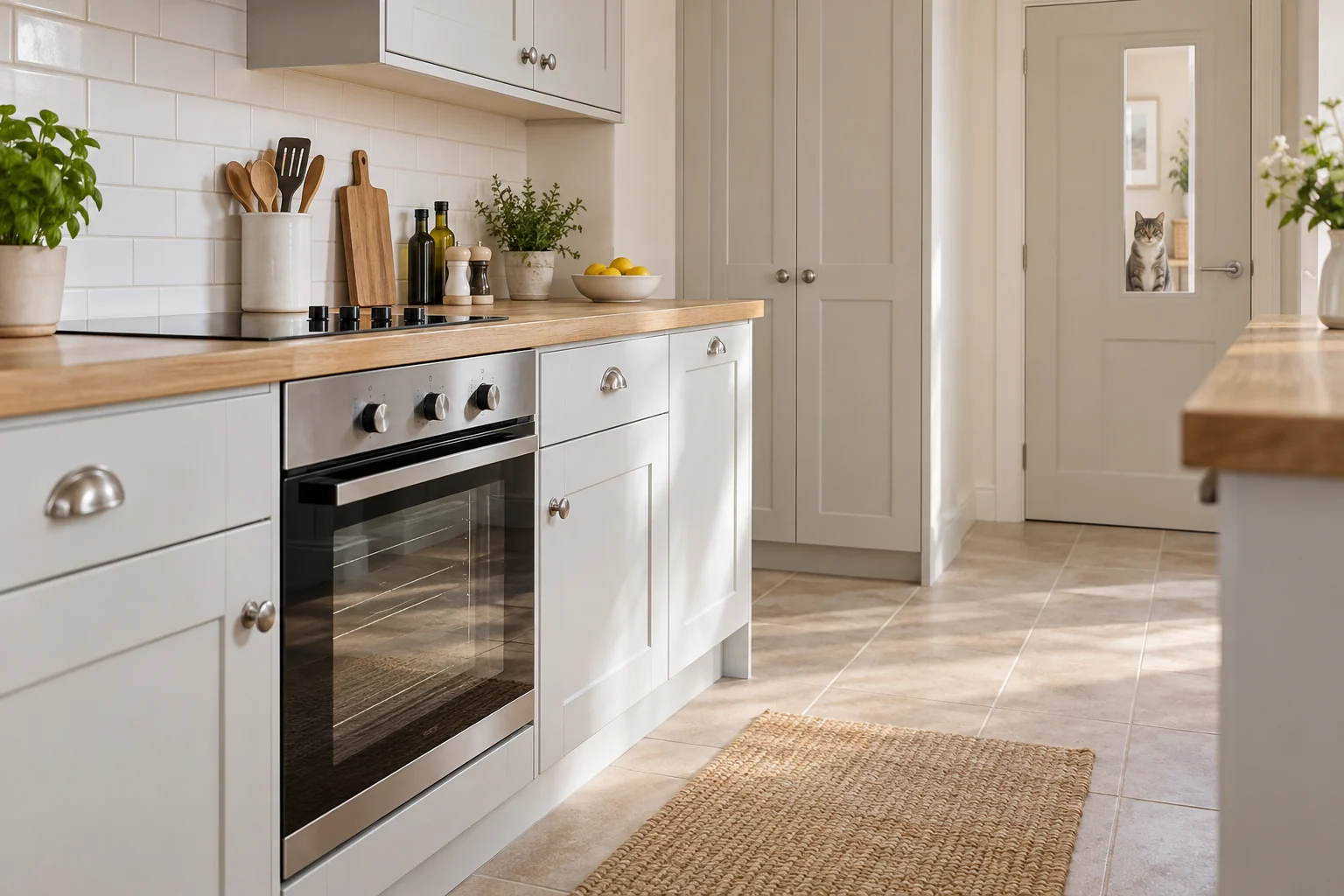
Decide whether to split the job or book help
A busy household may find short, low-risk maintenance more workable than a single long chemical clean. Wiping a cool fresh spill promptly and washing a removable tray separately can prevent a large build-up. Keep those small jobs within the appliance instructions. Do not attempt to access a fan, dismantle a door or use an unapproved cleaner simply because you need a fast result.
If a deep clean is needed, ask about a professional oven cleaning visit and discuss how long the kitchen needs to remain clear. Professional work still needs safe access and supervision of children and pets; it does not make the workspace open for family use. Tell the cleaner about vulnerable household members, known appliance damage and any products recently used in the oven.
The best result is an oven cleaned without anyone having to dodge chemicals, hot parts or loose equipment. Pick a calm time, secure the room, use one approved method and complete the rinse and storage before the kitchen returns to normal. Those decisions are more valuable than a faster scrub.