
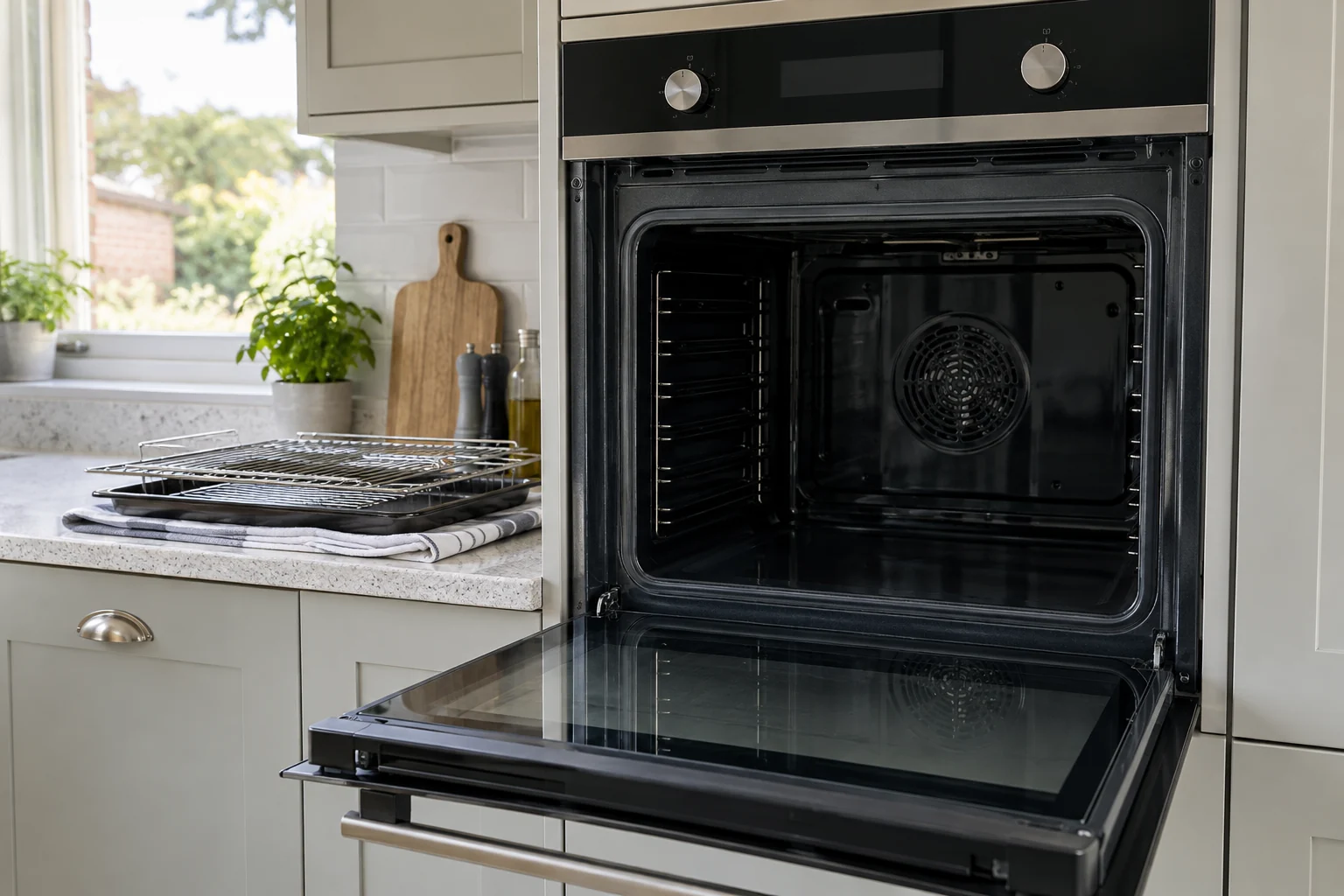
A pyrolytic oven uses a high-temperature cycle to reduce some food residue to ash. That does not mean you can press the button after any spill and walk away. Preparation matters: follow the manual for your exact model, remove parts it says to remove, clear heavy loose food and grease, ventilate the room and allow the oven to cool completely before wiping the remaining ash. A pyrolytic cycle is a built-in appliance function with specific limits, not a substitute for reading the instructions.
Never start a cycle if the door is damaged, the appliance shows a fault or you cannot meet the maker’s ventilation and supervision requirements. If the oven is already smoking unusually, investigate safely while it is cool instead of using self-cleaning as a response. The door normally locks during the process; do not try to force it open.
Check the model instructions first
Find the pyrolytic section of the appliance manual. It will identify the permitted cycle, items that must be removed, surfaces that should be wiped in advance and any ventilation advice. Some ovens have more than one intensity or duration. Choose only what the manufacturer recommends for the actual soil level. Do not assume a familiar procedure from another oven applies to yours.
The manual may specify whether shelf supports, racks, telescopic runners, a meat probe, trays or other accessories must come out. Treat each item by its instructions. Parts that cannot withstand a cycle may discolour or suffer damage if left inside. If you cannot remove a required part safely, stop and seek guidance rather than running the cycle around it.
Prepare the cavity while it is cool
Switch the oven off and let it cool fully. Lift loose crumbs and large food pieces with a soft cloth. Deal with heavy pools of grease or a sizeable spill using the maker-approved method. A self-cleaning cycle can produce smoke and odour when there is too much loose residue, so reducing the load first is sensible. Do not pour water into the cavity or scrub a specialised finish with an abrasive pad.
Wipe accessible door glass or the area near the seal only as the manual directs. The seal is not a general scrubbing surface; do not pull it out, soak it or coat it with cleaner. Check that the door closes smoothly and the glass is intact. A faulty lock or damaged door is a reason to postpone the cycle and arrange repair advice.
Remove the specified accessories
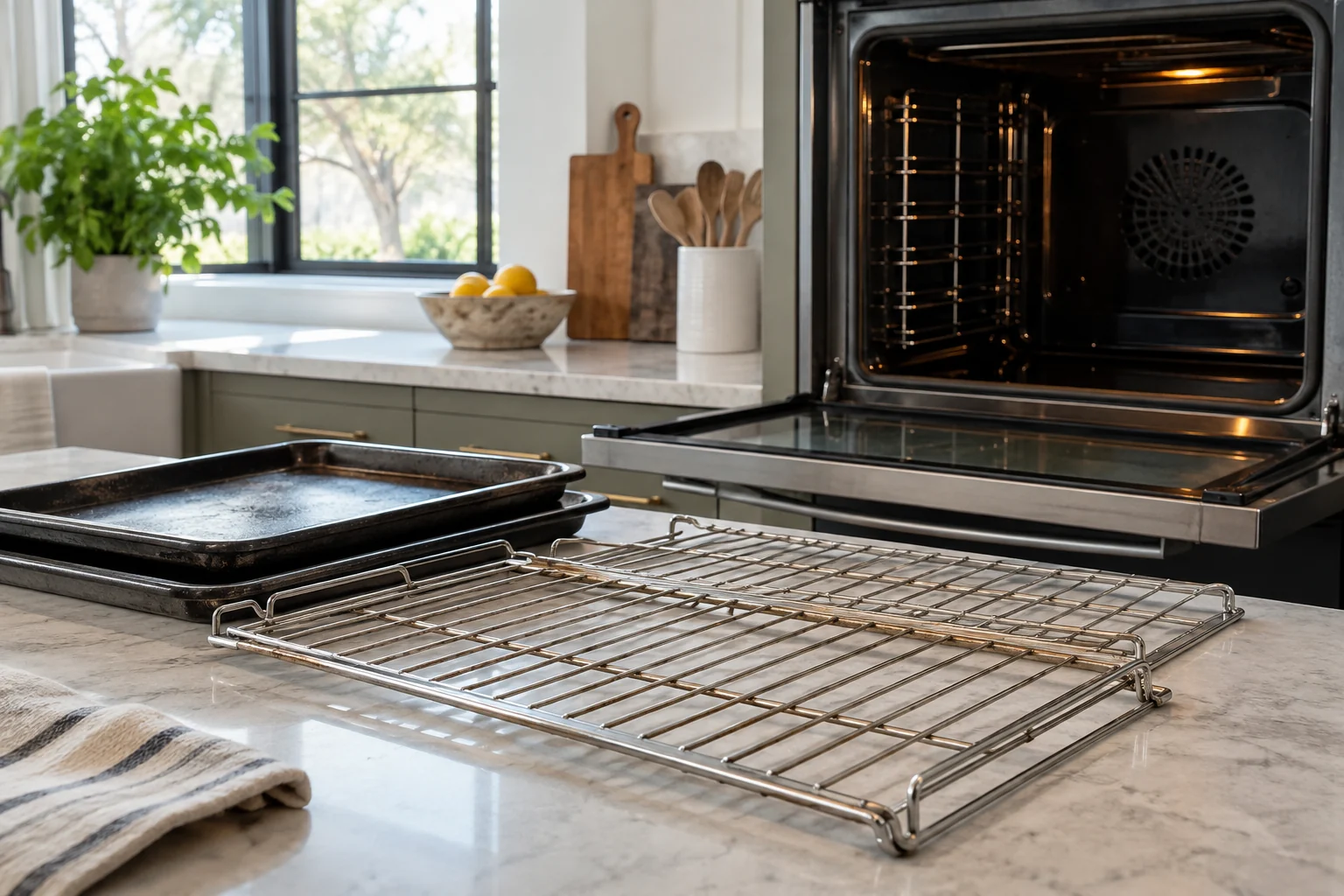
Take out racks, trays and runners that the manual lists. Keep them on a protected worktop and clean them separately according to their material. Some can be soaked gently; telescopic mechanisms may need only a wipe. Dry them fully before they return. Keep small fittings together if the manual has you remove shelf supports, and note their positions so reassembly is straightforward.
Look through the empty cavity before starting. A forgotten foil liner, paper, cloth, plastic utensil or loose tray should not be inside. Do not line the oven floor with foil during the cycle. Check that nothing rests against the door or blocks vents. Small preparation steps are easier than dealing with smoke or damage later.
Plan ventilation and timing
Follow the maker’s guidance on ventilation. Open a window or use the kitchen extraction as instructed, and keep children and pets away from the hot appliance. The exterior and nearby surfaces may become warmer than during ordinary cooking. Do not plan the cycle just before leaving the home or going to bed if the instructions require you to remain nearby. Choose a time when the room can be ventilated and the oven can cool undisturbed afterwards.
Be considerate of anyone in the home who is sensitive to odours or smoke. If the manual warns about particular conditions or the ventilation available is poor, delay the cycle and seek advice. Do not use a stronger setting than needed to try to shorten the job. The permitted programme and its lock behaviour are controlled by the appliance, not by force or improvised timing.
During the cycle
Start the specified programme and leave the door closed. Do not attempt to unlock it, remove panels or spray product inside. If the oven shows a fault message, produces heavy smoke, or there is an immediate danger, follow the appliance and emergency guidance. Do not open into flames or pour water into an electrical appliance. A small expected odour under a documented cycle is different from thick persistent smoke or a sharp electrical smell.
Keep the route around the oven clear so no one brushes against it accidentally. Do not place towels, cleaning bottles or loose paper on the hob or directly above the hot cavity. Wait for the cycle to finish and the door to unlock on its own. A cooling period is part of the process, not dead time to skip.
After the oven cools
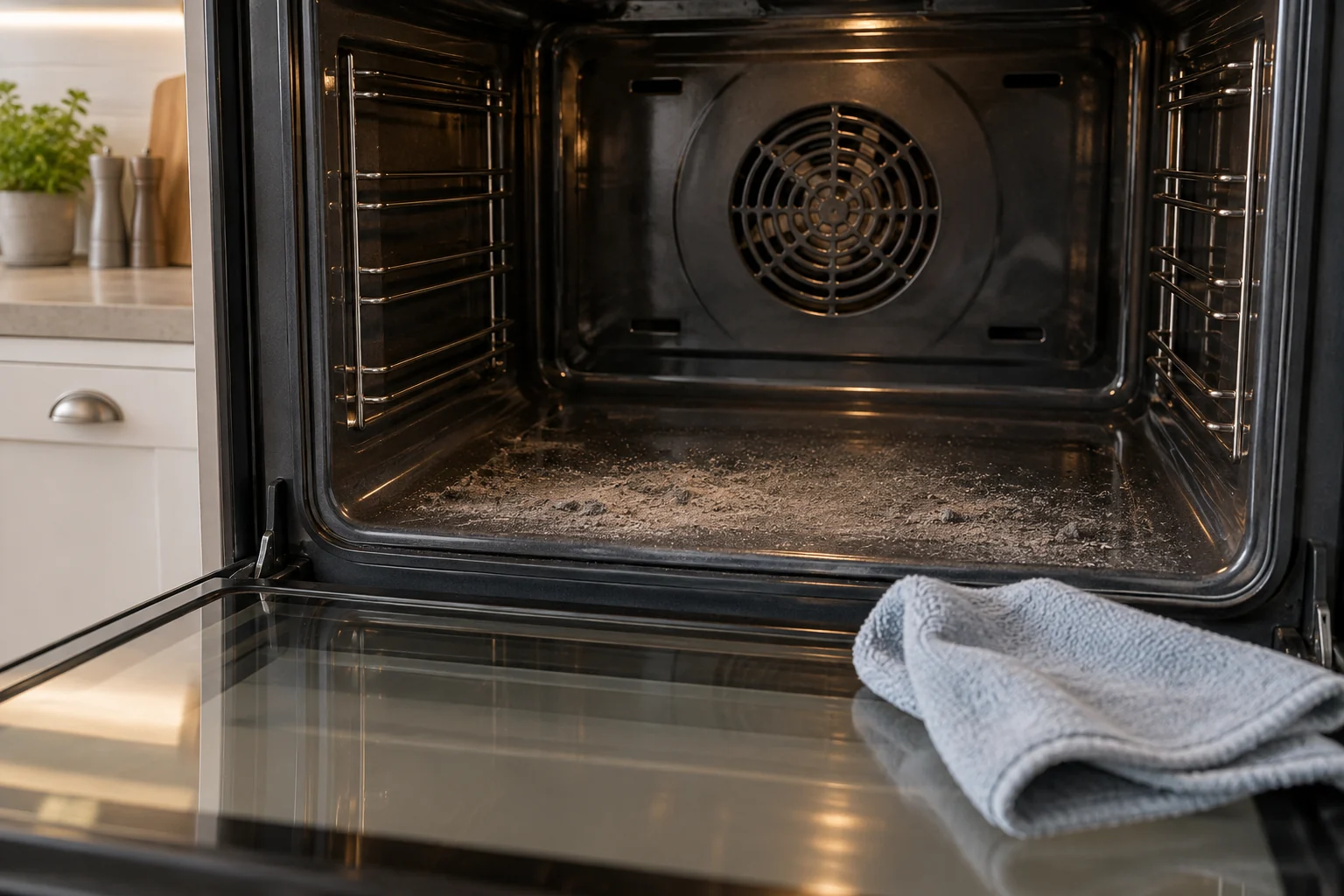
Wait until the door, cavity and removable areas are fully cool. Open the oven and inspect the remaining ash. Use a soft cloth lightly dampened with water, if the manual permits, to lift it from accessible smooth surfaces. Do not rub ash into a gritty paste across the finish; rinse or change the cloth frequently. Dry the cavity and check corners for residue. Clean the door glass separately where directed.
A stain that survives the cycle may be a different material or heat discolouration. Do not immediately run another high-temperature cycle. Check the manual for guidance and consider whether a gentle spot clean of a permitted surface is more suitable. If ash appears behind a fixed guard or a panel is damaged, leave that area alone and seek model-specific advice.
Refit parts and review the result
Return clean, dry accessories in their original positions. Check shelf supports and runners are secure and that the door closes correctly. If the oven reports a fault, the lock behaves oddly or an unusual smell persists after normal use, stop and seek repair advice. A professional oven cleaning service may help with accessible grease and removable parts, but it cannot replace repair of a failed lock or damaged liner.
Keep a simple record of the cycle date and the amount of residue afterwards. It can help you decide whether the chosen setting was appropriate the next time and whether ordinary wiping between cycles is enough. If the cycle repeatedly leaves thick ash or produces more smoke than the manual describes, describe that pattern to the manufacturer or a technician. Do not assume that running it more often will solve a persistent problem caused by a damaged seal or a deposit outside the self-cleaning area.
Between cycles, wipe fresh spills once the oven cools, wash trays and avoid letting grease build up in pools. That reduces the load on the next pyrolytic clean. The best routine combines ordinary gentle maintenance with an occasional manufacturer-approved cycle when genuinely needed. Follow the model instructions, respect the heat and wait for full cooling before aftercare.