
An oven’s steam-clean function can make light, recent residue easier to wipe away. It is a useful maintenance setting, but it is not a substitute for removing thick, baked-on grease by hand. The programme typically warms a small amount of water to create moisture inside the cavity; what it does next, and how much water it requires, depends on the appliance. Check your own manual before adding water or starting a cycle.
The distinction matters when you are looking at a dirty oven and hoping the display’s steam symbol will do all the work. Steam helps with soil that can absorb moisture. It cannot reliably dissolve carbonised deposits, clean the gap between door-glass panels, or remove debris from places it cannot reach. Used at the right time, however, it can make an ordinary wipe-down less of a chore.
What the setting actually does
Names such as steam clean, hydro clean and steam assist vary by manufacturer. Some models have a dedicated programme and a recessed well in the oven floor. Others ask you to place water in a particular tray or container. A combination oven with a steam-cooking system may have a different maintenance procedure again. The name on the control panel is not enough to tell you where to put water, whether to remove shelves, or how hot the appliance will become.
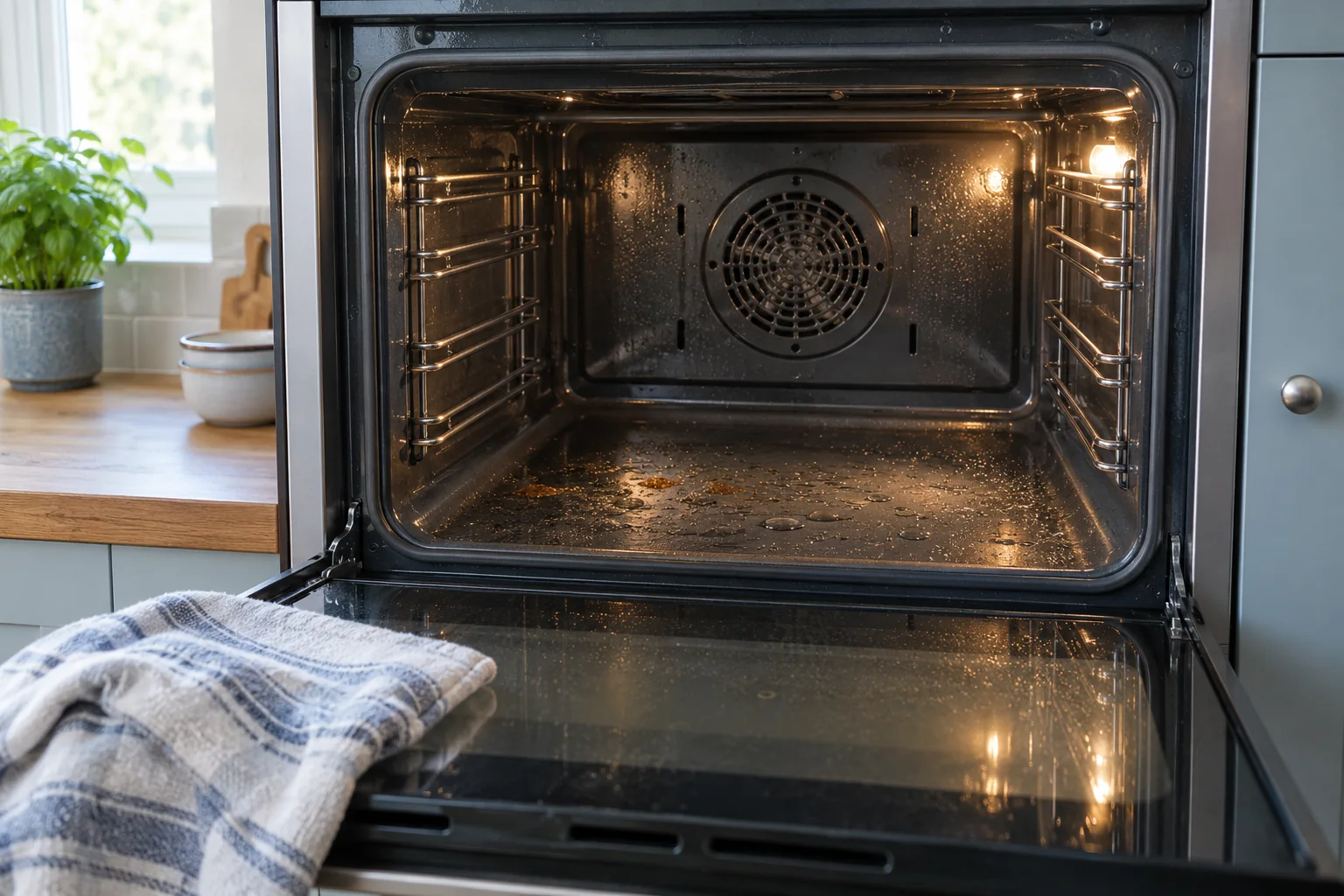
In the common maintenance version, a modest amount of water is warmed in a closed oven. The humid air softens some grease and food splashes on the enamel and glass. Once the cycle has finished and the appliance has cooled enough to handle safely, you wipe the loosened residue away. That final wipe is part of the job. If it is skipped, moisture can dry and leave the original dirt in place.
Steam-assisted cleaning should therefore be thought of as a preparation step. The programme creates conditions that may reduce scrubbing; it does not collect the soil, rinse the oven or inspect the places you cannot see. Expecting a spotless cavity when the timer ends leads to disappointment and can tempt you to repeat cycles on stubborn marks without dealing with their cause.
The messes it handles best
The setting is most worthwhile after ordinary cooking that has left thin splashes or a small amount of soft residue. A recently spattered side wall, light grease on the door’s inner face and a trace of sauce on the oven floor are reasonable candidates, provided your manual allows the affected surfaces to be cleaned in this way. Moisture has a better chance of reaching a thin film than a hard, raised crust.
Timing helps. If you notice a spill, let the oven cool, remove loose food and address the mark before it goes through several more heating cycles. A steam programme at that stage may soften what remains. If the oven is used every day, an occasional light clean prevents several small deposits from becoming one heavy layer. That is more useful than waiting months and asking the steam setting to tackle everything at once.
The programme can also be a convenient first step before wiping broad, accessible areas. It may reduce the need to press hard on enamel or glass. Use a soft cloth or non-scratch sponge suitable for the finish, and follow the manufacturer’s instructions for any cleaner. A stubborn patch is a reason to pause and choose a suitable method, not to reach for a sharp scraper or a stronger chemical mixture.
What steam will not remove
Blackened carbon, thick grease and food repeatedly baked onto the oven floor usually need more than moisture. A steam cycle can wet the surface of a deposit while leaving the hard layer attached underneath. Large flakes of burnt food should be lifted out when the oven is cool; otherwise they can remain in the cavity and continue to smoke during cooking.
Steam cannot reach marks sealed between door-glass panels. If a haze is inside the door, cleaning the exposed pane will not remove it. Door construction differs by model, and dismantling glass or hinges without instructions can cause damage or injury. The same limitation applies to residue behind fixed liners or around inaccessible components. A clean-looking visible surface does not prove that every part of the appliance has been cleaned.
It is also not a remedy for a fault. If the oven produces smoke despite removal of visible food, the door seal is damaged, a fan sounds abnormal, or a control is not behaving normally, stop using cleaning cycles as a diagnostic experiment. Refer to the manual and arrange appropriate appliance help. A cleaning programme cannot repair an electrical or mechanical problem.
Before you press start
Read the cleaning section of the exact model’s manual, including its limits on water quantity and placement. Do not pour water onto a hot oven floor unless the instructions expressly require it. Sudden temperature changes may harm some surfaces, while water in the wrong place can reach components designed to stay dry. Never fill the cavity by guesswork because another oven used a different amount.
Remove shelves, trays or accessories if the manual says to do so. Some coatings and telescopic mechanisms have their own care rules. Clear away large crumbs and loose pieces of food first, taking care around the door seal. If the seal is torn or displaced, do not use the cycle until you know the appliance is safe to operate. Keep children and pets away while the oven is running and cooling.
Check whether the oven is meant to start from cold. Avoid adding household cleaners, essential oils or descalers to the water unless the manufacturer specifically instructs you to use them. Heating an unapproved product can create fumes or leave residue on cooking surfaces. The familiar idea that extra chemicals will make steam stronger is a poor trade-off when the appliance has a defined maintenance procedure.
Finish the cycle properly
When the programme ends, follow the manual’s cooling advice before opening the door fully or touching the cavity. Steam and condensed water can still be hot. Open the door carefully, protect your hands where required, and allow enough time for surfaces to become safe to wipe. The point is to take advantage of softened residue without treating a warm oven as a safe worktop.
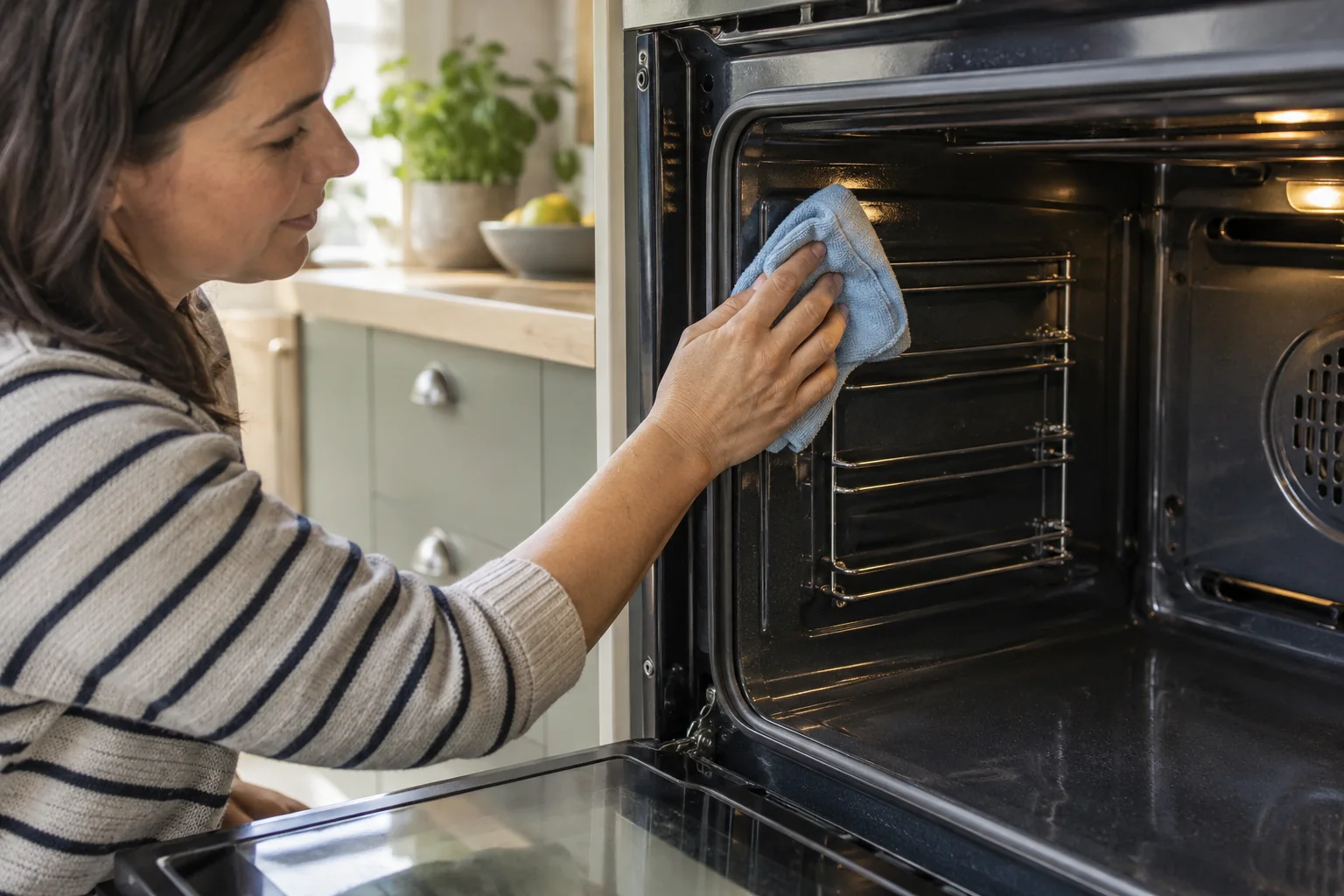
Use a soft, clean cloth to wipe accessible enamel and glass. Rinse or replace the cloth as it picks up grease, rather than spreading a dirty film over the oven. Pay attention to the lower corners and the area where water was placed, but do not flood vents, controls, the door edge or a fan opening. Lift pooled water with a cloth. Finish with a separate clean, damp wipe if the manual recommends it, then dry accessible surfaces before cooking again.
Inspect the result in ordinary light. A remaining brown mark may be a stain in a coating, a hard deposit or residue in a recess. Do not assume every mark will yield to repeated steam cycles. Check the manual for a suitable next method and test any approved product on the relevant surface as directed. If heavy contamination remains, professional oven cleaning may be a more sensible way to deal with the wider cavity while you keep regular light maintenance manageable at home.
Steam clean is not pyrolytic clean
These two features are often confused because both appear in an oven’s list of cleaning functions. A steam-assisted programme uses moisture and generally aims to loosen light soil for wiping. A pyrolytic programme uses very high heat to reduce suitable residue to ash, subject to its own preparation and safety instructions. Catalytic liners are different again: their surface is intended to help break down grease during normal heating, but they still require model-specific care.
Do not transfer advice from one system to another. A shelf that must come out before one programme might be treated differently in another oven, and a cleaning product acceptable on ordinary enamel may be unsuitable for a special liner. The manual identifies both the cleaning system and the surfaces covered by it. If you cannot identify the model, the label is usually on the door frame or an accessible edge, though its position varies.
When it is worth using
Use the steam setting as a regular aid for light, accessible mess, ideally before splashes are reheated repeatedly. Judge success by whether residue wipes away with little pressure after the prescribed cycle. If you have to scrub hard, the setting has reached its limit. A routine of checking the oven after messy meals, removing loose food once cool and wiping spills promptly usually does more to preserve a clean cavity than running a programme only when the oven is already heavily soiled.
Keep the wider kitchen in mind as well. Grease on the hob or other kitchen surfaces is outside an oven’s steam-clean cycle. Wipe those areas with methods appropriate to their finish. A steam function is one tool within oven care: useful when matched to a light job, limited when a hard deposit, inaccessible mark or appliance fault is the real issue.