
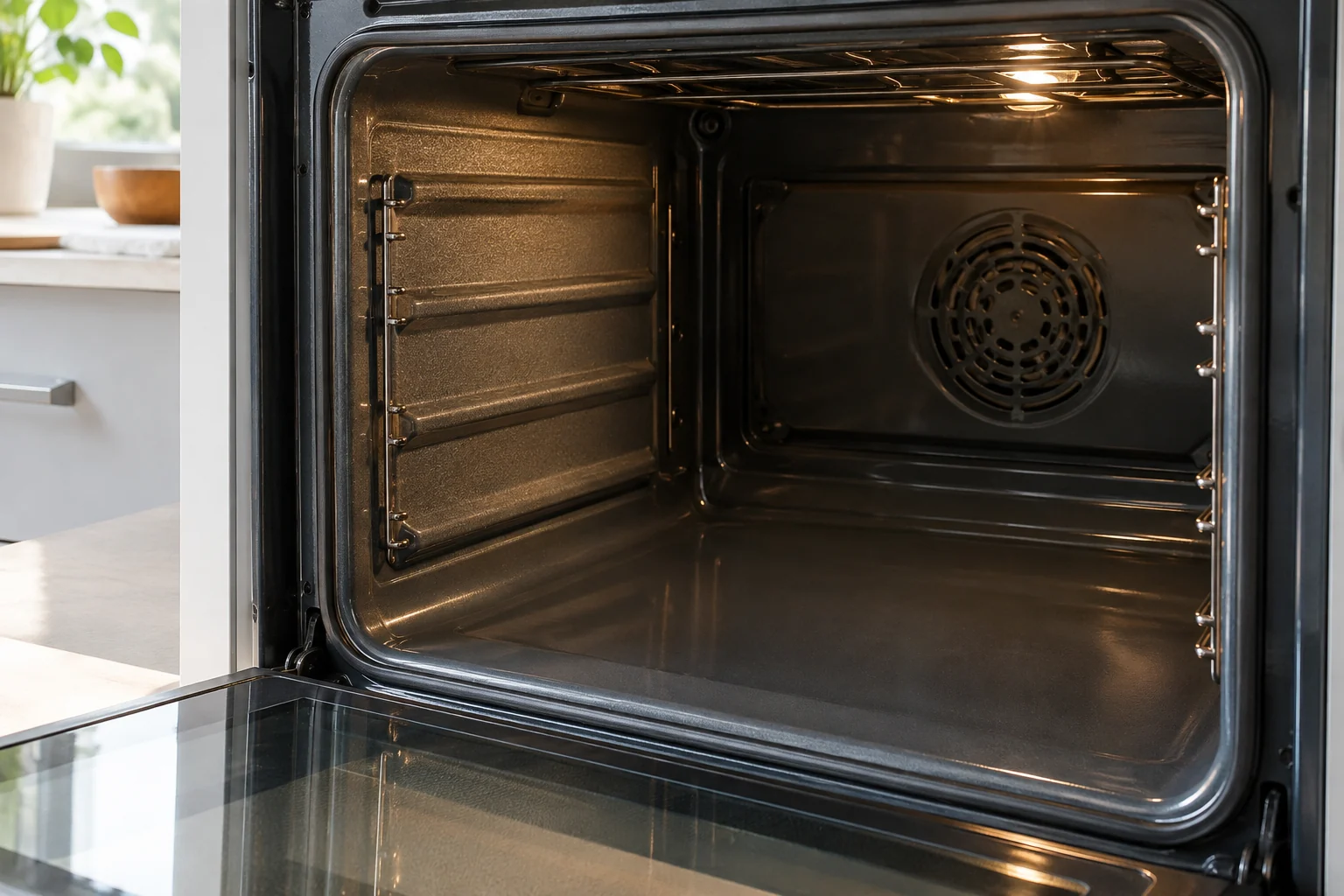
Catalytic oven liners are textured panels designed to help deal with some cooking grease during normal or manufacturer-specified heating. They are not the same as smooth enamel, and scrubbing them with an abrasive pad or coating them in strong cleaner can damage their function. The best first step is to identify the panels in the manual for your exact oven, then follow that maker’s care cycle and cleaning limits. Clean neighbouring smooth surfaces separately.
A catalytic liner does not make the whole oven maintenance-free. Food spills, sugary sauces and thick deposits may still need attention, and the floor or door may not have the same finish. Do not assume every dark panel is catalytic; appearance alone can be misleading. If you cannot confirm the material, pause before applying a product.
Find out which panels are catalytic
Consult the model manual for a diagram of the cavity. Catalytic panels are often on the sides or rear, but placement varies. The oven floor, roof and door glass may be smooth enamel or another material. Note whether the panels are owner-removable and whether the maker gives instructions for replacement. Do not loosen a panel merely to inspect behind it; a fixed liner may cover other components.
Look for damage before doing anything else. A panel that is cracked, flaking, loose or badly coated with a foreign product needs model-specific advice. Cleaning cannot repair a damaged catalytic finish. If a fragment could fall into food or an element, stop using the appliance until it has been assessed.
Understand the limits of the coating
The textured surface helps break down certain grease residues under conditions specified by the manufacturer. It is not designed to absorb unlimited food or to remove every stain. A large sauce spill or thick burnt-on piece may not respond to the same process as a thin grease film. Some marks remain visible even after a proper care cycle. The practical test is whether the panel is sound and free of loose material, not whether it looks new.
Do not scrub the texture smooth or fill its pores with a paste. Avoid metal scourers, stiff brushes, abrasive powders and strong oven cleaner unless the maker expressly allows a particular product. A cleaner safe for enamel on the floor may be wrong for the side liner. Keep cloths and products separate by surface.
Follow the manufacturer’s heating guidance
Some ovens specify a heating period to help a catalytic liner deal with grease. The temperature, duration and preparation depend on the model; do not invent a high-temperature burn-off. Read the manual and remove accessories if directed. Ventilate the room as instructed and do not begin a cycle when there is a heavy loose deposit that might smoke. If the oven is already smoking unusually or has an electrical fault, stop and seek help instead of starting a care cycle.
Let the appliance cool fully afterwards before inspecting it. Do not touch a panel immediately because its dark colour can hide retained heat. If the manual says to wipe loose ash or residue after a cycle, use the specified method. Do not soak the porous panel simply because a neighbouring smooth surface can be rinsed.
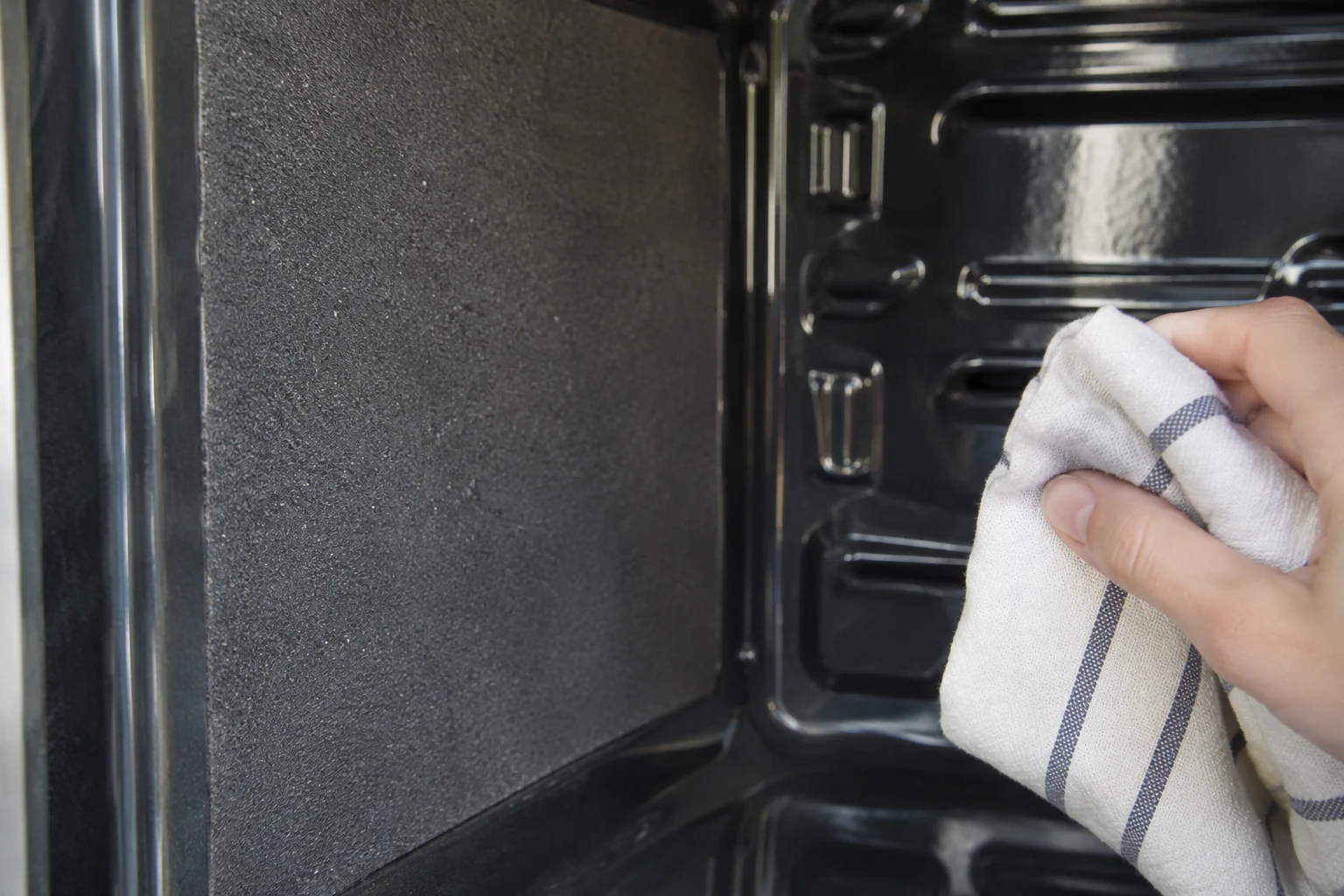
Clean the areas around the liners
Remove cool racks and trays to give yourself space. Clean them according to their own finish. On smooth enamel surfaces that the manual permits you to wipe, lift loose crumbs, soften grease with a damp soft cloth and use a small amount of mild detergent if approved. Keep liquid and product off the catalytic panel. Rinse the smooth area with a fresh cloth and dry it. Work carefully at the border rather than dragging a soapy cloth across the texture.
The door glass, seal and controls also have separate methods. A seal should not be pulled out or scrubbed hard. Wipe accessible glass gently and keep moisture away from electrical fittings. If the liner meets a fan guard, do not push a tool into the guard or remove it without a documented owner procedure.
What if food is stuck on the liner?
Check the manual for advice on a specific spill. It may direct you to remove loose material only after cooling or to use a particular heat cycle. Do not scrape at a raised patch with a knife. If the model guidance does not cover the situation, contact the manufacturer or a suitable specialist with the model number and a photograph. An aggressive home experiment could leave the liner less effective or damage the panel.
A sugary spill, melted plastic or cleaner accidentally applied to a catalytic panel deserves particular caution. Do not heat an unknown substance simply to see whether it disappears. Switch off, cool and obtain model-specific advice. If a cleaning product was used, keep its label so the person advising you knows exactly what touched the surface.
Know when a liner may need replacing
Over time, a panel may become damaged or stop performing as expected. Replacement decisions depend on the appliance design, availability of the correct part and the maker’s guidance. Do not fit a generic panel by size or cut one yourself. If the manual allows owner replacement, follow its sequence precisely; otherwise use a qualified technician. A loose panel or a section that flakes is not a routine stain to scrub away.
Professional oven cleaning may help with the accessible enamel, racks and door around catalytic liners. Tell the cleaner which panels are catalytic before any product is applied. Cleaning services and appliance repairs have different scopes, so make clear if you suspect a damaged liner or a fan problem.
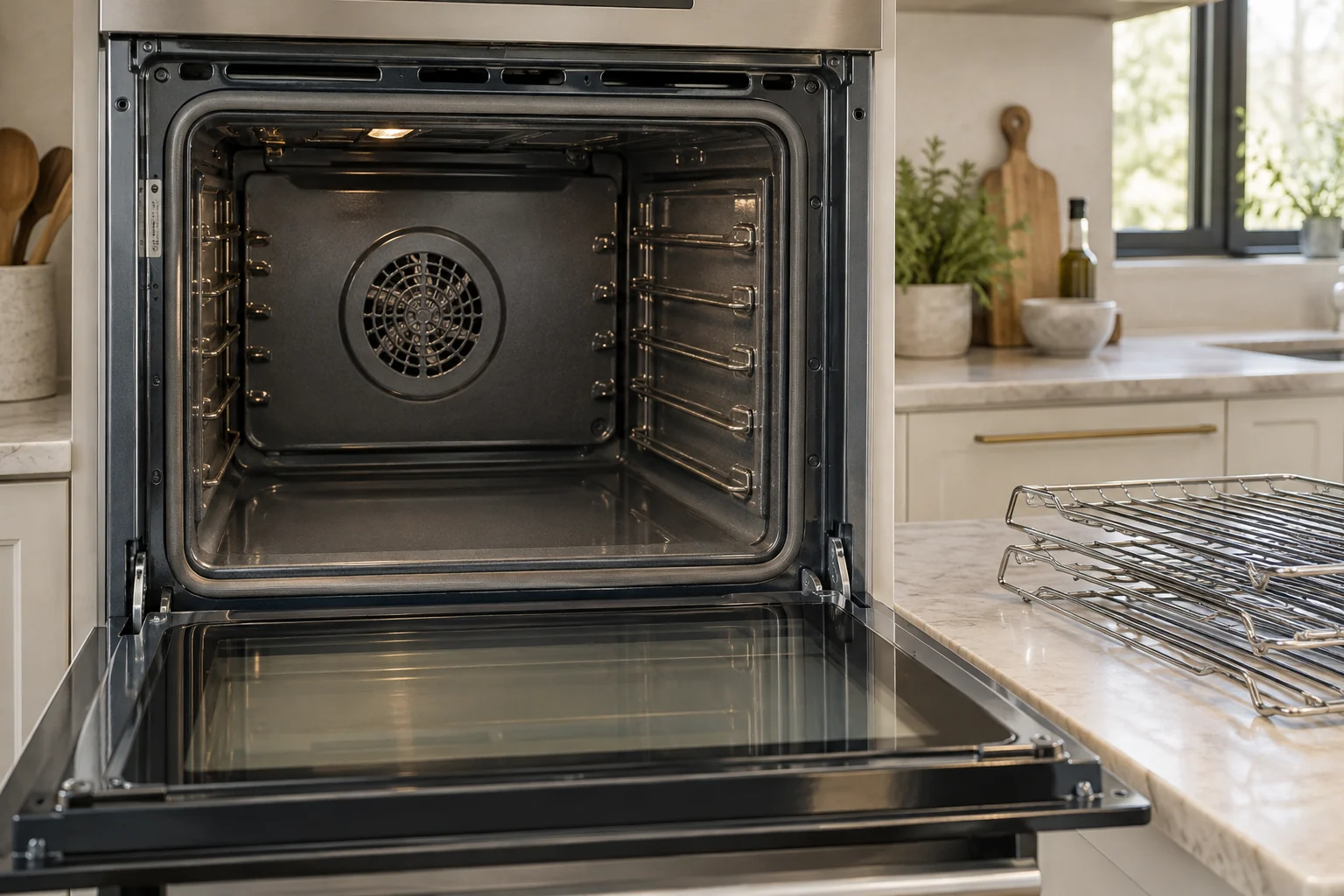
A sensible maintenance routine
After cooking, let the oven cool and remove fresh spills from smooth permitted areas. Keep trays clean so fat does not drip repeatedly. Use suitable cookware that contains bubbling food, and avoid foil or liners in places the maker forbids. Check the catalytic panels for loose material during routine inspections, but do not rub them simply because they look darker than enamel.
It helps to keep a small note in the appliance manual showing which panels are catalytic. Anyone else who helps clean the kitchen can then avoid applying a general oven spray to the wrong place. Store any approved product separately from stronger cleaners and read its label each time. If the panel has already been treated with an unsuitable product, do not try a second chemical to reverse it. Keep the first product’s label and ask the manufacturer or a specialist for advice before heating the oven.
When a model-specific care cycle is needed, follow its exact instructions and allow time for the oven to cool afterwards. This approach respects what the coating is designed to do while keeping the rest of the cavity clean by ordinary methods. The key distinction is simple: treat each surface as the manufacturer describes, not as a single uniform oven interior.
Also consider how much food lands on the liner in ordinary use. A roasting tin filled close to the rim or a dish placed too near a side wall can create repeated splashes. Use cookware with enough depth and follow the recommended shelf positions. This does not replace cleaning, but it reduces the burden on a coating whose job is to help with a film of grease rather than large pieces of food.