
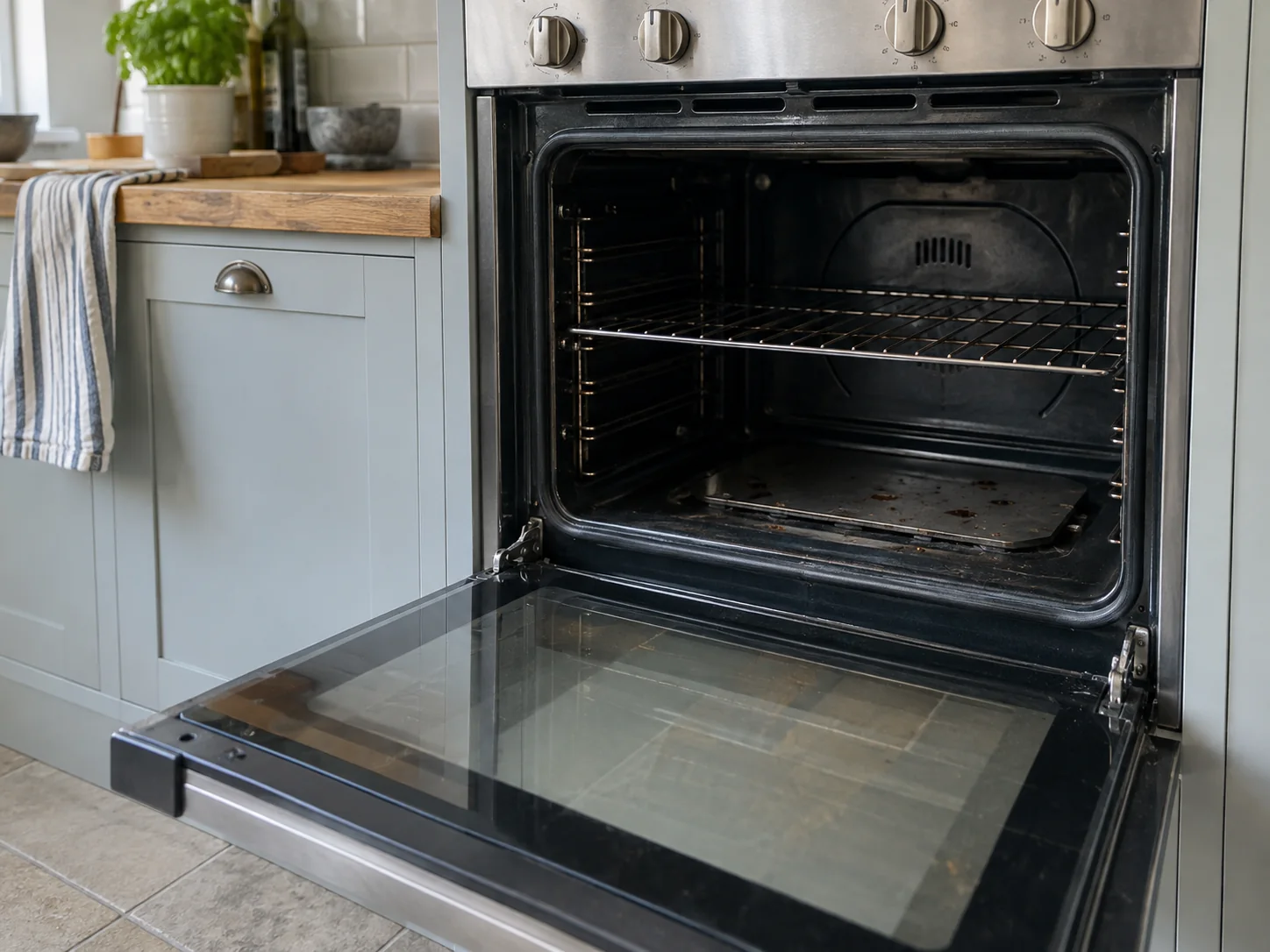
To clean a gas oven at home, first switch it off, let it cool completely and check the appliance manual. Remove only the shelves and accessories the manufacturer says are removable. Wipe accessible enamel and glass with a suitable soft cloth and a modest amount of cleaner approved for those surfaces. Keep liquid, loose debris and cleaning products away from the burner, ignition point, vents and controls. If any gas connection or burner part needs dismantling, stop and seek qualified help.
That separation between ordinary cleaning and appliance work is the key. A gas oven still has many familiar surfaces: a glass door, racks, a floor and side walls. Yet it also needs a clear path for gas, air and combustion products. Covering an opening with grease or pushing water into a component can create a problem that a spotless door will not reveal. A careful clean is therefore controlled and fairly dry around the working parts.
Identify the oven you have
Not every cooker with gas burners on top has a gas oven below. Many range cookers combine a gas hob with an electric oven, and some built-in ovens have a gas grill as well as a gas oven. Look up the exact model before following advice about burner covers, removable panels or automatic cleaning settings. The identification label is often on a door frame or another accessible edge; the position varies. If you cannot find the manual, the model number is more useful than a photograph of a similar-looking appliance.
Read the instructions for cleaning, safe isolation and the parts you may remove. Some lower oven panels lift out for routine access; others are fixed or protect components underneath. A screw is not an invitation to remove a cover. The manual may also identify coatings that must not be treated with abrasive pads or strong oven cleaner. Follow those model-specific rules even if a general cleaning tip sounds easier.
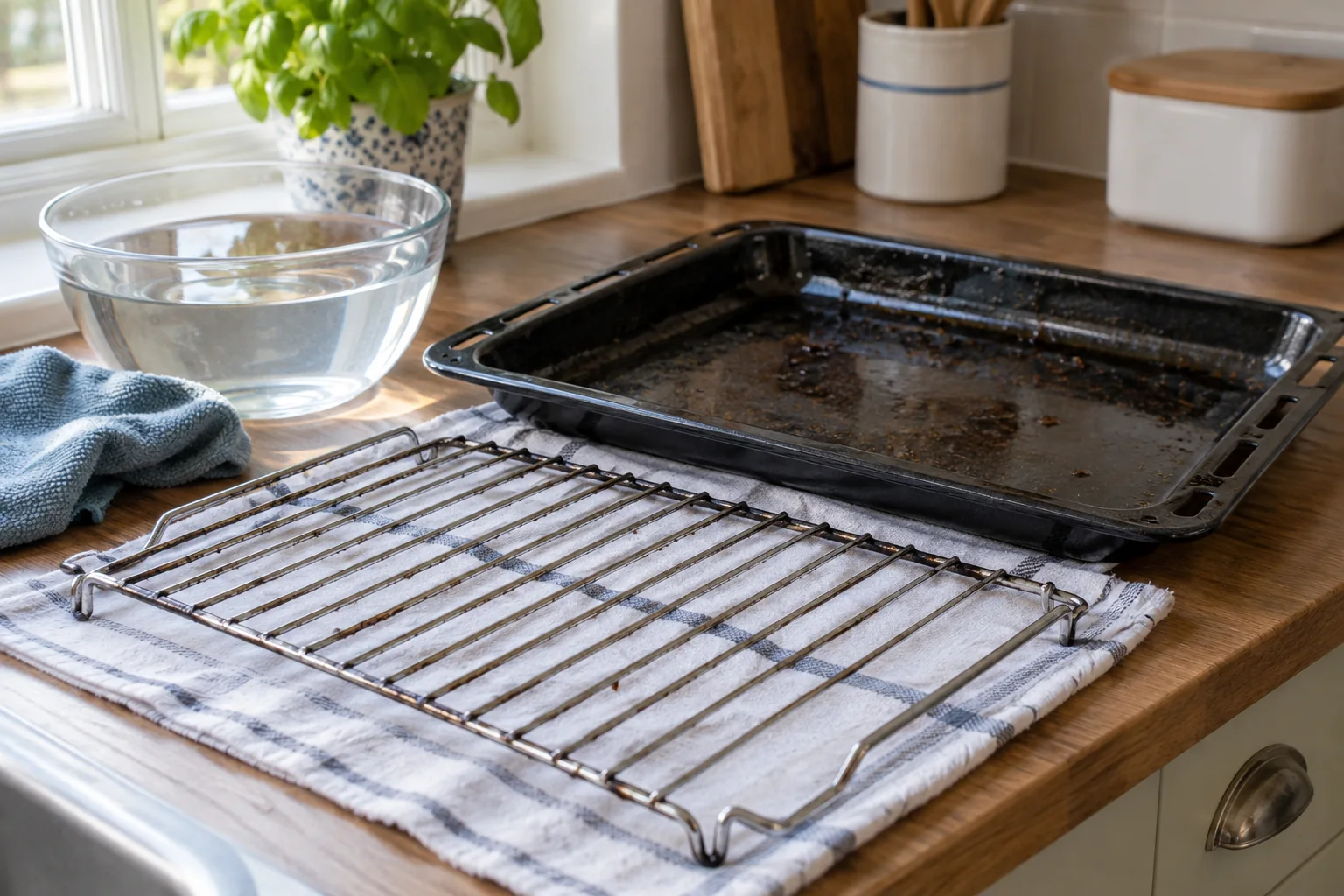
Before starting, clear your work area and make sure the room is ventilated. You need a place for hot-looking but now fully cool shelves, a soft cloth, a bowl of clean water for the cloth and an appropriate cleaning product if the manual permits one. Do not spray cleaner into the oven indiscriminately. Applying a little product to a cloth can give better control around edges and openings. Wear gloves if the product label calls for them, and never mix cleaning chemicals.
Start with loose food and removable pieces
Take out racks and trays that the manual allows you to remove. Lift out crumbs or flakes of burnt food using a dry cloth or soft brush; avoid sweeping them into burner slots, vents or gaps. If a spill has landed on the oven floor, note where it is before wiping. A pool of sauce directly beside a burner opening deserves more caution than a similar spill on accessible enamel away from it.
Clean shelves separately on a protected work surface. Their finish and any telescopic mechanism determine what is safe. A plain metal rack may tolerate a different method from a coated shelf or a runner with bearings. Let baked-on food soften using the method allowed for that accessory, then use a non-scratch cloth or brush and rinse thoroughly. Dry each piece before returning it to the oven. Do not leave a shelf soaking because it seems simpler if the instructions say the coating or mechanism must stay dry.
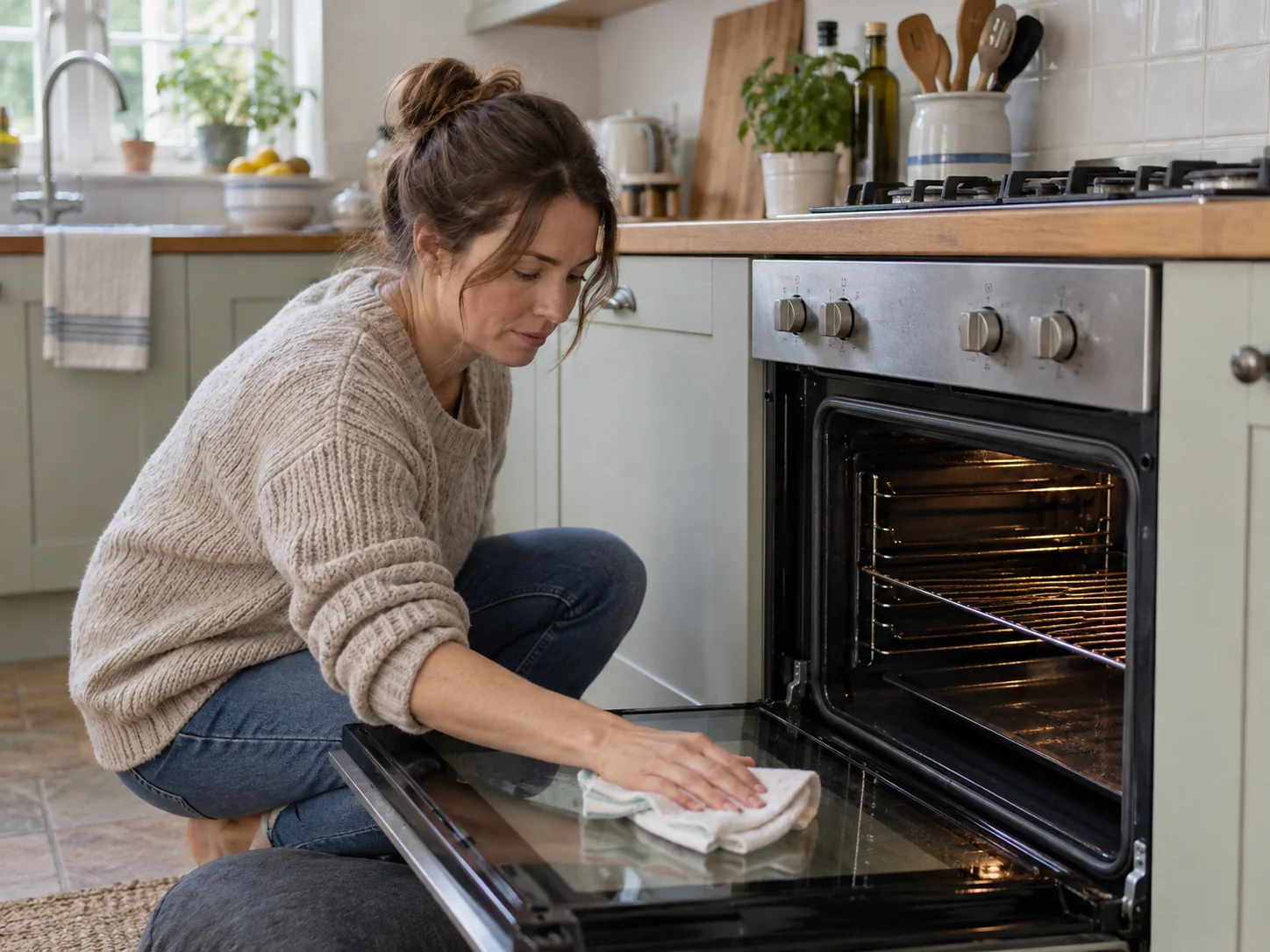
The door is often the most visible part of the job. Once cool, wipe the accessible inner glass with a cloth suited to glass, working gently around its edges. Avoid flooding the door, since liquid can pass into seams and leave marks between panes. If a stain is trapped inside a multi-pane door, it cannot be removed by polishing the outside. Door removal and glass-panel access vary by model; only follow a documented procedure you can complete safely, or use appropriate appliance help.
Clean the cavity without soaking it
For accessible side walls and enamel, start with a lightly damp cloth. Let an approved product work for the time on its label if water alone does not shift the grease; wipe residue away rather than grinding at it. Keep your cloth controlled near the burner area, igniter and any perforated cover. Do not scrape with a metal tool or push into holes to dislodge burnt food. A mark left on a surface is less concerning than damage to a working part.
Use fresh sections of cloth as grease transfers. This simple habit prevents a dark film being spread across a larger area. Work from cleaner upper surfaces towards dirtier lower ones, and pick up moisture with a separate cloth before moving on. If the oven has a removable floor panel, follow the manual before lifting it; if it does not, wipe only what you can reach safely. A fan housing, pilot assembly or gas fitting is outside a routine household wipe-down.
Be especially cautious with cleaning sprays and paste near a flame port. A product might be suitable for enamel yet unsuitable for a burner, seal or igniter. Do not assume that rinsing later will solve this; the rinse water may carry residue into the same area. If a cleaning product’s instructions conflict with the appliance manual, use a method that satisfies both or do not use that product on the oven.
After cleaning, give accessible surfaces a clean damp wipe where the product label requires rinsing, followed by a dry cloth. Check that no cloth fibres, crumbs or tools remain in the cavity. Refit shelves and any approved removable pieces exactly as described in the manual. Do not test the oven while wet components or a cleaner smell remain. If you are uncertain about an assembly, leave it unused and seek advice rather than guessing.
Know when to stop
If you smell gas, do not continue cleaning or try the oven to see whether it still works. The National Gas Emergency Service advice is to call 0800 111 999, open doors and windows, and avoid electrical switches and naked flames. Turn off the gas at the meter only if it is safe to do so; the official advice excludes a meter in a cellar or basement. This is an urgent gas-safety matter, not a cleaning problem.
Less dramatic issues still deserve care. A burner that lights unevenly, fails to light, goes out, or makes unusual noises should be assessed by an appropriately qualified professional. So should a damaged seal, visibly loose fitting or suspected water intrusion. Household cleaning does not authorise work on gas parts. In the UK, gas work should be carried out by a Gas Safe registered engineer competent for that type of appliance. A general oven cleaner may address accessible grease; they should not be asked to diagnose or repair the gas system unless they have the required qualification.
Heavy, baked-on grease may also be impractical for a quick home clean. If accessible surfaces need a thorough treatment and you would rather avoid aggressive scrubbing around vulnerable parts, professional oven cleaning is an option. Explain that the oven is gas-powered and mention any fault symptoms separately; cleaning and repair are different jobs. If there is a fault, prioritise a qualified inspection.
Keep the next clean small
Once the oven is back in service, deal with fresh spills when it has cooled instead of letting them bake on repeatedly. Use a suitably sized roasting tin, avoid overfilling dishes and place food so it does not obstruct vents. Do not line an oven floor with foil unless your manual explicitly permits it; a liner in the wrong place can interfere with heat and airflow. A quick check of the door glass and floor after a messy meal can prevent a much harder job later.
The same measured approach applies to the gas hob above an oven. Its burner caps and supports may be removable, but the hob has its own care instructions and ignition points. If you are tackling the whole cooker, treat each component according to its manual rather than applying one cleaning method everywhere. For broader appliance surfaces that are safe to clean, the site’s kitchen cleaning service describes another route when ordinary maintenance has become too time-consuming.
A safe gas-oven clean leaves accessible surfaces free of grease while protecting the parts that make the appliance work. Keep the process cool, controlled and model-specific. The moment the job requires opening a gas component or guessing whether a burner is clear, it has moved beyond routine cleaning.