
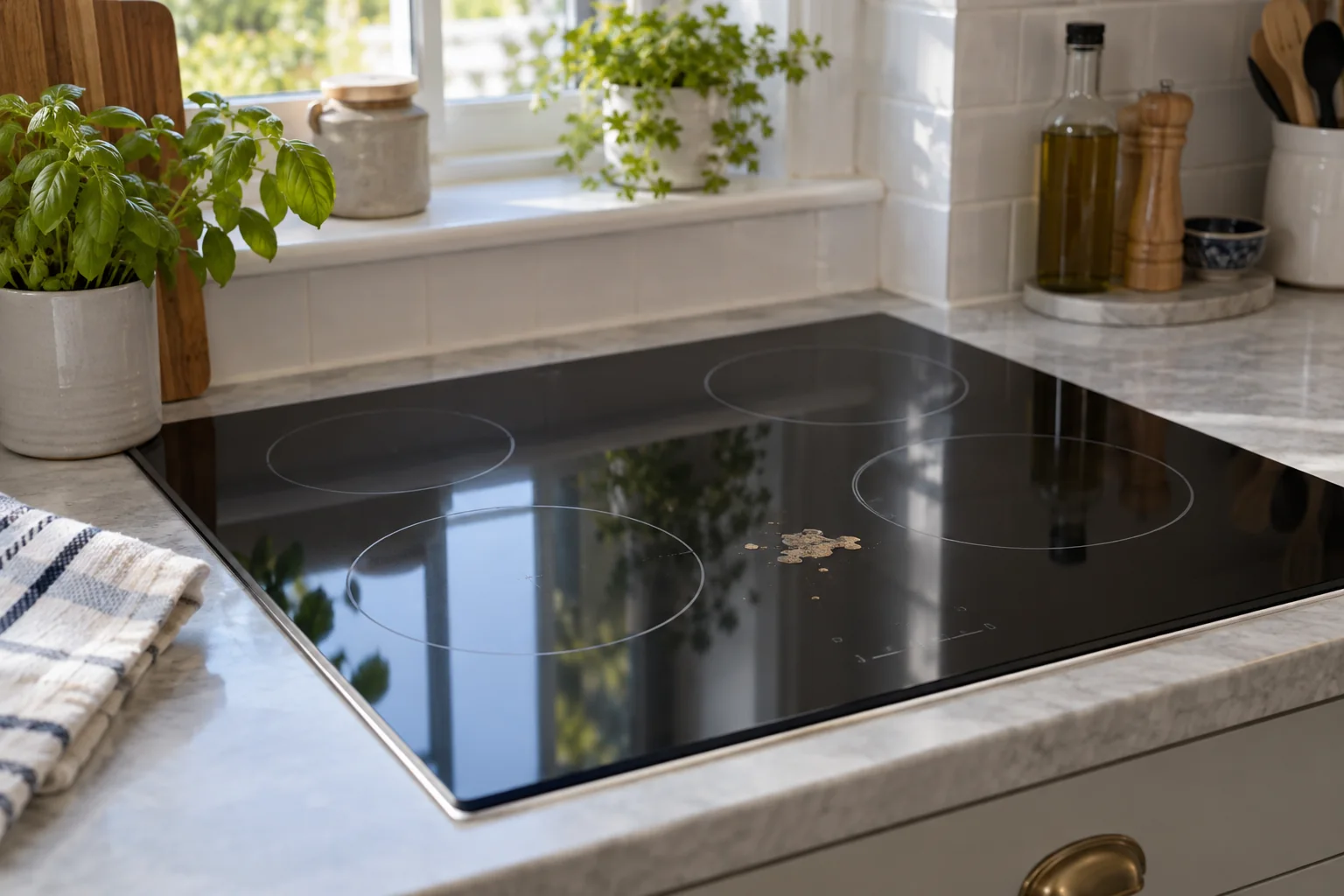
To clean an induction hob without scratching it, wait until the glass-ceramic surface is cool, remove loose grit first and wipe with a soft, clean cloth and a cleaner approved for the hob. Dry the surface with another soft cloth. Never drag cookware across crumbs or use a scouring pad to chase a mark: tiny particles and abrasive fibres can leave visible lines even when the hob itself looks tough.
An induction hob heats pans through an electromagnetic field, but the surface you touch is generally glass ceramic. It can still be hot from contact with a pan after cooking. Treat a residual-heat warning as meaningful and follow your model’s instructions before touching the zone. The cleaning challenge is not usually thick oven-style grease; it is a thin film, dried spill or grain of debris trapped between cloth and glass.
Begin with the hob switched off and cool
Turn the hob off and move pans away. Check the residual-heat indicator and allow the surface to cool in line with the manual. An induction zone may stop heating as soon as a pan is lifted, yet heat stored in the cookware can leave the glass hot. A damp cloth on a warm zone can also dry too quickly and smear rather than clean. Never test the temperature by placing your hand directly on the surface.
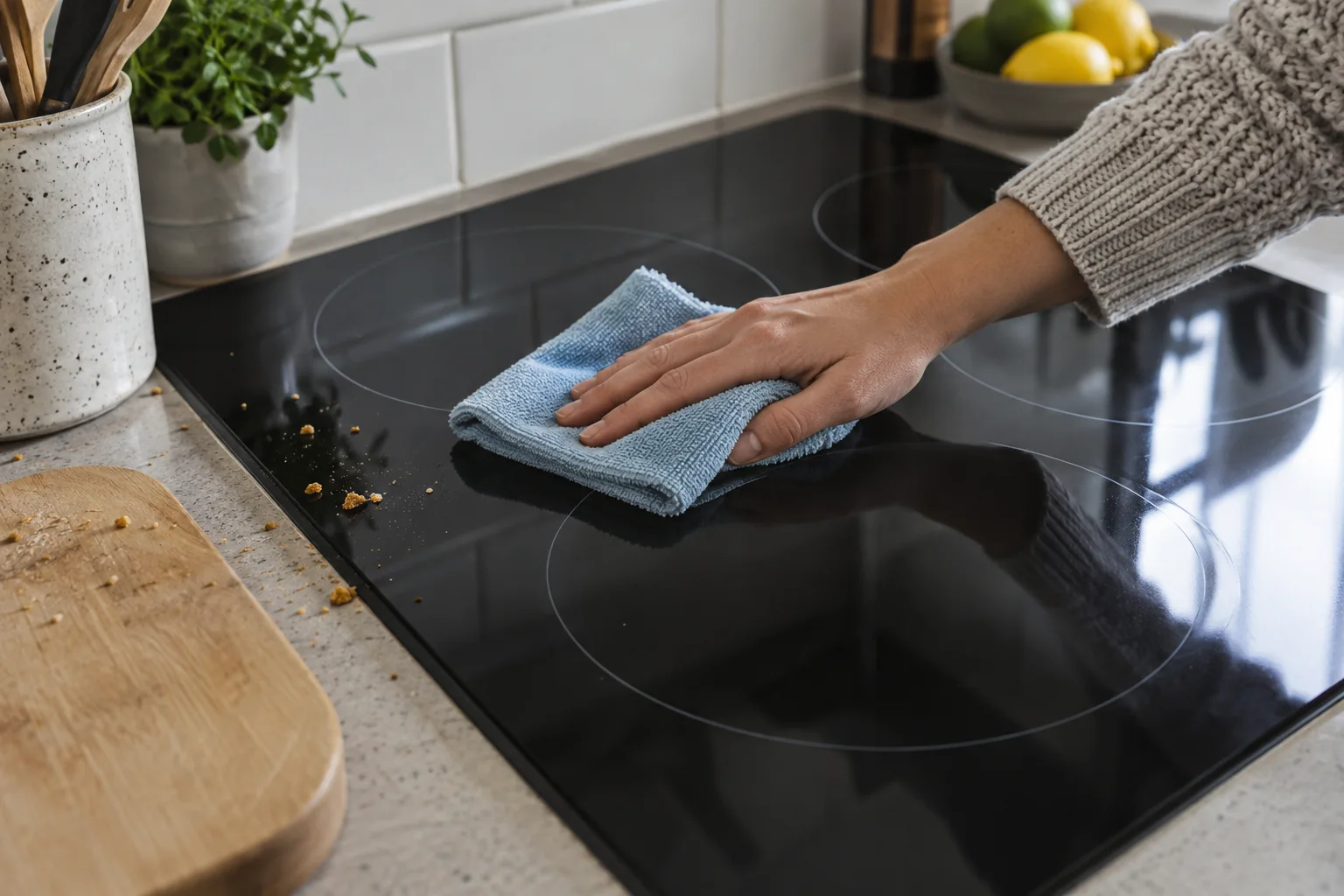
Look closely at the mess before rubbing it. Crumbs, salt crystals and burnt grains act like fine grit under a cloth. Lift them away gently with a dry soft cloth or a method the manufacturer approves. Then use a slightly damp microfibre cloth for ordinary fingerprints and fresh splashes. Work across a small area and turn the cloth to a clean face as it picks up soil. That prevents a greasy corner of fabric becoming the tool that spreads the mess.
If water leaves a haze, finish with a dry cloth. This last pass matters on black glass, where streaks show readily in side light. Avoid large amounts of water near touch controls, edges and trim. The hob is a sealed cooking surface, but liquid can still travel to places that are difficult to dry. Apply a suitable cleaning product to the cloth or as directed by its label, rather than flooding the entire top.
Match the method to the mark
A fresh cooking splash usually needs only a gentle wipe once the zone is cool. A dried sauce ring may soften if a damp cloth rests on it briefly, provided your manual allows this and the controls stay dry. Wipe the loosened residue away, rinse the cloth and dry the area. Repeated gentle passes are preferable to hard pressure with a rough sponge.
Grease can leave a dull film that looks like scratches from some angles. A small amount of glass-ceramic hob cleaner may lift it, but check the appliance instructions and product label. Rinse or buff as directed; an unremoved cleaner can itself leave streaks. If a mark remains in exactly the same line after the surface is fully clean and dry, it may be a scratch rather than dirt. No amount of extra cleaner will polish deep physical damage back into glass.
Some spillages need special treatment. Sugar, syrup and certain melted materials can adhere strongly as they cool. Manufacturers may prescribe immediate action with a dedicated hob scraper while the surface is still warm, which carries burn and scratching risks. Do not copy a general internet method for a hot spill. Follow the exact manual for your hob, use the specified tool and protective measures if it instructs you to, and seek help if you are unsure. For routine dried food, a sharp kitchen knife is not a substitute for a purpose-made scraper.
Tools that tend to cause damage
Avoid steel wool, abrasive powder and the rough side of an ordinary scourer unless your appliance maker specifically allows a particular product. These can dull the glass or create a network of fine lines that becomes obvious in daylight. A plastic spatula may seem harmless but can still trap grit along its edge. If you use a specialist scraper because the manual recommends it, keep its blade clean and use it at the stated angle without levering at the glass.
Be careful with homemade mixtures. Baking soda pastes, vinegar and lemon are often proposed as universal cleaners, but abrasiveness and acidity matter to surrounding trim and markings. More importantly, mixing products can create unwanted reactions. Use a method supported by the hob instructions and a product labelled for glass ceramic. This is a small surface; there is no benefit in combining several cleaners when one appropriate product and a clean cloth will do.
Paper kitchen towel can be useful for absorbing a spill, but some grades shed fibres and can carry particles across glass. A clean microfibre cloth is easier to control for the final wipe. Wash cleaning cloths without leaving them full of grit from another task. A cloth used on a roasting tin or floor is not the one to bring back to a polished hob.
Prevent scratches while cooking
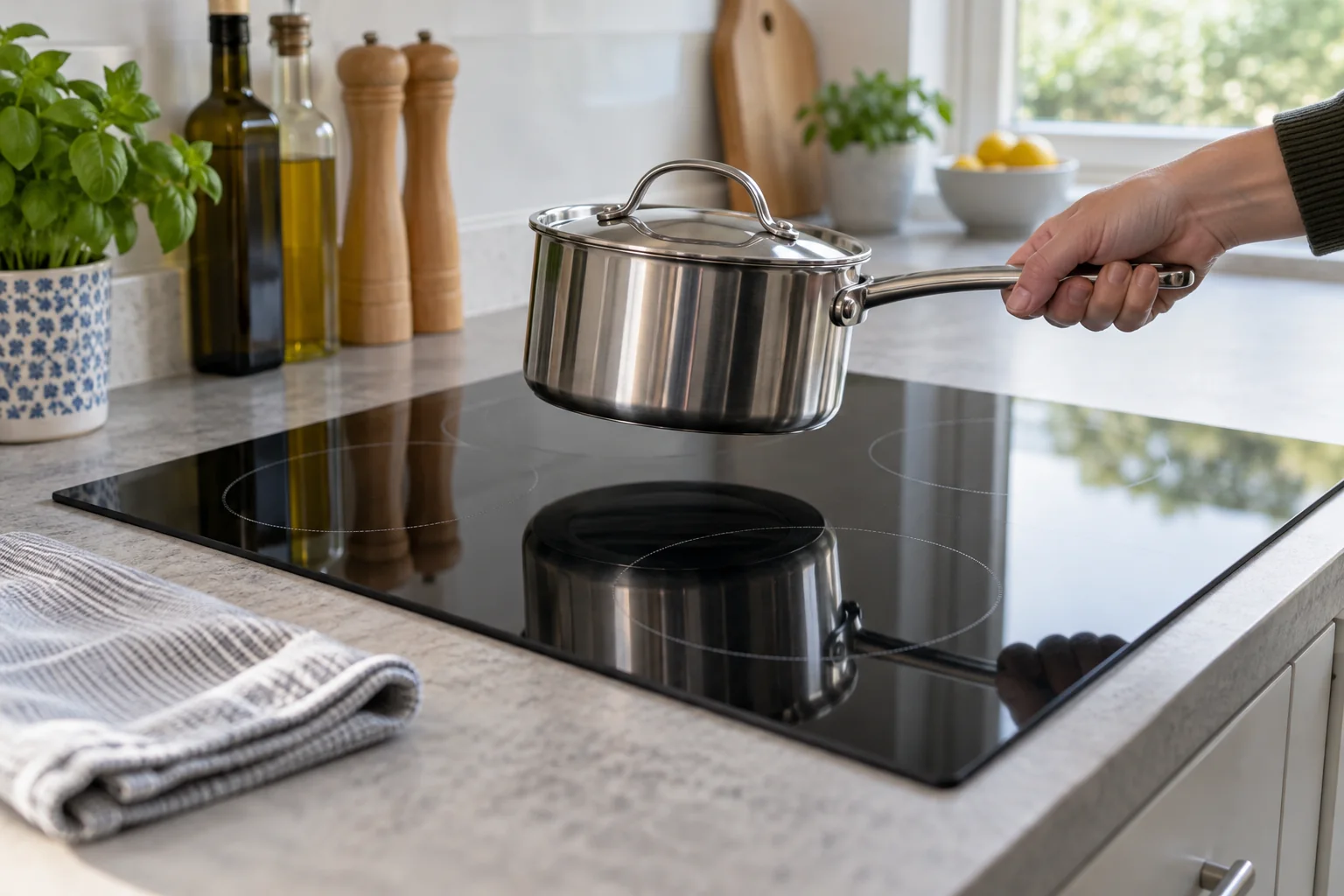
Cleaning is only part of keeping the glass clear. Check pan bases before placing them on the hob. A grain of salt caught under a heavy saucepan can score the surface when the pan is slid. Lift cookware to move it between zones instead of dragging it. Keep the underside of pans dry and free from burnt deposits, and place pans down gently. These habits reduce the need to scrub later because food and grit are less likely to be pressed onto a warm zone.
Wipe around the zones after each cooking session once the hob has cooled. Pay attention to the narrow strip beside controls and the outer edges, where a drop of sauce can be missed. A one-minute inspection is more useful than waiting until several spills have built up and then trying to remove them all with force. If the hob has a child lock, use it as described in the manual while cleaning so an accidental touch does not activate controls.
Do not put a wet pan lid, tray or utensil on the glass as an improvised resting place. Even an induction hob that is off can have a warm area after use, and hard objects can chip edges. A trivet or worktop space is better for the things you need to move while cooking. The goal is to prevent grit and impact as well as chemical or abrasive damage.
Decide whether a mark is dirt or damage
Clean and dry the hob, then look from more than one angle in good light. A smear changes or disappears as you wipe. A scratch remains fixed, although light may make it more visible from one direction. A chip, crack or damaged control area needs more attention than a cosmetic line. Stop using a cracked hob and follow the manufacturer’s repair guidance; liquid can reach electrical parts beneath the glass.
If the surface is sound but heavily coated with cooking residue, a careful deep clean may help. The site’s appliance cleaning service covers broader appliance care, while kitchen cleaning can address the wider cooking area. Check the scope of a service before booking, especially if the issue may be permanent scratching rather than removable soil. Cleaning cannot reverse a crack or worn marking.
For day-to-day care, keep the method simple: cool surface, remove grit, soft cloth, suitable cleaner where needed, and a dry finish. That sequence protects the glass while making it easier to see when a mark needs a different answer.