
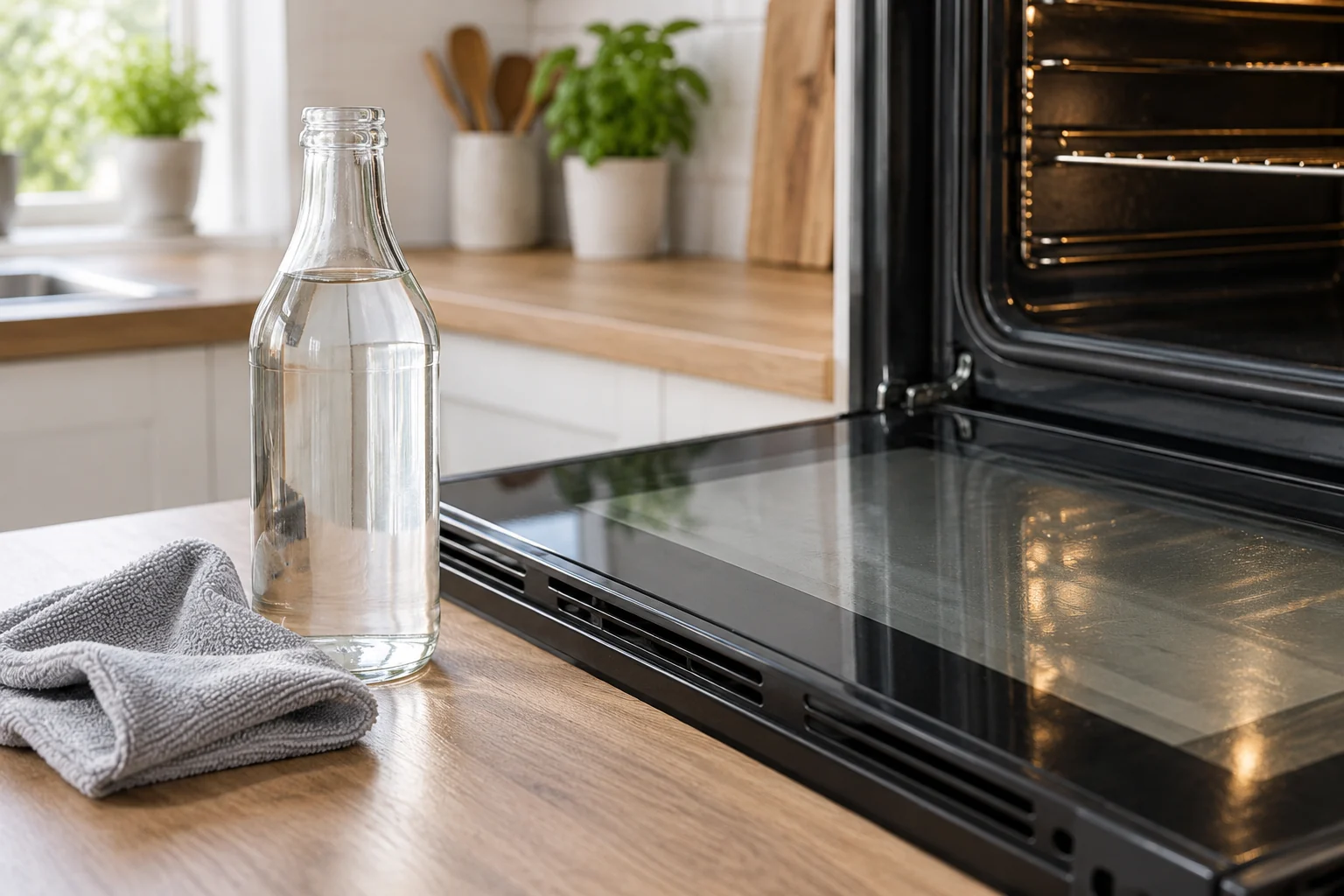
Vinegar is suitable for some small, accessible oven-cleaning jobs, but it is not a blanket treatment for every part of an oven. The sensible answer depends on the surface and the appliance instructions. A little diluted household vinegar may help remove a light film from compatible glass or a removable part; acidic liquid should not be sprayed into vents, onto electrical components or over specialist liners. Do not use it to “neutralise” another cleaner.
If you are unsure what the oven surface is made of, start with warm water and a soft cloth. Find the model instructions before introducing an acid. That short check can save you from dulling a finish or leaving liquid where you cannot rinse it out.
Decide what you are cleaning
An oven door is not one single surface. It can include glass, coated metal, stainless trim, printed control markings, seals and joints. Inside the cavity you may find enamel, catalytic panels, a fan guard and exposed fittings. A spray that lands across all of them is harder to control than a damp cloth used on one accessible patch. Work out where the mark is before selecting a product.
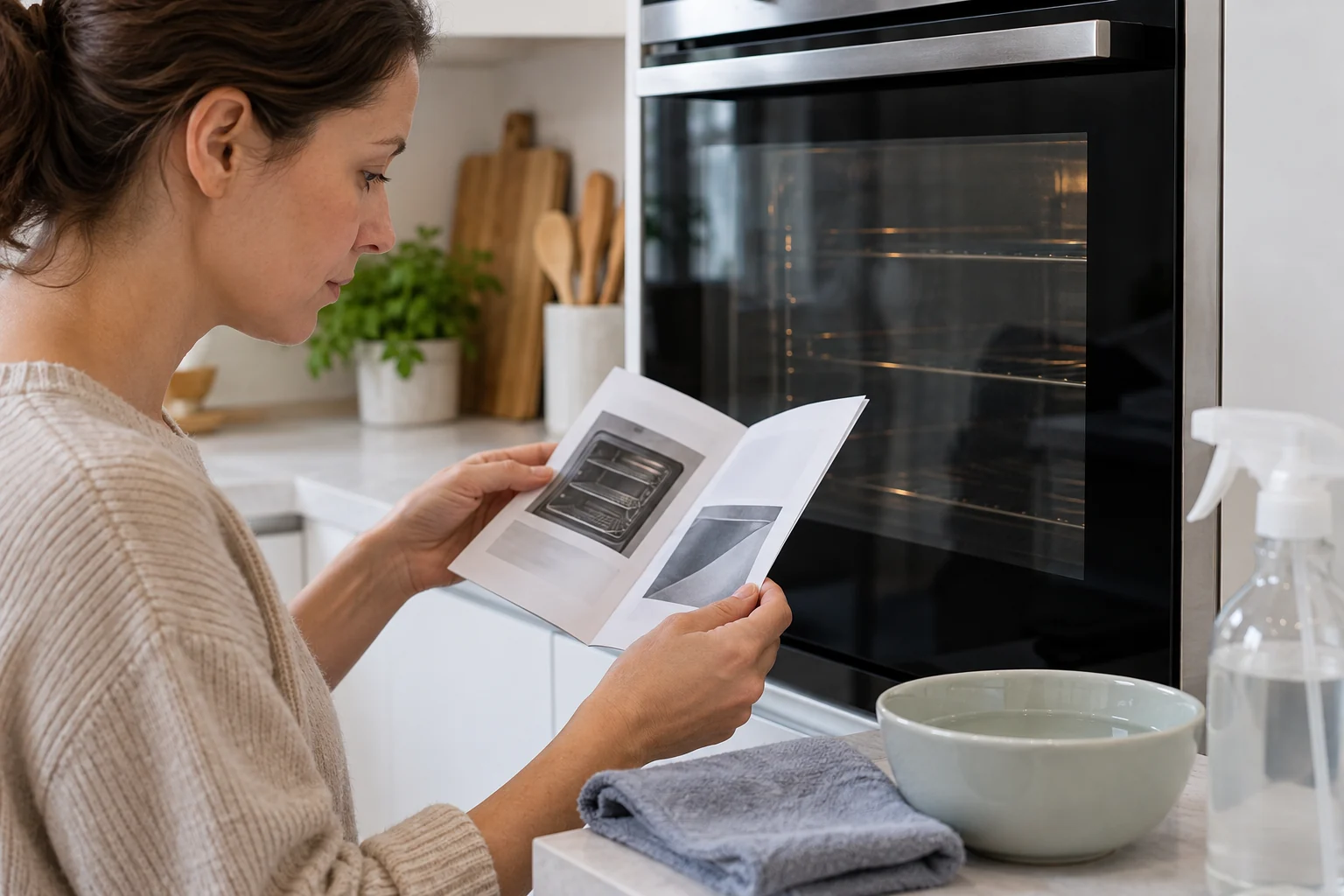
The appliance manual should be your first reference. Look for instructions on cleaning the door glass, cavity walls and removable parts, plus any warnings about acidic or abrasive products. A cleaner that the manual accepts on glass may still be unsuitable for a seal, aluminium edge or painted trim. If the instructions are unclear, consult the manufacturer using the model number rather than testing an inconspicuous spot on a component that could be damaged invisibly.
Household vinegar also varies in concentration and may be sold for cooking or cleaning. Do not assume a stronger product is better. Labels explain what the product contains and what it is intended for. Keep the bottle away from children and pets while you work, even if it is a familiar kitchen ingredient. Avoid transferring it to an unlabelled spray bottle that someone else could mistake for water.
What vinegar is likely to achieve
Vinegar is acidic. On a compatible surface, it may help with light mineral marks or a thin film, but baked-on grease is a different sort of soil. An oily deposit usually needs a suitable detergent and wiping, while hard carbon may need a manufacturer-approved method or professional attention. Repeatedly wetting a thick black patch with vinegar is unlikely to make it lift cleanly.
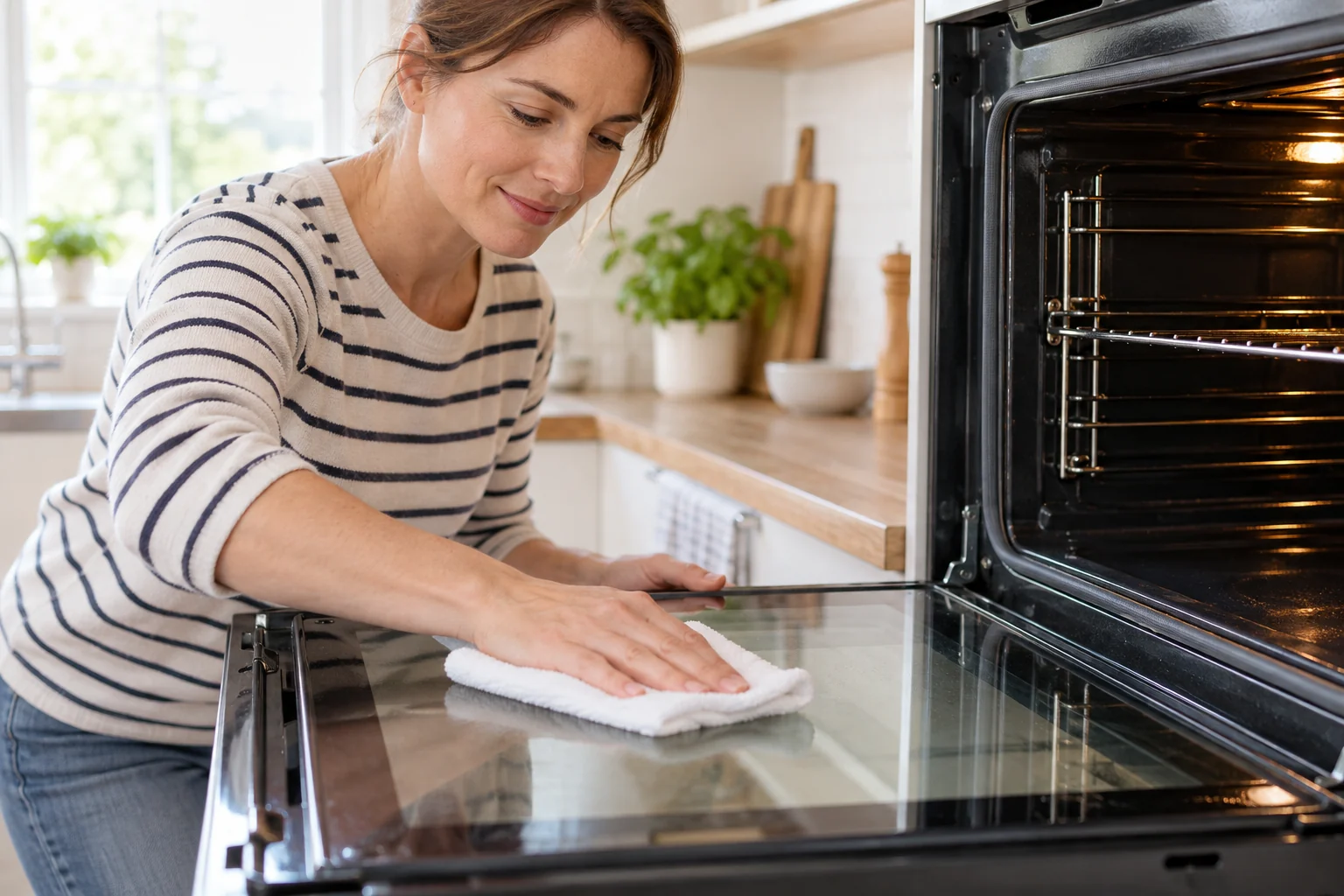
For accessible glass where the maker allows it, put a small amount on a cloth rather than spraying directly at the door. Wipe a limited area, then use a second clean damp cloth to remove it. Dry with a lint-free cloth and look from an angle for streaks. Keep liquid away from the top and bottom edges, where it could track between panes or into fittings. If marks lie between glass panels, surface wiping will not reach them; do not prise the door apart unless the manual gives a safe procedure.
For a removable tray or rack, check its finish separately. Some metals can be marked by acid, and coated accessories may have their own cleaning limits. A short contact time on a suitable removable item is easier to manage than an acidic liquid left in a fixed cavity. Rinse thoroughly and dry, especially around exposed edges. If a mark is really heat discolouration rather than residue, further washing may have little effect.
Never combine it with another cleaner
This is the most important limit. Never mix vinegar with bleach, oven cleaner or an unknown residue of another cleaning chemical. Some combinations can release harmful fumes or cause an energetic reaction. The fact that one product is sold as a food ingredient does not make a mixture safe. Use one product at a time, follow its label and rinse as directed before considering any different method.
Online recipes often pair vinegar with bicarbonate of soda for a dramatic fizz. The bubbling consumes part of the acid and alkali; it does not prove that oven grease has disappeared. It can also carry residue into seams. If you have already used bicarbonate on a compatible patch, lift and rinse it thoroughly as that method requires. Do not add vinegar as a finishing step to a poorly rinsed oven. A clean damp cloth is more predictable.
If someone has accidentally mixed cleaning products and there is a strong smell, coughing, eye irritation or breathing difficulty, leave the area and follow the product emergency instructions. Seek appropriate medical or poison information advice promptly. Do not lean into the oven to identify the fumes and do not try to correct the mixture with another ingredient. Keep others away from the area until it is safe.
Protect sensitive materials and nearby fittings
Do not pour vinegar into the bottom of the oven or run it over heating elements, controls, screws or fan openings. Liquid can collect where it cannot be wiped away. Seals are particularly easy to overlook: they are designed to fit a certain way and may be made from material that responds poorly to rough wiping or repeated soaking. Clean them only as the manual directs.
Some ovens have self-cleaning modes, catalytic liners or specialist coatings. Those features are not instructions to use any domestic acid freely. A liner may be deliberately porous or textured, which makes liquid residue harder to remove. Use the prescribed maintenance cycle or wiping method, and let the appliance cool before touching it. If a removable component has flaking or peeling material, treat that as a condition issue rather than a stain to scrub away.
When dealing with the exterior, watch for stone worktops, grout, metal finishes and printed markings close to the oven. Acid can mark some nearby surfaces even if the glass itself tolerates it. A cloth gives you control over where the liquid goes. Put a towel below the door to catch drips, but do not leave a wet towel against timber or another sensitive surface.
A practical way to choose the next step
First identify the mark. A greasy smear, limescale-like water spot and burnt food deposit call for different treatment. Next identify the surface and check its manufacturer instructions. If vinegar is permitted, use a modest amount on a cloth, work a small area, remove it with clean water and dry. Stop if the finish changes, the liquid runs into a joint or the mark remains unchanged after a gentle attempt.
If the cavity has widespread heavy grease, it may be more efficient to arrange an oven cleaning service than to experiment with household acids. Describe the appliance and any specialist finish when enquiring so the cleaner can explain the appropriate scope. A separate fault, damaged seal or inaccessible stain may require repair advice rather than cleaning.
Vinegar has a limited role in oven care: small compatible areas, controlled application and complete removal. The manual, not an online mixture, decides where it belongs. If the material is uncertain or the soil is heavily baked on, pause and choose a method suited to that specific surface.