
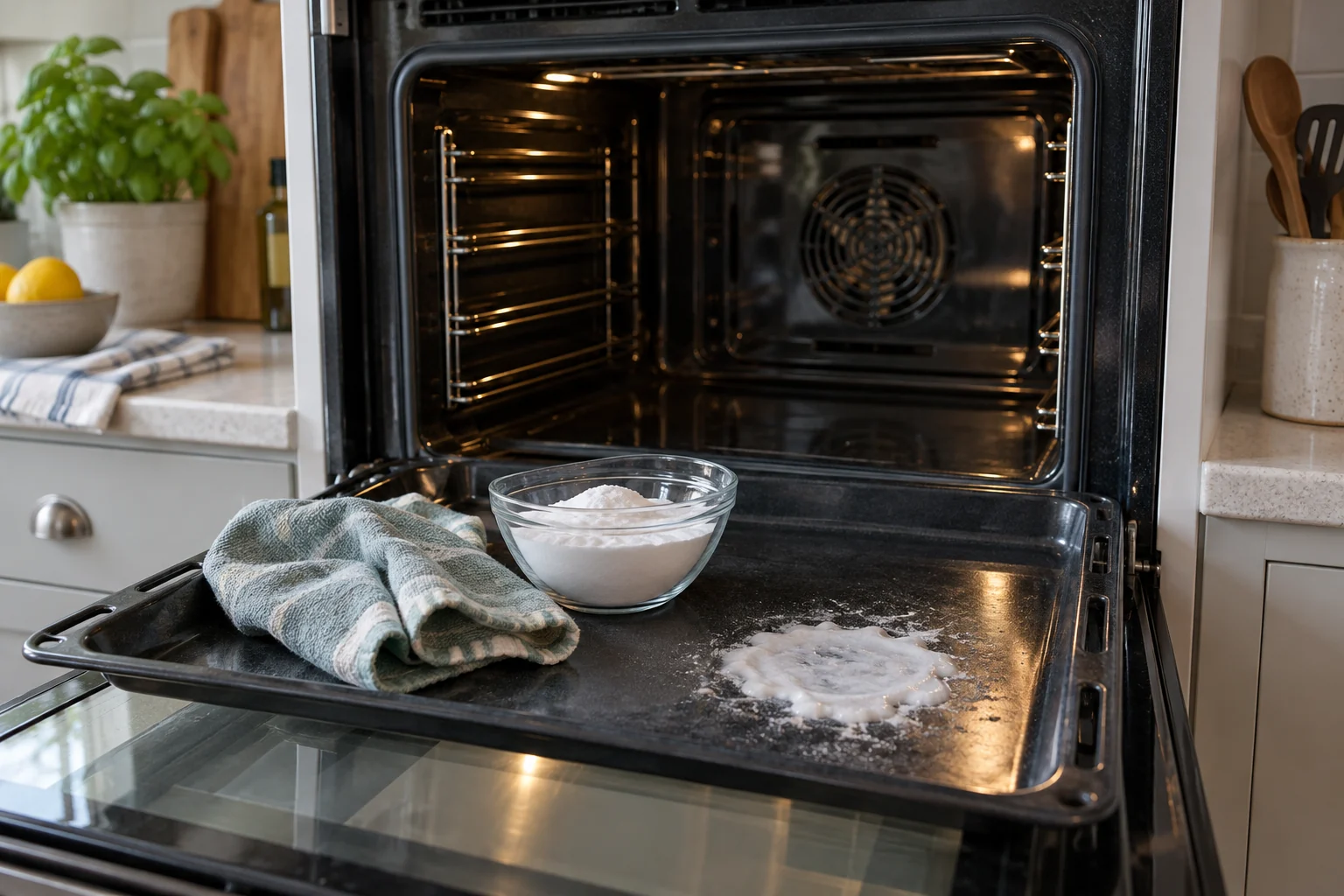
Yes, bicarbonate of soda can help with light grease and some softened food residue in an oven, provided the appliance instructions allow it and you remove every trace afterwards. It is a mild abrasive, however, not a universal cleaner. A thick paste left in seams, on heating elements or against a sensitive coating can create more work than it solves. It also will not reliably shift years of hard carbon without considerable effort.
Many household guides treat bicarbonate of soda as if it were harmless on every surface because it is familiar in the kitchen. That is too broad. The material of the oven, the location of the soil and the way you apply and rinse it matter more than the fact that it comes from a grocery aisle. Start with the oven manual and a small, accessible patch rather than coating the entire cavity.
First, check where you intend to use it
An oven cavity may combine enamel, glass, metal trim, door seals, exposed heating parts and specialist liners. Some surfaces are meant to be wiped; others rely on a particular cleaning cycle or must not be scrubbed. If the manual calls a panel catalytic, pyrolytic or self-cleaning, read its care instructions before applying a paste. Do not assume advice for an ordinary removable tray applies to the wall of the appliance.
Bicarbonate particles can lodge around a fan guard, hinge, seal or vent. Even a small amount may be awkward to remove from a textured surface. Avoid electrical components and holes where water or powder could enter. Never dismantle the door, fan cover or heating assembly to reach a mark. A cloth can be guided over an accessible flat surface; a paste pushed into an inaccessible gap is a different risk.
If you have a gas oven, take particular care around burners and ignition parts, following the manual rather than a general cleaning recipe. The same principle applies to a ceramic or induction hob next to the oven: its surface is governed by its own instructions. A household ingredient does not override those limits. When the surface type is uncertain, choose plain damp wiping first and seek model-specific advice.
What bicarbonate can realistically do
On a compatible cool surface, a damp bicarbonate paste may give a little mechanical help with a greasy film or a small patch of softened food. It is not a solvent that dissolves every burnt layer. If the mark is a shiny, hardened deposit, you may find yourself rubbing repeatedly without much progress. That is a sign to stop before the finish is dulled, rather than increasing pressure.
For a small test, put a little powder in a bowl and add water gradually until it becomes a spreadable paste. Apply it to the selected patch with a soft cloth, not by throwing dry powder into the oven. Keep it away from seams and avoid covering a large area. Follow any waiting time recommended by the appliance maker; if there is no approved time, do not leave it overnight simply because an online recipe suggests it. Rewet a drying patch so you are not grinding powder into the finish.
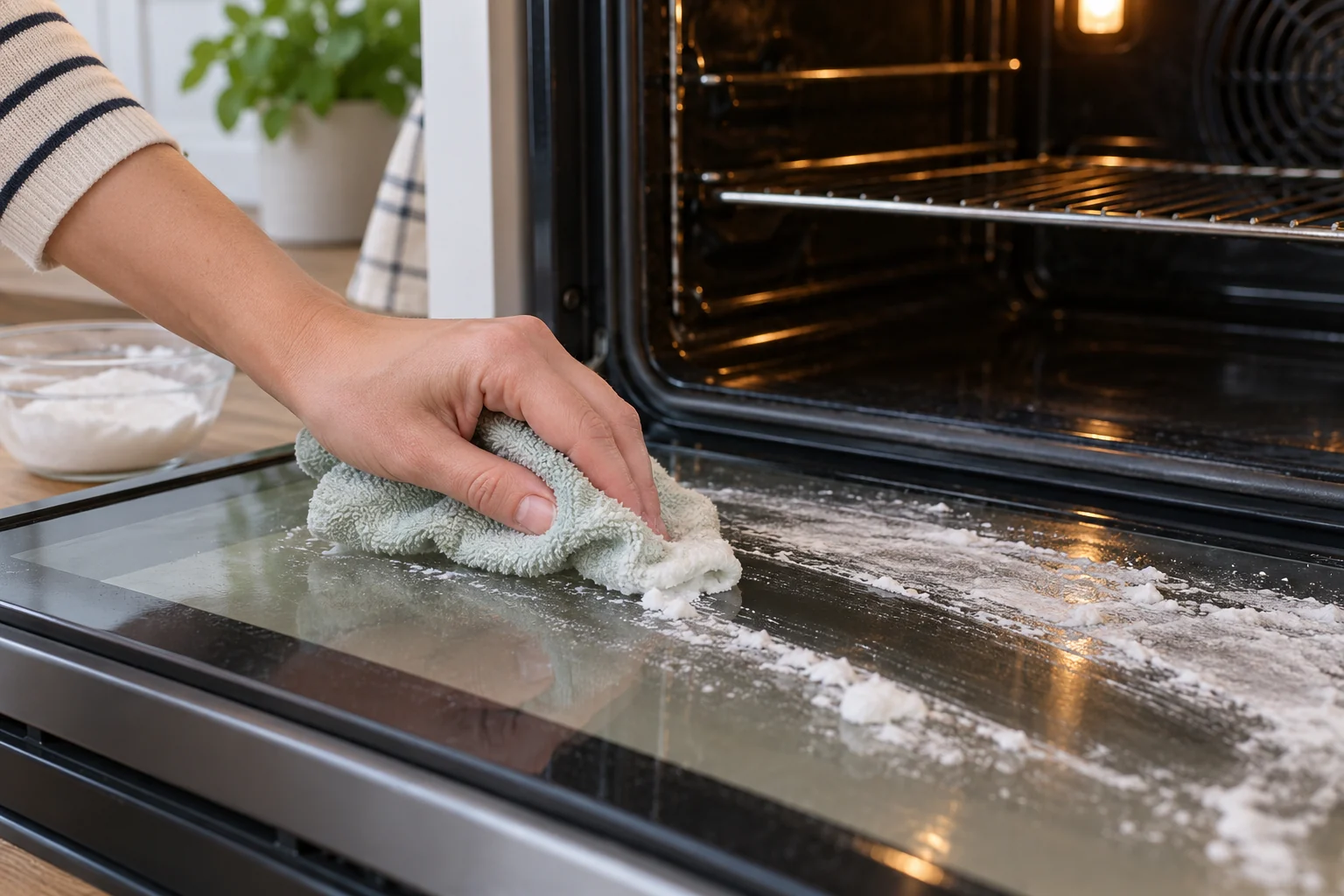
Use a soft damp cloth to lift the paste, turning it frequently. A clean second cloth makes it easier to see whether the remaining white marks are residue or discolouration of the oven itself. Rinse the cloth away from the oven, wring it well and repeat until it picks up no powder. You should not have to flood the cavity. Let the surface dry fully before returning shelves or using the appliance, following the manual’s instructions for first use after cleaning.
Why the rinse matters
A white haze on dark enamel or glass is often leftover bicarbonate rather than permanent damage. Wipe with a clean, damp cloth and then dry with a lint-free one. Check corners and the underside of a removable tray, where paste tends to collect. If a spot remains, do not immediately add another chemical. Identify whether you are looking at residue, staining or a scratched finish before making another pass.
People sometimes add vinegar to make the paste fizz. The reaction can look effective, but bubbling is not proof that baked-on grease has been removed. More importantly, adding vinegar to a surface recently treated with a commercial cleaner can be unsafe. Never mix household ingredients with bleach or oven cleaner, and do not use one product to neutralise another unless its label specifically directs it. Follow the original cleaner’s rinsing instructions instead.
A strongly alkaline commercial oven cleaner and bicarbonate of soda are not interchangeable. The former has specific hazard, compatibility, protective equipment and ventilation instructions. The latter is milder, but can still abrade a delicate finish or leave deposits. Choose based on the appliance and the job, not on a promise that one option is always natural, effortless or completely safe.
Decide when to use another approach
For a fresh spill, let the oven cool and lift the loose material before it is repeatedly heated. Warm water and a suitable mild detergent may be enough. For a removable rack or tray, clean it separately according to its finish. If grease covers the whole cavity, a series of tiny bicarbonate patches can become a tiring and messy project. It may be more practical to use a manufacturer-approved cleaning method or ask about a professional oven clean.
Cleaning cannot fix a failing seal, a heating fault or a strong electrical smell. If the oven smokes heavily, trips the power, fails to heat normally or gives off an unusual burning-plastic odour, turn it off and seek appropriate repair advice. Do not apply more paste in the hope of solving a mechanical or electrical symptom. The point of cleaning is to remove accessible soil, not to diagnose an appliance fault through trial and error.
Some marks are cosmetic. A patch of discoloured enamel may remain after grease is removed, and a heavily worn tray may never regain its original colour. Scrubbing to chase that appearance can cost more than leaving a sound surface alone. Judge the result by the absence of loose grease, food residue and cleaning product, and by the appliance being ready for use as its manual specifies.
A sensible routine for a small patch
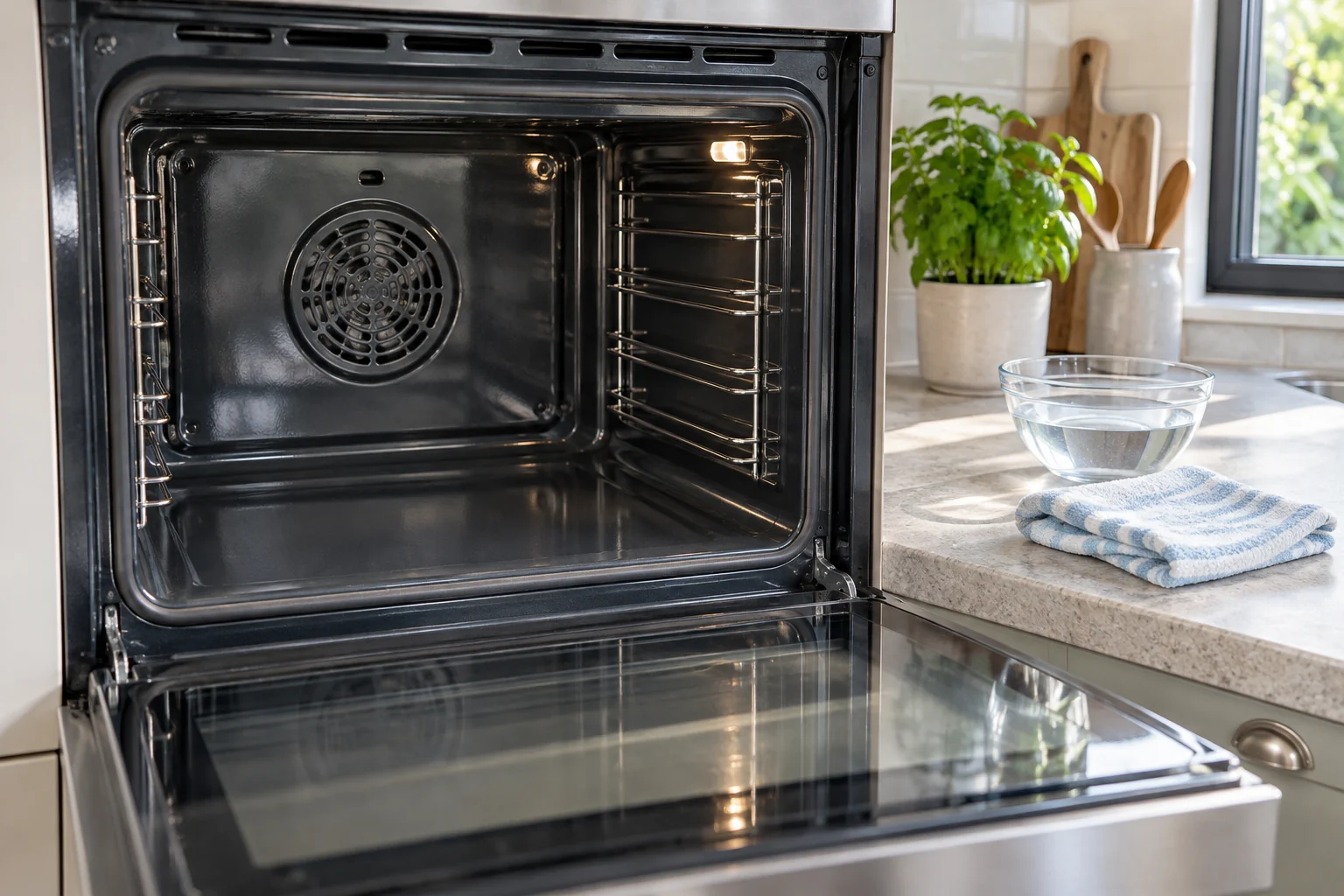
Check the oven’s instructions and let it cool completely. Protect the floor and nearby worktop, remove shelves only as the manual allows, and clear loose crumbs. Test the mild paste on an inconspicuous accessible area. If the surface remains sound, treat the small soiled patch with a soft cloth, giving moisture time to loosen the deposit. Lift rather than grind the residue. Finally, wipe repeatedly with clean damp cloths and dry the surface.
If the patch is untouched after a gentle attempt, reassess. Perhaps it is a stain within the finish, a different material, or a carbon deposit that needs a different approved method. Taking a photograph and checking the appliance model can help you ask a precise question of the manufacturer or a cleaning professional. It is more useful than repeating a popular recipe indefinitely.
Bicarbonate of soda earns a place as a modest option for compatible, accessible surfaces. Used sparingly, it can help with manageable grime. Used everywhere or left behind, it becomes a new source of residue. The best result comes from matching the method to the material, working on a small area and finishing with a careful rinse.