
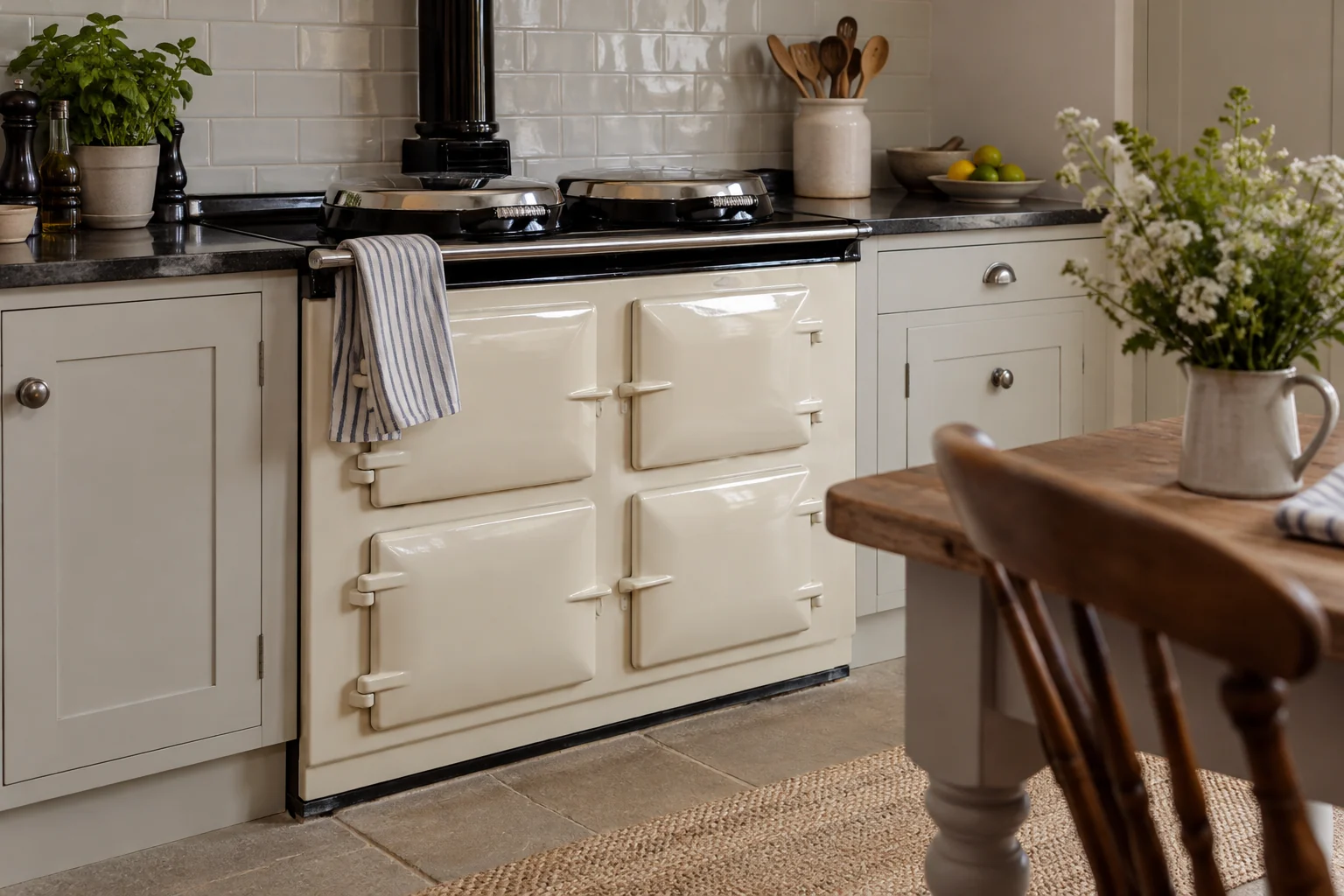
Keeping an AGA cooker tidy between deeper cleans is mostly about small, timely jobs: deal with a fresh splash when the relevant surface is safe to touch, wipe accessible enamel with a suitable soft cloth and keep lids, handles and nearby worktops free of grease. The exact routine depends on the model and its operating mode. Some AGA cookers remain hot for long periods, while others can be switched off or cooled for cleaning. Read the instructions for yours before assuming a surface is cool.
Routine home care should stay with reachable surfaces and permitted removable parts. Do not dismantle lids, insulation, burner or electrical components to chase a stain. A professional visit is useful for a fuller clean, but the gentle work you do between visits can stop ordinary spills from becoming repeated heat-baked deposits.
Start with the model and the finish
Find the model details and consult the manufacturer’s care instructions. An enamelled front, cast-iron hotplate, stainless trim and oven door interior are different surfaces. A product that works on one may mark another. Check whether the maker describes a daily wipe, a cool-down process or a particular way to lift food from the hotplate. Do not borrow a method from a different AGA model merely because the cookers look similar.
Look for existing chips, loose fittings or a door that does not close correctly before cleaning. A cracked finish or failing hinge is not a dirt problem. Avoid rubbing a damaged edge until it becomes larger. Record what you see and seek model-specific service advice.
Make a short after-cooking routine
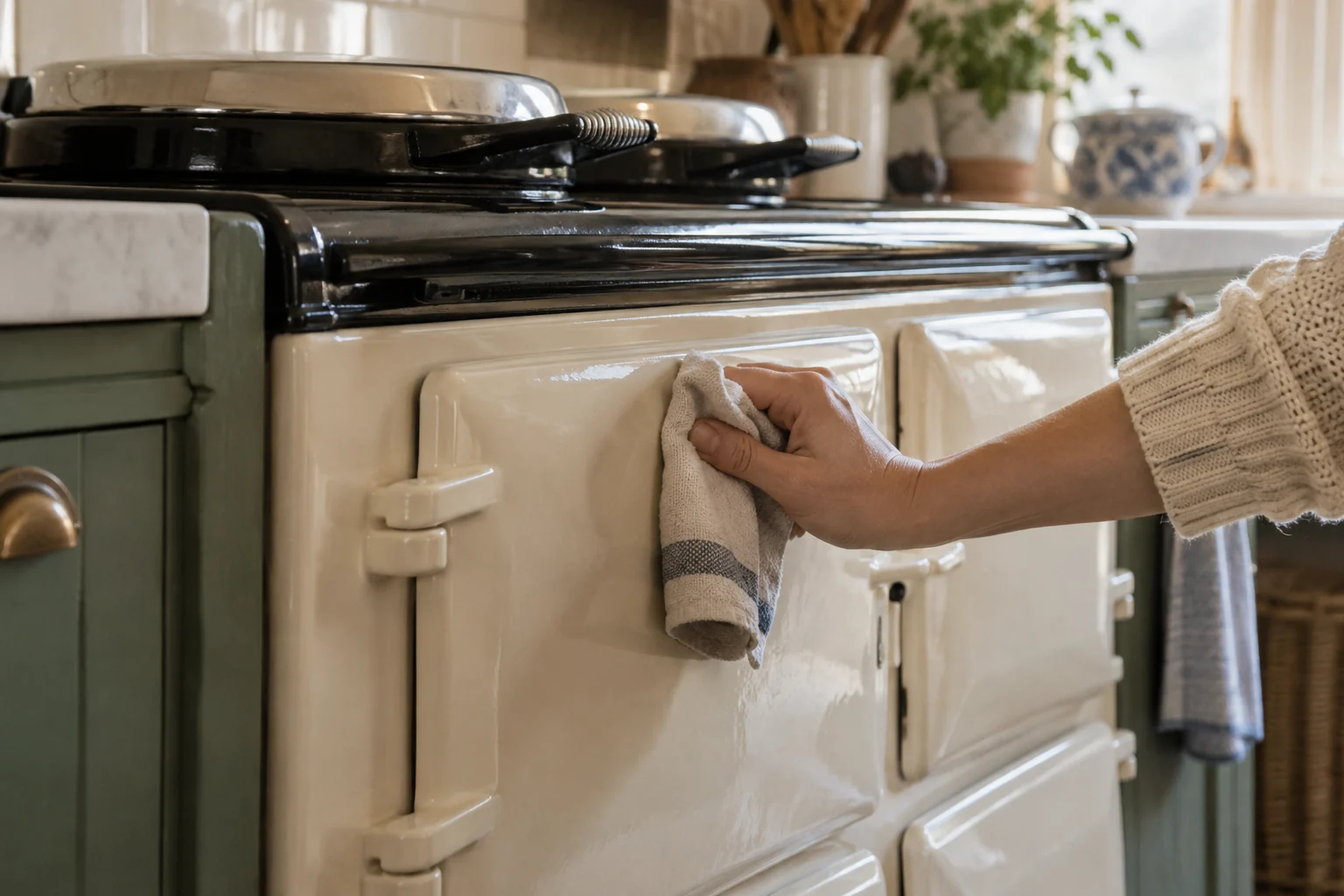
Once a surface is at a safe temperature according to the manual, lift loose crumbs with a soft cloth. Wipe accessible enamel with a lightly damp soft cloth if permitted, then dry it. Deal with a visible drip before it can be heated through several more meals. Keep moisture controlled around seams, controls and electrical fittings. A cloth should be damp, not dripping, and cleaner should not be sprayed into a gap.
Separate cloths for separate jobs help. A cloth used on a greasy oven door can leave streaks on the polished front. A gritty cloth from a hotplate edge can scratch enamel. Rinse or change it as soon as it feels loaded with residue. Do not mix cleaning products, and check both the product label and cooker instructions before using anything stronger than mild detergent.
Care for the front and doors
Fingerprints and light grease on the front are usually easier to remove than baked-on oven residue. Use the model-approved method for its finish. Wipe handles and door edges carefully without forcing liquid into hinge points. The door seal or gasket may require a different technique from the enamel around it; do not pull it out or scrub it with a stiff brush. A seal that is loose, split or compressed needs proper replacement advice.
Open each door only when safe, and support it as designed. Do not lean on an open door while reaching into a cavity. Check the accessible inner face for crumbs and wipe it gently once cool enough. If food is trapped inside a door assembly, do not prise trim apart without manufacturer instructions. It is better to describe the problem during a specialist visit.
Keep lids and hotplate areas tidy
Lids and hotplates may remain hot well after cooking, and some cookers are designed to stay warm continuously. Never judge temperature by appearance. Follow the maker’s guidance on when and how to wipe each surface. Remove loose crumbs from safe, accessible edges using a suitable soft tool; do not sweep them into a hinge or vent. Avoid leaving a wet cloth or bottle on a warm lid.
A burnt mark on cast iron or a lid lining is not necessarily treated like grease on enamel. Check the relevant section of the manual. Do not pour cold water onto a hot plate, use a metal blade or apply a strong chemical without explicit approval. These shortcuts risk damage and may create fumes. If the stain does not respond to the permitted routine, leave it for specialist advice rather than increasing force.
Watch the cooking accessories
Trays, shelves and other removable parts should be cleaned according to their own material. Let them cool, lift food residue and wash with a soft cloth. Some coatings do not tolerate abrasive pads or a long soak. Dry accessories completely before returning them. A greasy tray placed in a clean oven can cause the next smell or smoke, so accessory care is part of keeping the cooker pleasant to use.
Keep accessories in their intended positions. A shelf or plate from one cavity may not be interchangeable with another. If you remove several pieces at once, group them by compartment. Do not put a part back simply because it seems to fit; refer to the model instructions.
Know the boundary of home cleaning
Routine wiping should not involve removing fixed panels, servicing burners, adjusting controls or working behind a hotplate. If you notice unusual heat, smoke, a gas smell, an electrical smell or a door fault, stop using the relevant part of the appliance and seek suitable help. Cleaning cannot diagnose a combustion or wiring problem. For ordinary accessible build-up, a professional AGA cleaning service may be appropriate. Explain the model, finish and problem areas when enquiring.
Before the visit, make a note of stubborn marks and any product you have already used. This avoids repeating a treatment that was unsuitable and helps the cleaner decide which areas are within scope. If a surface is chipped or a fitting loose, mention that too. A specialist can often clean around a damaged area, but cleaning should not be described as a repair.
A practical rhythm between visits
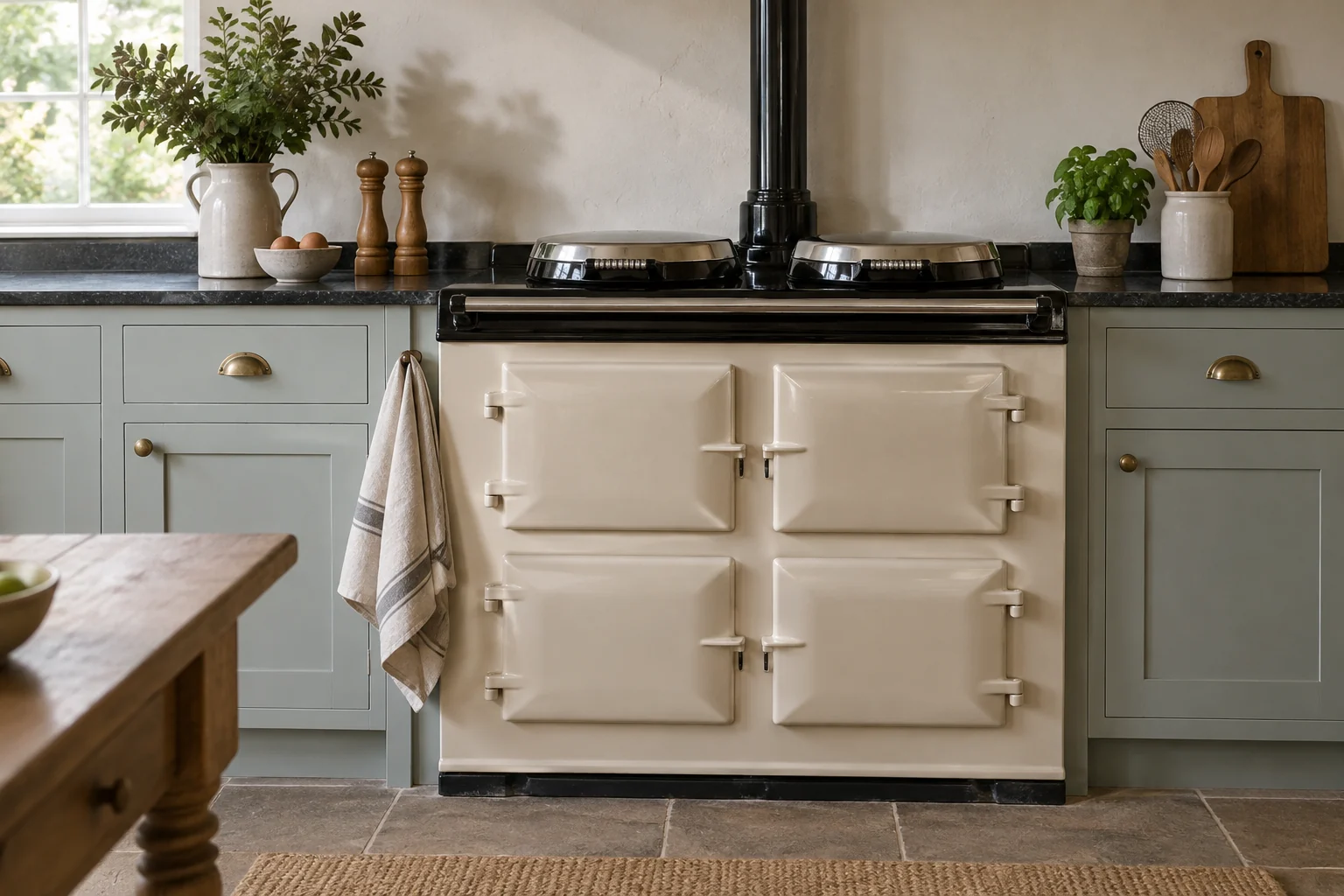
After each cooking day, notice fresh splashes and lift them when the relevant area reaches the safe state specified by the manual. Each week, check handles, front enamel, accessible door edges and removable accessories. Keep the work brief and gentle; there is no benefit in scrubbing a difficult stain until a finish is damaged. A periodic deeper clean can then focus on built-up areas rather than every ordinary fingerprint.
If the cooker runs continuously, plan cleaning around the safe windows described by its maker rather than assuming that an unused hotplate is cool. Keep a dedicated soft cloth and the approved care information close at hand, but store both away from hot surfaces. Let visiting family members know which areas stay warm. This habit prevents a well-meant quick wipe from turning into a burn or a damaged finish when someone unfamiliar with the appliance helps in the kitchen.
The useful standard is a cooker that is safe to use, with no loose food residue on accessible surfaces and no cleaner left behind. A small amount of harmless discolouration may remain on a hard-working surface. Follow the model’s instructions, respect its heat and finish, and leave dismantling or faults to the people equipped for them.