
An AGA hotplate and its lid are used constantly in many kitchens, so crumbs and splashes appear quickly. Cleaning them safely starts with the model’s instructions and the surface temperature. Some cookers remain hot even when a particular plate has not been used for a while. Never decide that a lid or plate is cool merely because it looks clean or has been closed. Follow the manufacturer’s guidance on when and how each area can be wiped.
The plate, enamel around it, lid lining and hinge area are different materials. A product suited to enamel may be wrong for cast iron or the underside of a lid. Keep the work small and controlled: remove loose debris from accessible places, use the permitted cloth or tool, and dry only where the instructions call for it. Do not dismantle the lid to reach a hidden stain.
Check the exact model first
Find the model identification and read the care section for hotplates and lids. An electric model may have different cooling behaviour from another fuel or control arrangement. Some instructions describe a particular plate-cleaning tool or a safe timing for wiping. Use only what the maker recommends. A generic household tip can be misleading when applied to a continuously warm cooker.
Inspect the lid and hotplate without touching them until you know they are at a safe temperature. Look for a loose hinge, a damaged lid lining, chipped enamel or a plate that does not sit as expected. These are service issues, not dirt to scrub away. If a lid does not stay open securely, do not work beneath it.
Prepare the surrounding area
Clear pans, paper and cloths from the cooker top. Keep a heat-safe place for any tool and protect nearby worktops. Wear suitable protection if the manual requires it, and keep children and pets away during cleaning. Do not rest a damp cloth on a warm lid or leave a bottle beside a hotplate. Use a small amount of approved cleaner on a cloth rather than pouring liquid onto the cooker.
Separate the tools used on the cast-iron plate from those used on glossy enamel. Grit picked up at the plate edge can scratch enamel, while a greasy enamel cloth can leave film on the plate. Having two clean cloths makes a careful job easier. Never mix cleaning products, and follow label ventilation advice.
Lift loose crumbs and fresh splashes
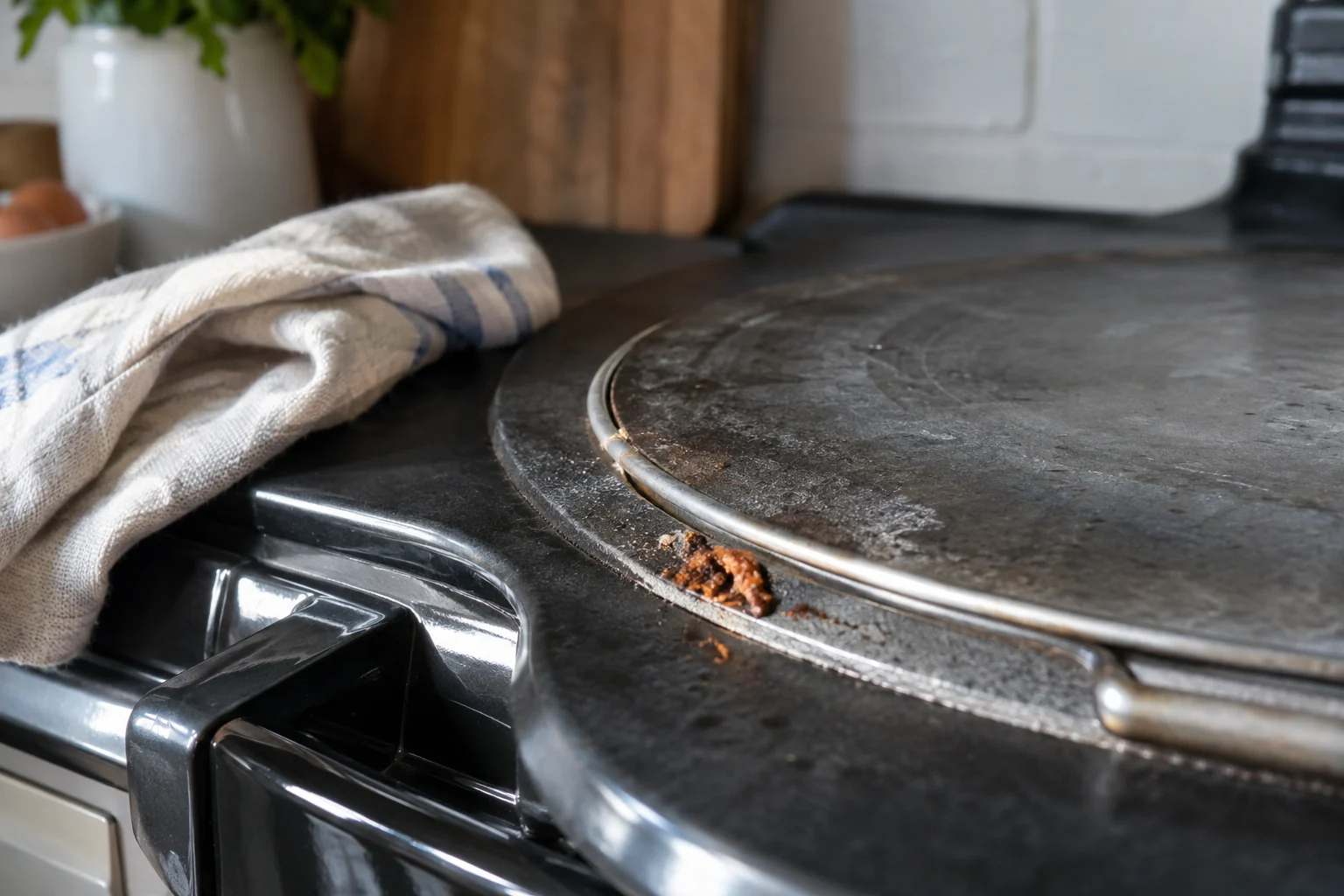
Once the relevant part reaches the safe state specified by the manufacturer, lift crumbs from the accessible rim. Do not brush them into the plate gap, hinge or vent. A fresh splash on enamel may wipe away with a soft cloth before it hardens, but use the finish-specific method. Keep moisture controlled and dry the area if instructed. Do not flood the plate edge to chase one spot of sauce.
If food has burnt onto the plate, identify whether it is a raised deposit or a surface colour change. The approved method may call for a particular scraper or brush on that plate, but do not substitute a sharp household knife. Use only the model-specific tool and motion described in the manual. If you do not have the correct tool or cannot confirm the procedure, leave the deposit for specialist advice.
Care for the lid and its underside
Wait for the lid to be safe to handle according to the cooker guidance. Wipe its outer enamel with a soft cloth and a compatible product, avoiding excessive water around the hinge. The underside may have a different lining and a separate care method. Do not scrub it with the same abrasive tool used on a cast-iron plate. If the lining is torn, loose or heavily stained in an inaccessible area, seek advice rather than peeling it back.
Open and close the lid gently after cleaning. It should move smoothly and rest as designed. Do not force a hinge to reach a greasy corner. A lid that drops unexpectedly or does not sit correctly should be assessed. Cleaning should never involve supporting a heavy lid with one hand while scraping beneath it with the other.
What to avoid around heat
Do not pour cold water onto a hotplate or hot enamel. Sudden temperature change and steam can be hazardous. Do not use aerosol cleaner near a hot surface unless the product and appliance instructions explicitly permit it. Avoid leaving cleaning residues that may smell or smoke when the cooker heats. Do not cover a plate or vent with a cloth to soak a stain, and do not place a wet pan on a just-cleaned plate without checking the maker’s advice.
If you smell gas, notice sparking or see an unusual control fault, stop cleaning and follow appropriate safety guidance. A surface clean cannot correct a fuel or electrical issue. Note the model and the symptom for a qualified service provider. Do not run the cooker again simply to see whether the problem repeats.
Finish with a careful check
After permitted cleaning, remove all product residue from surfaces that require rinsing and dry areas as specified. Look for trapped cloth fibres around the lid hinge or plate rim. Ensure no cleaning tool or loose paper remains on the cooker before it is used again. Check that lids close fully and no handle feels loose. A minor discolouration that does not lift by the approved method can remain until a specialist assesses it; avoid increasing force for appearance alone.
Think about where a spill came from if the same mark returns. A pan that boils over repeatedly may be too small for the contents or placed at a setting that is too high for the stage of cooking. Adjusting the cooking routine within the manufacturer’s guidance can prevent more residue than any stronger cleaner. Lift pans carefully to avoid dragging gritty bases across the plate, and keep the bottoms of cookware clean as well as the cooker top.
When a professional visit helps
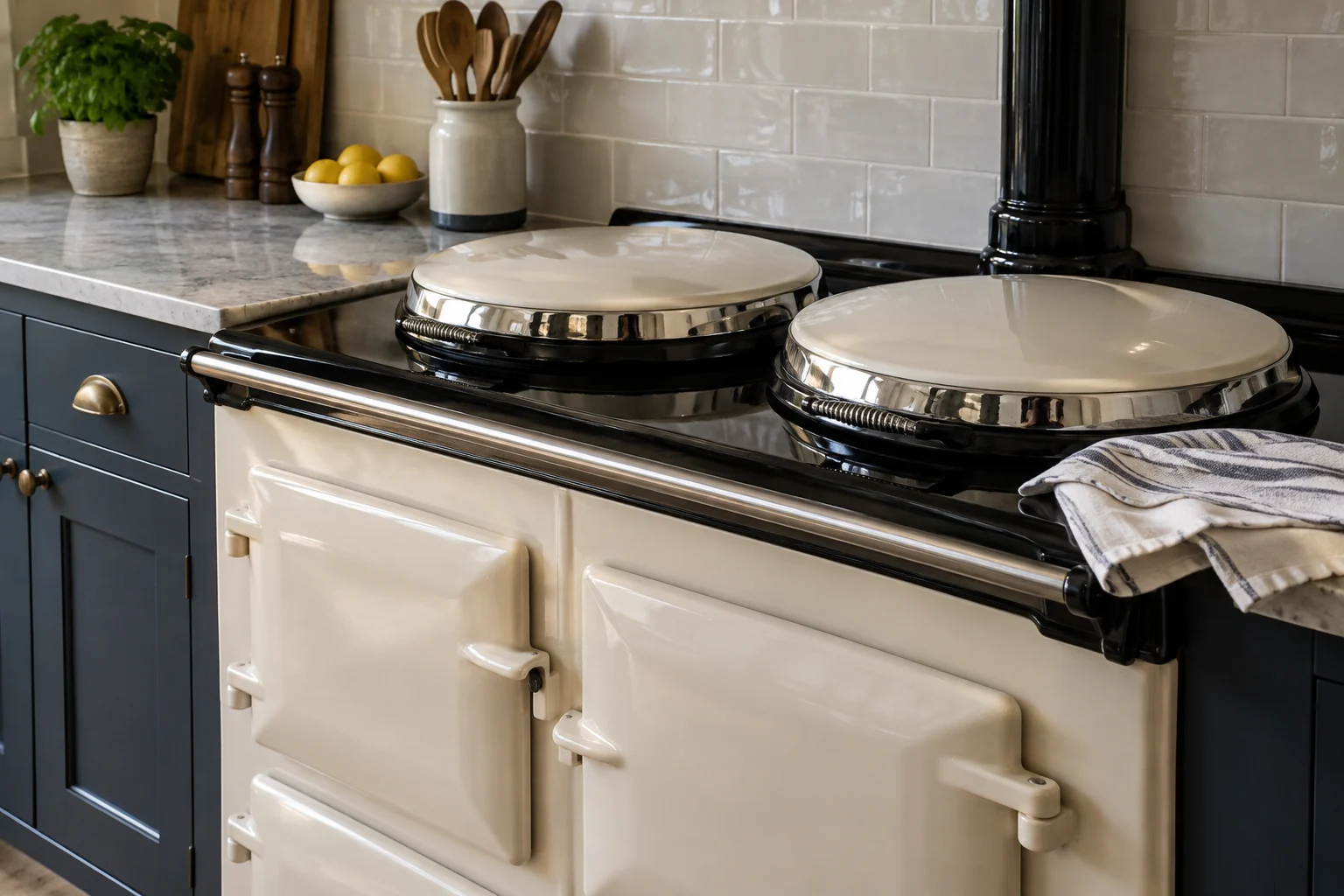
If food is baked onto several areas or the lid lining needs specialist attention, ask about the site’s AGA cleaning service. Describe the exact model, the plate and lid finishes, and the areas you could not clean safely. A cleaner can advise on accessible build-up, while a damaged hinge or operating fault needs repair expertise. Make the distinction clear when enquiring so the right work is planned.
Before that visit, list any cleaner or tool you have already tried. A useful description says whether the mark is raised or flat, whether it sits on enamel or cast iron and whether the lid mechanism feels normal. This helps avoid repeating an unsuitable method and gives the specialist a better view of the job before they arrive. If the cooker is under a service agreement or warranty, check those terms before anyone removes a fixed part.
Between visits, a brief check after cooking is usually more useful than occasional hard scrubbing. Lift crumbs and fresh splashes at the safe time stated in the manual, keep the plate rim clear and use separate soft cloths for enamel and other finishes. Respecting heat, material and the lid mechanism keeps the cooker tidy without risking damage for a cosmetic result.