
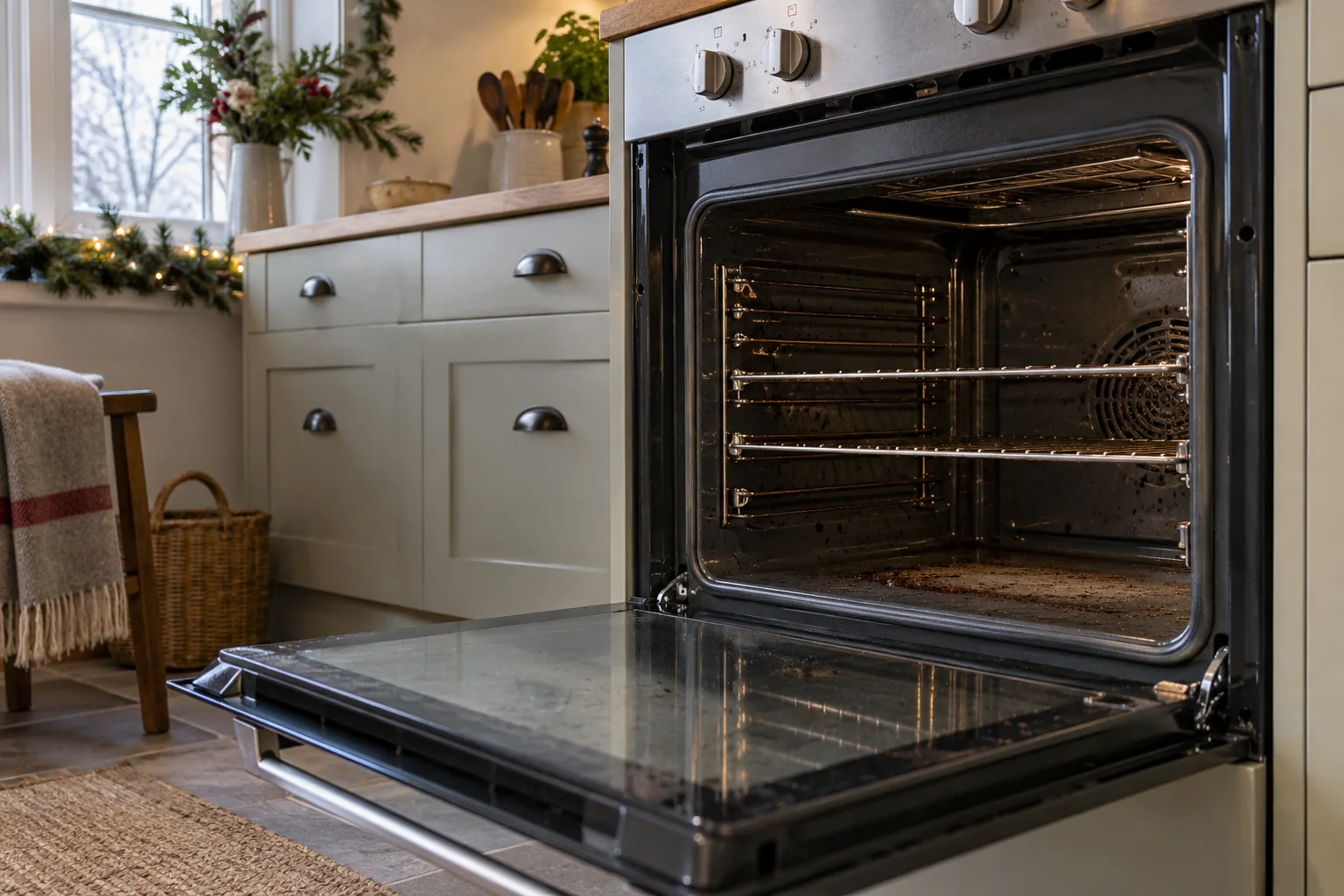
Prepare the oven for Christmas cooking several days before the meal, not on the morning when every shelf and worktop is already in use. Check for old grease, loose crumbs, smoke or odours; clean accessible surfaces by the appliance manual; make sure the shelves and roasting tins fit the dishes you plan to use; and allow the oven to dry and return to normal operation before the busy day. If there is a fault, give yourself time to arrange repair rather than treating a cleaning cycle as a fix.
The point of an early check is practical. A large roast, vegetables, pudding and reheated dishes can make the oven work harder and longer than on an ordinary weekday. Old splashes may smoke when exposed to prolonged heat, while an overlooked missing shelf can disrupt the cooking plan. A calm inspection lets you deal with those problems without turning Christmas Eve into a rushed deep clean.
Begin with a cold-oven inspection
Open the oven once it has cooled completely. Look at the floor, side walls, door glass and lower corners. Lift out large loose pieces of food before they are reheated. Check that a door seal is seated and intact, that shelves slide in normally and that no tray is wedged against a fan cover or element. A stained but sound surface is different from a cracked glass panel or a damaged seal; the latter needs appliance advice.
Think back to the last few meals. Did the oven smoke, smell strongly or make a new noise? Could a spill from a bubbling dish explain it? Cleaning visible residue may help with a straightforward spill, but persistent smoke or abnormal behaviour can have another cause. Do not wait until guests arrive to discover that a fan or heating element is unreliable. Follow the manufacturer’s troubleshooting guide and arrange appropriate repair if the appliance appears faulty.
Check the manual before using a steam, catalytic or pyrolytic cleaning feature. These programmes have different preparation rules, including which accessories to remove. A high-temperature cycle may be unsuitable when there is a large spill or a damaged seal. Using the feature early gives the oven time to cool fully, be wiped as required and air before food preparation begins.
Clean what will matter during a long cook
The most useful targets are loose debris, grease on the floor and walls, and the inner door glass. Lift crumbs first, then clean accessible enamel with a soft cloth and a product approved for the model. Allow the product only its stated contact time, rinse as directed and dry. Keep cleaner away from elements, fan openings, controls and special liners where the manual prohibits it. Stronger scrubbing is not a substitute for the right method.
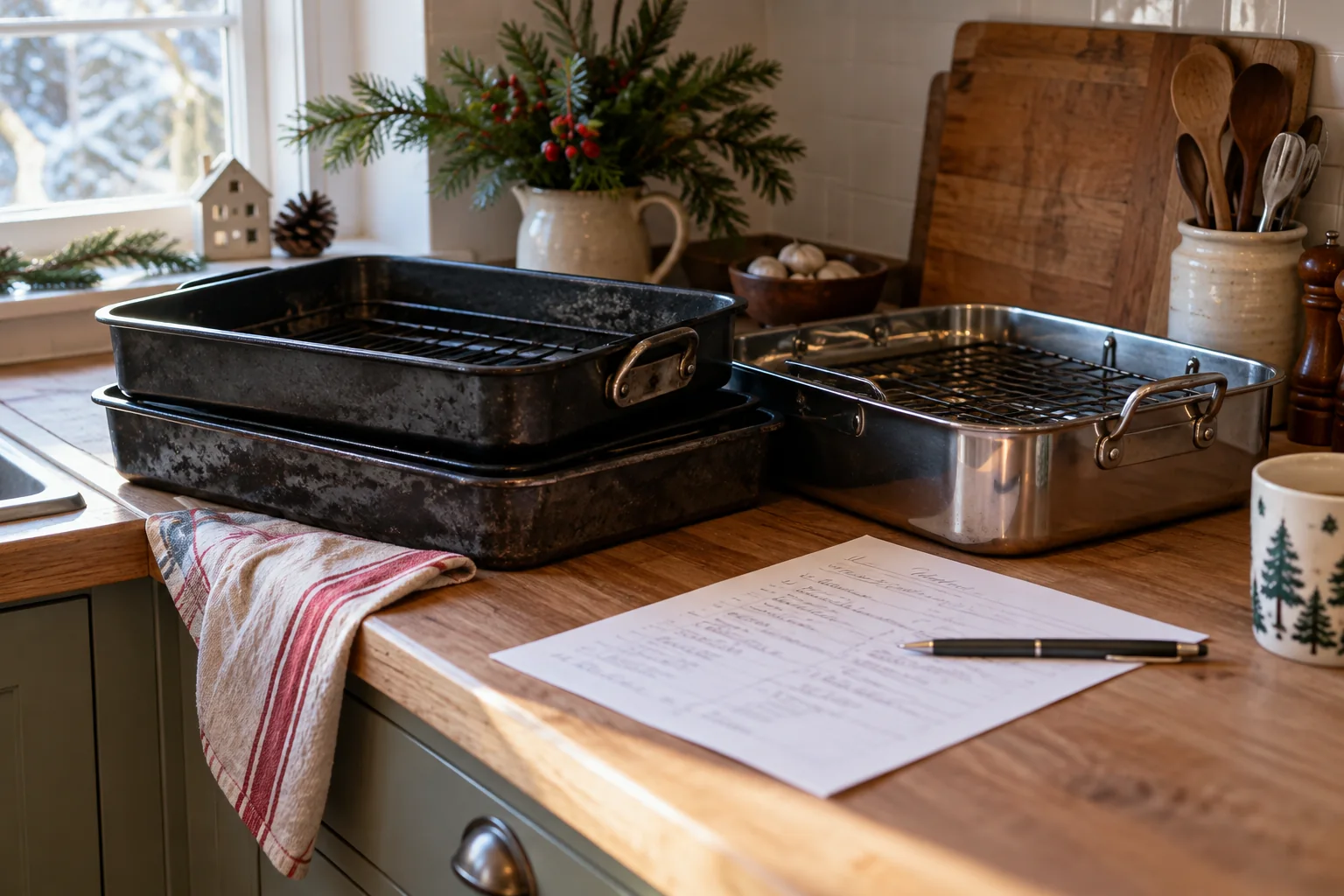
Roasting tins and shelves need attention too. Old grease on a rack can drip when heated; a sticky tray can affect how comfortably you handle it. Wash removable pieces according to their finish, then dry thoroughly before returning them. Telescopic runners may have separate care rules and should not be soaked just because the plain metal shelf can be. Check that each shelf moves smoothly and sits level.
If the oven has heavy carbonised deposits, decide early whether a professional clean is worthwhile. Oven cleaning may be a practical option when a quick home wipe will not address the cavity. Confirm availability and scope well before the holiday. A cleaning appointment cannot repair a fault, and no particular booking outcome should be assumed at short notice.
Make a shelf and dish plan
List the dishes that genuinely need oven space and note their cooking temperatures and approximate timings. You do not need an elaborate chart, but it helps to know which tin fits which shelf and whether the door closes freely around a large roasting pan. Measure the usable shelf width if a new dish is being used. A tin that nearly fits on the worktop may not pass the oven door or allow air to circulate once inside.
Check that shelves are placed at the heights suggested by the recipes and appliance manual. Leave enough room around dishes for heat to circulate. Avoid resting foil or trays directly on the oven floor unless the manufacturer allows it; a liner in the wrong place can alter heat distribution or damage the finish. Do not block fan openings. A packed oven may cook differently from an empty one, so allow for checking food rather than relying only on a timer.
If several dishes require different temperatures, plan which can be cooked earlier and safely reheated according to its food-safety guidance. This is a cooking decision, not an oven-cleaning issue, but it reduces last-minute door opening and spills. Keep oven gloves and a clear landing space ready for hot trays. A clean cooker is less useful if there is nowhere safe to set a heavy roasting tin.
Prevent a mess during the main meal
Use roasting tins deep enough to contain juices and choose dishes that do not overflow as sauces bubble. Wipe accidental splashes from accessible surfaces only after the oven has cooled; do not reach into a hot cavity to preserve its clean appearance. If a spill begins smoking during cooking, follow the appliance and food-safety guidance for stopping and dealing with it rather than pouring water onto a hot oven floor.
Keep the extractor hood and surrounding hob in working order. A greasy metal hood filter or sticky control panel will not be cleaned by the oven’s own cycle. Wipe accessible kitchen surfaces with methods suited to each material. The site’s kitchen cleaning service is separate from oven cleaning if a wider preparation is needed; confirm what is included before booking.
After the meal, let the oven cool and lift out fresh loose food before it hardens through another heating cycle. This quick follow-up is easier than a major clean next month. A little grease after a large meal is ordinary; a pool of fat or a repeatedly smoking patch deserves attention before the next use.
Leave time for a final check
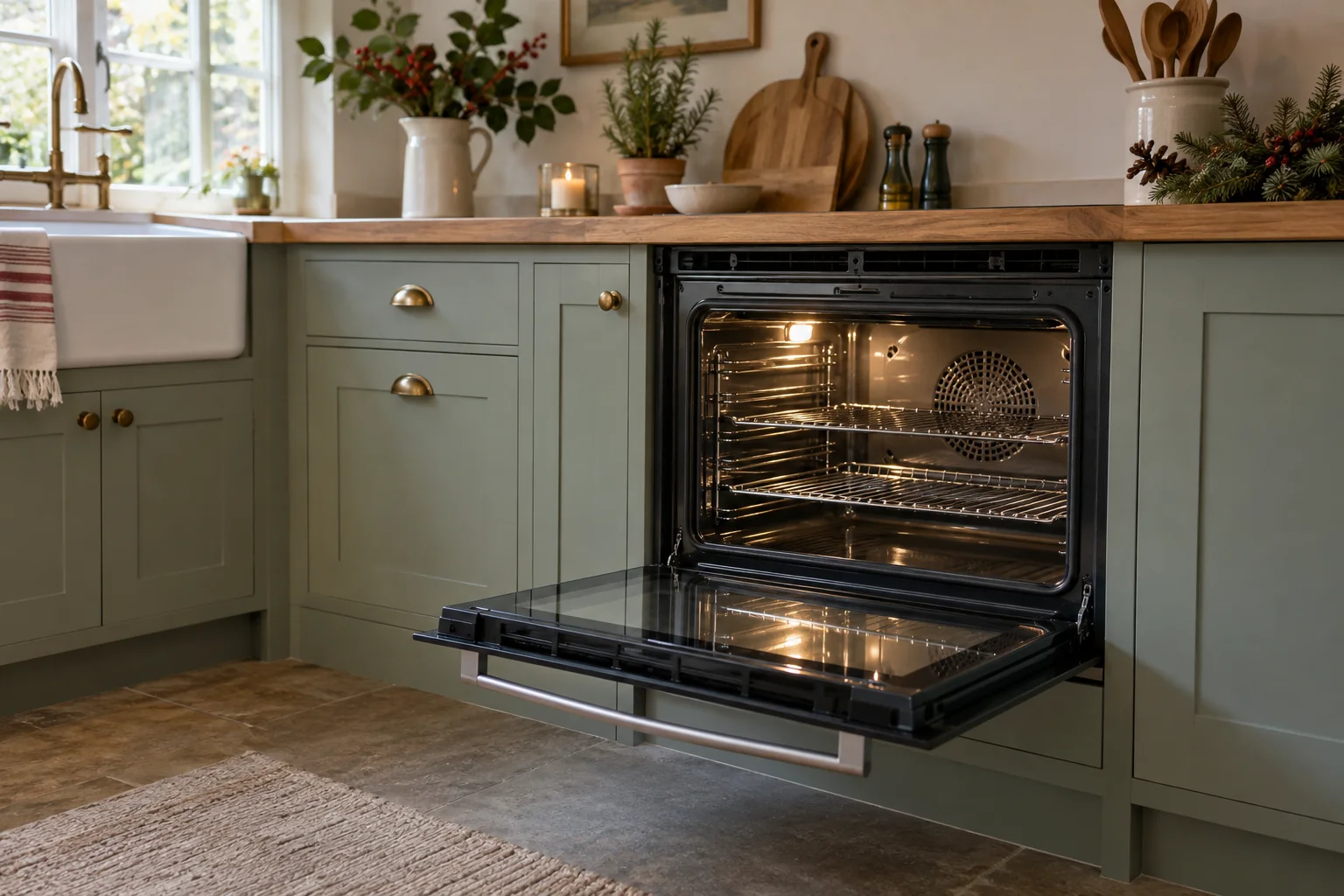
A day or two before the meal, make sure all cleaning product residue has been removed, accessories are dry and fitted, and the oven operates normally according to its manual. If the oven was cleaned using a product with specific airing instructions, follow them. Check for an unexpected smell without assuming that turning the temperature up will burn off any remaining cleaner safely. Stop and re-clean or seek advice if something seems wrong.
The useful outcome is an oven that is clean enough to cook without old debris smoking, with sound shelves and enough space for the menu. Preparing early gives you options if a deposit proves stubborn or a fault appears. On Christmas Day, the oven should be a familiar tool in the plan, not another task demanding a deep clean.