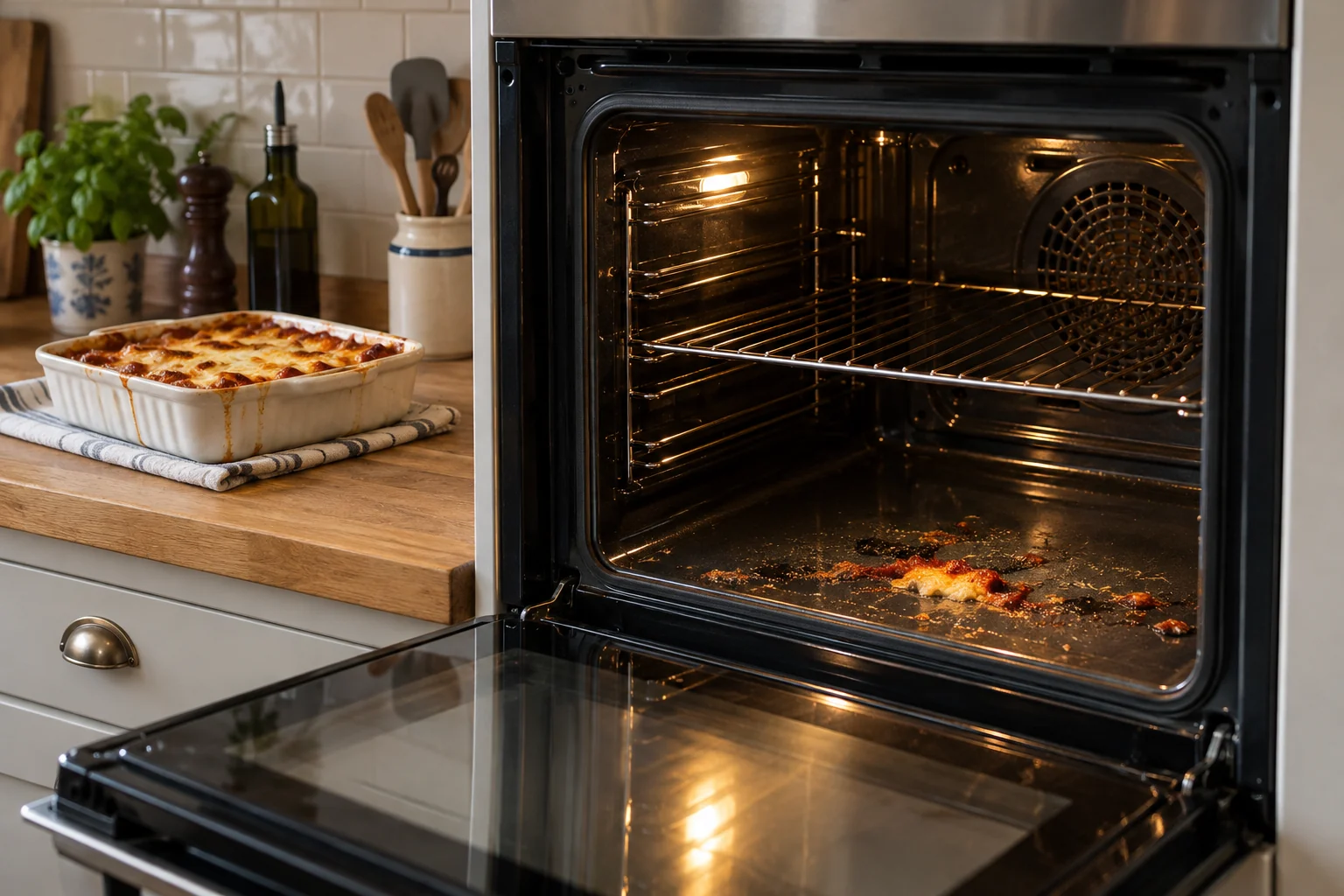
Cheese, tomato sauce and sweet glazes can make an awkward oven spill. Melted cheese may harden as it cools, sauce can bubble across the floor and sugar can leave a stubborn dark patch after another heating. The safest plan is to stop the spill being reheated, let the appliance cool completely and identify the surface before cleaning. Work only on reachable areas that the manufacturer says you may clean.
Do not reach into a hot cavity to pick up food. A bubbling dish, glass door and shelf can all retain heat. If the spill creates heavy smoke or a fault appears, switch the oven off and follow the appliance guidance. A damaged element, unusual electrical smell or unsafe door is a repair matter rather than an invitation to use a stronger product.
Make the area safe after cooking
Finish cooking only if it is safe to do so, then switch the oven off and allow it to cool fully. Keep people away from the open door and any hot tray. A casserole containing cheese or sauce can remain hot for longer than the oven air. When everything is cool, move the dish to a protected worktop and check how far the spill travelled.
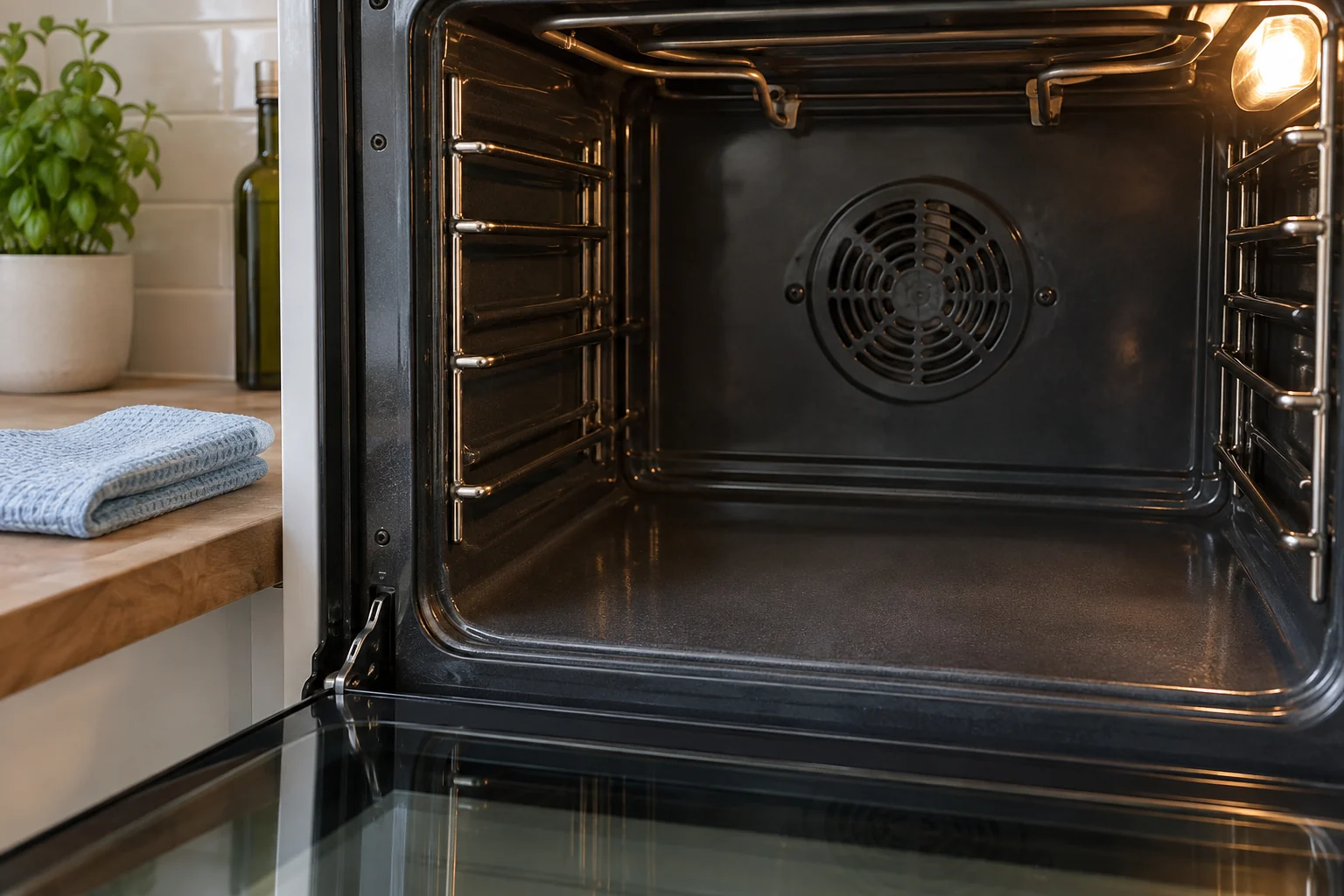
Look at the oven floor, lower rack, door glass and nearby side walls in good light. Note whether the residue sits on smooth enamel, a removable tray, a textured liner or beside a heating element. Do not assume a dark surface is ordinary enamel; check the manual for the exact model. A self-cleaning panel or catalytic liner may need a very different method from a smooth floor.
If sauce ran into a vent, fan guard or fixed seam, do not poke a cloth or blade inside. Note the location and seek model-specific advice. Cleaning a visible edge without pushing residue deeper may be the safest useful action.
Lift loose solids before wet wiping
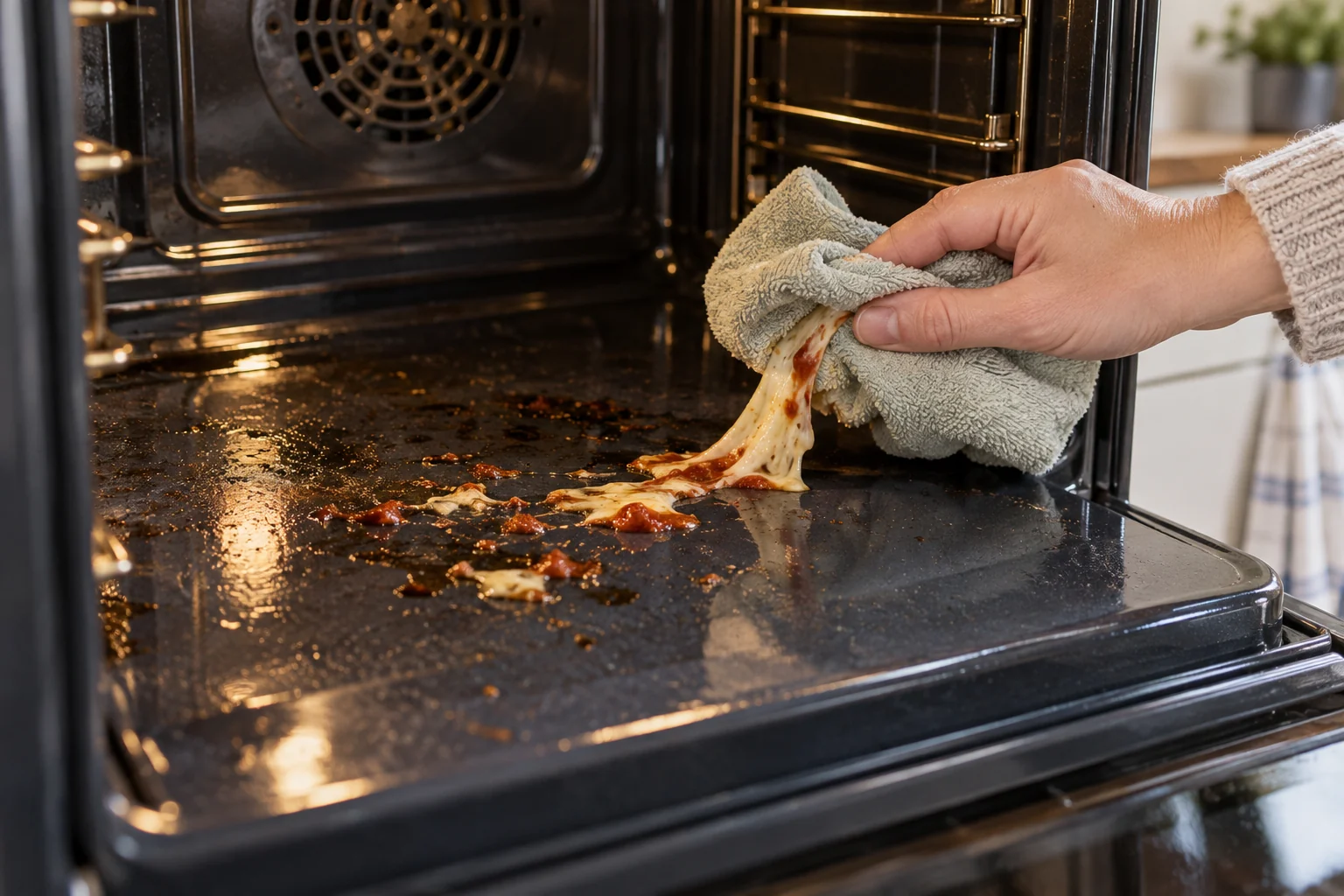
Start with the raised, loose material after cooling. Use a soft cloth or a suitable non-scratching utensil on a surface that permits it. Work from the outside of the spill towards its centre so crumbs are not spread across the cavity. Pick up pieces rather than sweeping them into an element gap. A dry first pass also stops food fragments becoming a gritty paste when water is added.
If melted cheese is attached to a removable tray, clean the tray separately according to its coating. A plain metal tin may allow a gentle soak; non-stick and enamelled accessories can have different limits. Do not scrape with a kitchen knife or metal scourer just because the food has set. Rinse and dry the tray before it returns to the oven.
For a patch on smooth oven enamel, remove only material that lifts with gentle pressure. If the finish chips or feels rough, stop. A damaged coating is not fixed by cleaning, and additional scraping can enlarge the problem.
Soften what remains on permitted surfaces
On a cool, owner-cleanable smooth area, hold a lightly damp soft cloth against a stubborn spot for a short time. Then wipe gently and repeat as needed. A small amount of mild washing-up liquid may help with fat if the manufacturer permits it. Keep the cloth damp rather than dripping, particularly near a lower element, seam or vent. Do not pour water onto the oven floor or spray product at an element.
Cheese and sauce can leave different marks in one spill. Grease may smear and need a fresh cloth; sugary residue may feel sticky or hard. Use several clean cloth sections instead of dragging grease over the whole cavity. After using an approved detergent, wipe again with a fresh cloth dampened with plain water and dry the area. Never mix chemicals or improvise a strong paste on an unknown finish.
A brown patch that is smooth after the raised food has gone may be heat discolouration. Scrubbing harder risks scratches without restoring the original colour. Stop if the permitted method no longer makes progress, and seek advice if appearance or food safety is a concern.
Protect elements and special liners
Some ovens show a lower heating element; others hide it under a floor panel. Keep cloths and liquid away from visible electrical parts. Do not lift a fixed panel, bend an element or push a tool beneath it to chase sauce. A small inaccessible deposit should be discussed with the manufacturer or a suitable specialist. If the oven smokes on a later use, turn it off and investigate after cooling rather than repeatedly heating it.
A rough catalytic liner should not be treated like smooth enamel. Strong cleaner, abrasive pads or a layer of paste can damage its intended function. The manual may specify a particular care cycle for that exact panel, but do not use high heat simply to burn off an unknown sauce. Sugar, melted plastic or a thick loose deposit calls for specific advice before any heating cycle.
Door seals and multi-pane glass have their own limits too. Wipe reachable cool glass gently and keep liquid away from gaps. Do not pull out a seal or prise the door apart to reach a drip unless the maker provides an owner procedure.
Check the rack, door and surrounding cavity
A spill rarely lands in one place. Look at the underside of the rack above the floor and at the front lip of the cavity. A bit of cheese stuck under a shelf can smoke at the next use even if the floor is clean. Wash removable parts according to their material instructions, rinse and dry. Check the inner door glass for a splash and wipe it with a soft cloth when cool.
Use clean water for the final rinse of treated smooth surfaces. Greasy rinse water can leave a film that smells during the next cook. Let everything dry and refit shelves at their original height and orientation. Confirm no cloth, loose food or cleaner remains inside. A shelf with a stop should slide and rest as designed, without being forced.
If heavy accessible residue remains, a professional oven cleaning service may be useful. Describe the spill, surface type and any area close to an element when enquiring. Cleaning cannot repair a damaged coating, failed element or door that no longer closes correctly.
Avoid another overflow
For the next casserole, choose a dish with space above the food so bubbling sauce stays contained. Place it at the shelf height recommended for the recipe and appliance. A suitable tray beneath it may catch drips if the manufacturer permits that arrangement and airflow remains clear. Do not put foil directly on the oven floor unless the manual expressly allows it.
If a dish repeatedly boils over, reduce the fill level or divide it between two dishes. Check it through the glass instead of opening the door repeatedly, and wipe any fresh accessible splash after full cooling. These habits make the next clean a brief, gentle job instead of a long attempt to remove a repeatedly baked-on patch.