
There is no single calendar interval that suits every oven. A practical starting point is to wipe fresh spills once the appliance is cool, give the accessible interior and door a closer look every few weeks, and arrange a fuller clean when grease, burnt food or persistent odours begin to build up. A busy household that roasts several times a week will usually need more attention than an oven used mainly for occasional baking. The condition of the appliance matters more than a date in a diary.
Regular care is also easier than a long session with hardened deposits. It does not mean scrubbing the cavity after every meal. The aim is to prevent a small spill from being reheated over and over, while respecting the finish, seals and heating components of your particular model. Start with the manufacturer’s instructions, especially if the oven has catalytic liners, a pyrolytic cycle or a steam cleaning function.
Let the way you cook set the rhythm
Think about what goes into the oven in a normal fortnight. Roasting meat or vegetables at high heat can leave fat droplets on the door and walls. Pies and casseroles sometimes bubble over. Bread and cakes may leave only a few crumbs. The oven used for the first two jobs will need more frequent checks even if both households switch their ovens on equally often.
Frequency also depends on how quickly you deal with a mess. A splash wiped away after the oven has cooled is usually less demanding than the same splash after several more cooking sessions. If the door glass is becoming opaque or a previously clean tray leaves a burnt smell, bring the next clean forward. You need not wait for a scheduled deep clean to fix an obvious patch.
For a household that uses the oven most days, a brief weekly check is sensible. Look at the floor of the cavity, the inner door and the shelves. If they are largely clean, there may be little to do. If you cook less often, the same check can happen after a run of messy meals rather than every week. The point is to notice changes early, not to meet an arbitrary quota.
What to do after an ordinary cooking session
Allow the oven to cool fully before touching the interior. Once it is safe, remove loose crumbs with a soft cloth or brush suitable for the surface. Wipe a fresh splash with a damp, non-abrasive cloth if the manual permits it. Dry the area so moisture does not sit around joins or trim. Do not pour water into the cavity or spray cleaner towards controls, vents, fans or electrical parts.
If a spill has reached a heating element or a gas burner area, stop and consult the appliance instructions before trying to remove it. Those parts may require a different procedure or a technician. The same caution applies if a strong electrical smell, unusual noise or fault code appears. Cleaning is not a substitute for repair.
It helps to check the cookware too. A dish filled to the brim, an unstable tray or food positioned too close to the top of the cavity can create repeat spills. Fixing the cause may save more effort than changing cleaners. Use a suitable tray beneath a dish when the cooking instructions and oven design allow it; avoid covering the oven floor or blocking airflow unless the manufacturer explicitly permits that arrangement.
A light clean every few weeks
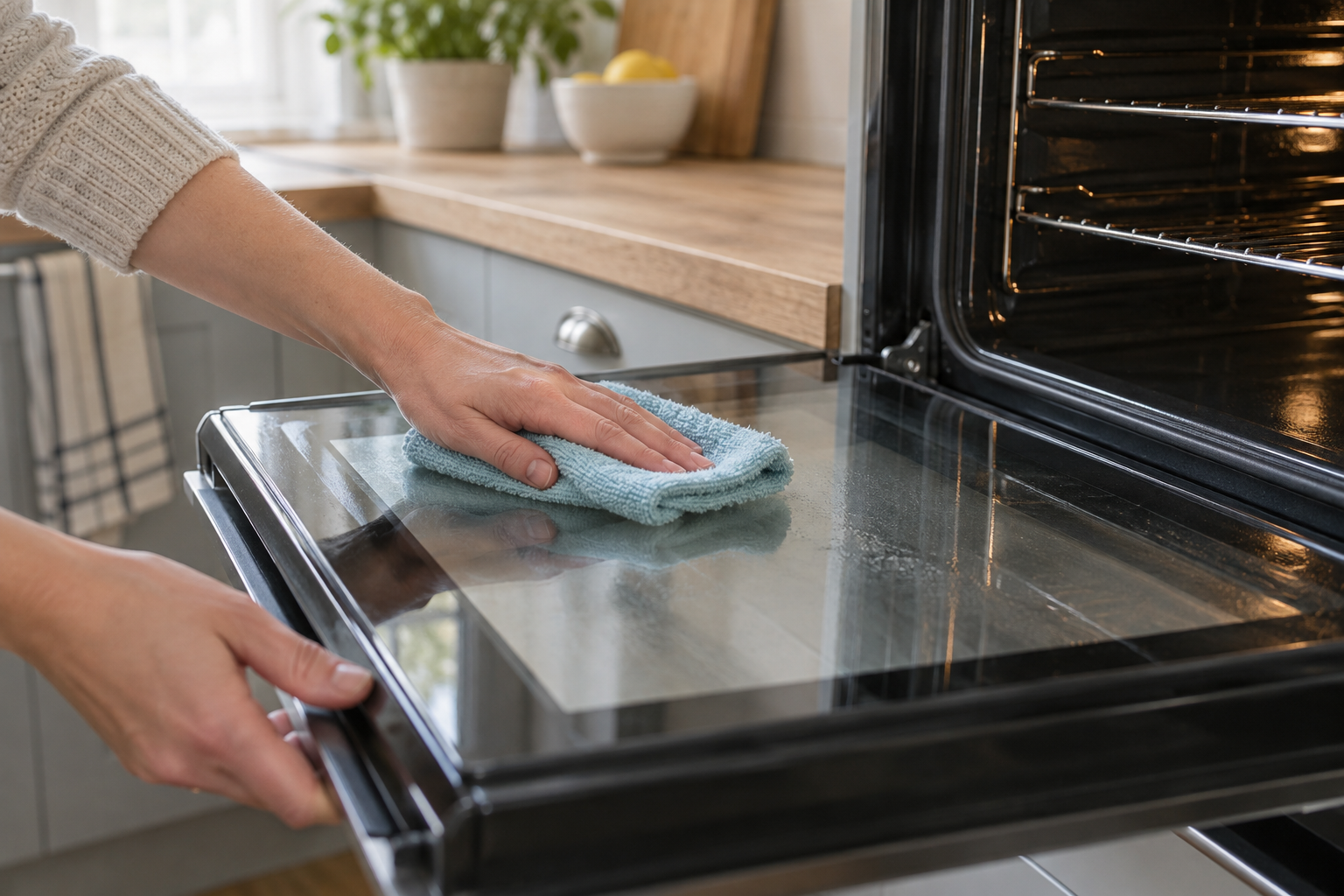
A light clean is a chance to address the parts you see and touch most often. With the oven off and cool, remove shelves if the manual explains how. Wipe the accessible walls and base using a method approved for the lining. Clean the inner door glass with a soft cloth and a compatible cleaner, keeping liquid away from the door edges. Check the seal gently, but do not pull it away from its channel or saturate it.
Shelves are easier to handle separately. Their finish may be chrome, enamel or another coating, so choose a method that suits the actual part. A warm-water soak can soften ordinary grease on some shelves, but telescopic runners and other moving fittings may not be suitable for immersion. If you are unsure, consult the manual before putting any assembly into water.
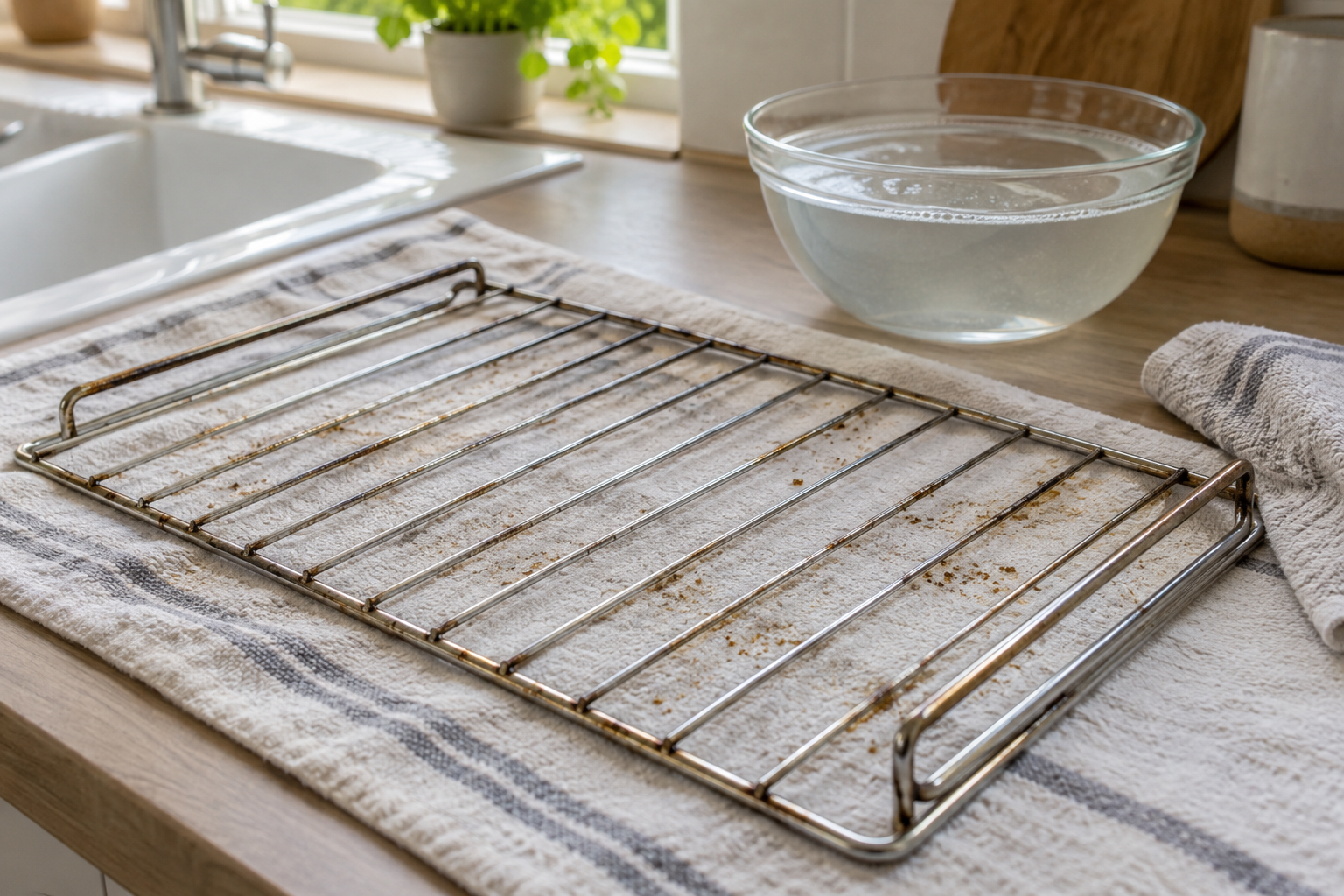
The light clean is also a useful moment to inspect rather than merely polish. A torn door seal, loose shelf support or door that no longer closes properly deserves attention. Do not force a component back into place. Note the model number and follow the maker’s guidance or ask for appropriate repair help.
When a deeper clean makes sense
Consider a deeper clean when patches remain after routine wiping, grease is visible in several parts of the cavity, shelves are heavily coated, or the glass is difficult to see through. Repeated smoke or a burnt odour after food residue has been removed also calls for investigation. A deep clean may remove deposits, but persistent smoke can have another cause and should not be dismissed as ordinary dirt.
Plan enough time to work methodically. Identify the oven’s liner and the removable parts before choosing a product. Read the cleaner’s label in full, including surface compatibility, protective equipment, ventilation and rinsing directions. Never combine cleaning chemicals or improvise a stronger mixture. Keep children and pets away from the work area and store products securely afterwards.
You may prefer to split the job across two sessions. For example, deal with shelves and trays first, then clean the cavity and door on another day. This avoids rushing through drying and reassembly. Keep track of which shelf came from which position if your oven has several cavities or special runners.
Built-in self-cleaning features change the procedure. A pyrolytic cycle uses high heat and normally requires particular preparation, while a steam-assisted setting is designed for lighter soil. Catalytic liners should not be treated like plain enamel. Follow the instructions for your exact model rather than assuming that a general oven-cleaning method applies everywhere.
Signs that your routine needs adjusting
You may need to clean sooner if an oven starts smoking during ordinary cooking, a greasy film returns quickly to the door, or food residue repeatedly burns on the base. Notice whether these signs appear after a particular kind of meal. If so, a small change in how you position or cover the dish, where permitted, could make a real difference.
On the other hand, a lightly used oven that remains clean does not benefit from unnecessary strong chemical treatments. Wiping occasional marks and inspecting the cavity may be enough for the time being. Use the least intensive compatible method that actually deals with the soil. More force, more cleaner and longer soaking are not automatically better.
Be wary of advice that treats every dark mark as removable grime. Some stains are baked into a coating, and a scratched or worn surface cannot be restored by repeated scrubbing. Knowing when to stop protects the appliance. If appearance is the only concern and the oven operates normally, weigh the likely gain against the risk of damaging the finish.
Choosing between doing it yourself and booking help
Routine wiping and modest grease removal are often manageable at home. A heavily soiled oven, difficult-to-remove shelves or a large range cooker can be a different proposition. If access is awkward, the finish is unfamiliar, or you cannot safely follow the product instructions, a professional clean may be worth considering. Ask what is included, which parts can be removed and how the appliance should be used afterwards.
Fanatic Oven Cleaners describes its oven cleaning service on the site. If the wider kitchen needs attention at the same time, its appliance cleaning service is another relevant page to review. Check the service details and discuss the appliance model before booking; do not assume every component can be dismantled or treated in the same way.
If the problem is a faulty door, uneven heating, persistent fan noise or a suspected electrical or gas issue, cleaning is not the right diagnosis. Stop using an appliance that appears unsafe and seek qualified advice. The site also has an oven repair page for service enquiries, though the appropriate response depends on the fault and appliance.
A routine that is easy to keep
For most households, the simplest plan is a quick look after messy meals, a light check every few weeks and a deeper clean when visible build-up justifies it. Put the emphasis on cooled, accessible surfaces and on preventing the next spill. Keep the manufacturer’s manual to hand so a convenient cleaning trick does not become an expensive mistake.
If you notice smoke, a fault or damage rather than ordinary residue, pause the cleaning plan and deal with that issue first. Otherwise, small and timely jobs should keep the oven pleasant to use without turning its care into a rigid timetable.