
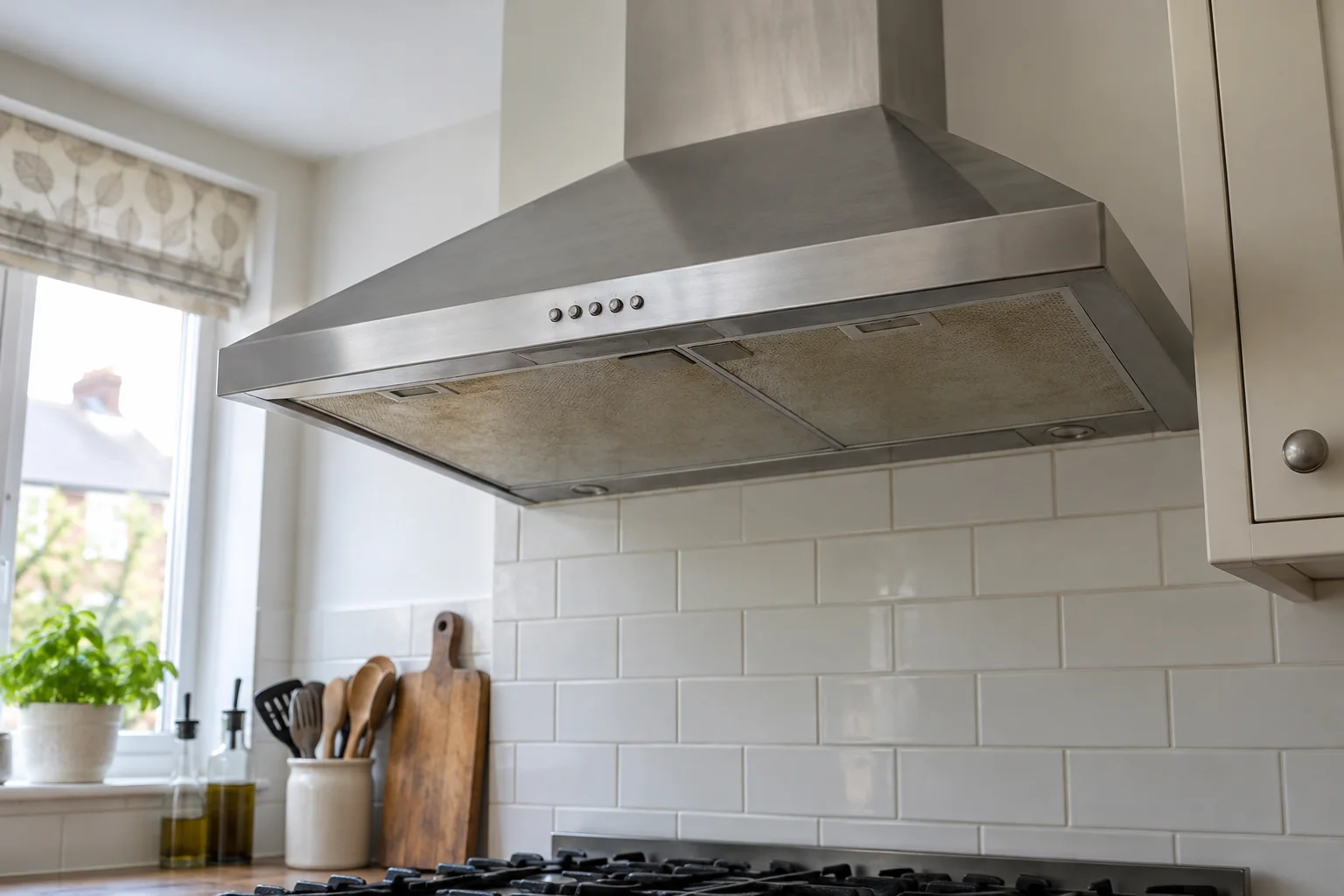
Extractor hood filters should be cleaned or replaced according to the hood’s own manual. A removable metal mesh grease filter can often be washed, then dried completely before refitting. A standard disposable charcoal filter used in a recirculating hood is usually replaced rather than washed, although some newer types have a specific regeneration procedure. Identify which filter you have before putting anything in water or a dishwasher.
This distinction saves wasted effort and protects the appliance. The visible metal panel beneath the hood catches airborne grease. A separate carbon filter, if fitted, deals with odours in a recirculating setup. Some hoods vent outdoors and do not use the same carbon filter at all. Their arrangement varies widely, so the first useful tool is the model number, not a universal cleaning recipe.
Identify the filter system
Switch the hood off and let nearby cooking surfaces cool. Check the user manual for the model, filter type and access method. A metal grease filter is commonly a framed mesh or baffle panel with a latch. A charcoal filter may sit behind it or near the fan housing. Do not assume every black pad is disposable or that every metal panel is dishwasher safe. The manual should identify the replacement part number and any cleaning instructions.
Before releasing a filter, support it with one hand. A greasy panel can slip, and a falling filter may damage the hob beneath it. If the hood is high, use a stable step stool rather than stretching over hot burners or climbing onto a worktop. Set the removed panel on a protected surface. Photograph its orientation if the frame has an airflow direction or several similar pieces fit together.
Look for grease around the filter frame and latch. A thick buildup may make removal awkward, but forcing the latch can bend it. Wipe accessible grease from the outside first with a cloth and a product suitable for the hood finish, keeping liquid away from motor openings and controls. If the filter is warped, corroded or damaged, check for a proper replacement rather than trying to flatten it by hand.
Wash a compatible metal grease filter
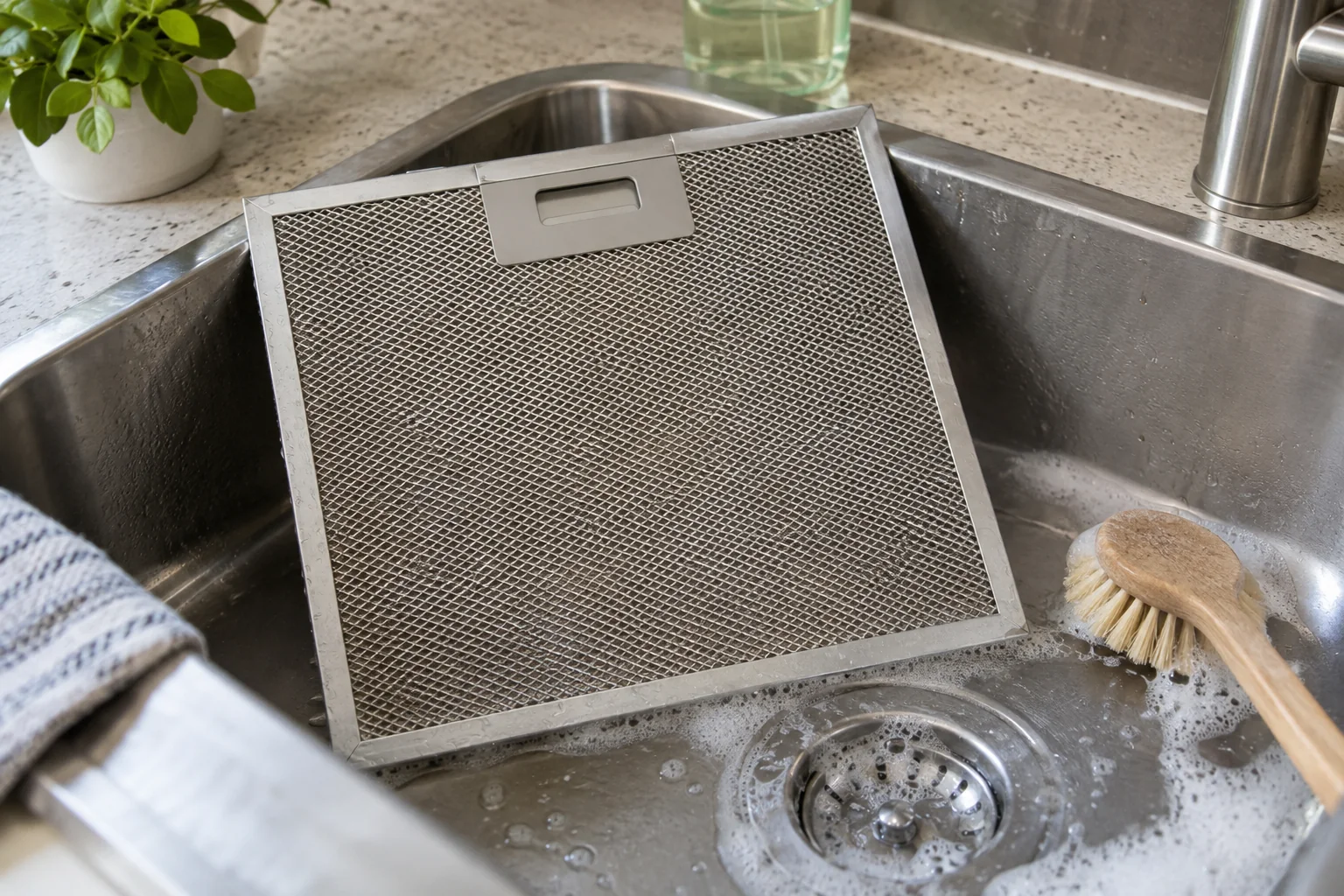
Follow the manufacturer’s method. Some metal filters can be cleaned in warm water with a suitable mild detergent; some can go in a dishwasher on a specified programme. Others may discolour in a dishwasher even when the change is cosmetic, and some finishes are not dishwasher compatible. If the instructions are unavailable, avoid making assumptions based on another hood’s filter.
For a hand wash, protect the sink and use water at a safe temperature. Let accessible grease soften, then use a soft brush or cloth along the mesh and frame. Avoid bending the layers, pulling at the mesh or driving a hard brush through it. Rinse until detergent and loosened grease are gone. If the water is heavily soiled, change it rather than moving the grease around. Do not mix strong degreasers or use a product that the manual prohibits.
Dry the filter thoroughly on a towel, turning it to release water trapped in the frame or mesh. A surface can feel dry while droplets remain between layers. Do not refit it wet above electrical components. If the manufacturer permits a dishwasher, allow the filter to cool and dry after the cycle before putting it back. A clean but damp filter is not a finished job.
Know when a carbon filter needs replacement
Carbon filters trap odours in a recirculating system and have a finite working life. Many common versions are replaced at intervals set by the manufacturer. Washing a disposable charcoal pad can damage it or leave it ineffective. Some specialist long-life filters can be regenerated by a specified process; if yours is one of them, follow its exact instructions. Do not heat an unknown filter in an oven because a different model’s manual suggested it.
Use the hood model and filter part number when ordering. A filter that looks roughly the right size may not seal or clip in correctly. Check the manual’s fitting diagram and whether a pair of filters is required. Record the replacement date in a kitchen note or reminder so it does not become a mystery months later. If a filter indicator remains on, the manual will explain whether it needs a reset after cleaning or replacement.
If the hood still smells unpleasant after the correct filter maintenance, inspect accessible grease on the hood exterior and surrounding splashback. Odours can also come from cooking residue elsewhere. Do not reach into the fan or duct with a wet cloth to search for a smell. A blocked duct, weak extraction or motor fault needs appliance attention, not repeated washing of the visible panel.
Clean the accessible hood while the filter is out
With the appliance off, wipe accessible underside surfaces with a lightly damp cloth and a cleaner approved for the finish. The edges around a filter opening may hold sticky grease. Work carefully so residue is lifted outward rather than pushed into the motor compartment. Keep the cloth controlled and avoid spraying into lights, switches or vents. The inside of a duct and any electrical housing are outside routine household surface cleaning.
Stainless steel hoods may show streaks if cleaner residue dries on them. Wipe with the grain where visible, rinse if the product requires it, and dry with a separate soft cloth. Painted and glass hoods need different products. Clean the hob beneath only after it has cooled and by the method suitable for its own surface. A single strong cleaner used on every part of a kitchen is rarely the safest choice.
Once everything is dry, refit the metal filter in its correct orientation and make sure the latch engages. The panel should sit securely and not rattle or fall when the hood starts. If a filter does not fit, check that it belongs to this hood before forcing it. Never operate a hood with a filter omitted if the manufacturer requires that filter in place.

Decide on a sensible maintenance rhythm
Cooking frequency, frying and the type of food prepared all affect how quickly grease collects. Use the manual’s interval as a starting point, then inspect the filter and underside regularly. A filter that feels tacky or has visible deposits may need attention sooner. An interval should be adjusted to real use, not treated as a promise that the filter will remain clean for exactly that many weeks.
Keeping the hood maintained can make day-to-day kitchen cleaning easier by reducing accumulated surface grease. For a broader appliance clean, the site’s appliance cleaning service may be relevant; confirm whether filter cleaning or replacement is included before booking. A cleaner can remove accessible grease, while a damaged motor, duct problem or faulty switch needs repair expertise.
The practical sequence is straightforward once the filter type is known: switch off, remove safely, wash compatible metal pieces or replace disposable carbon media, dry and refit securely. The manual settles the exceptions. That is more reliable than treating every extractor filter as though it were a washable mesh panel.