
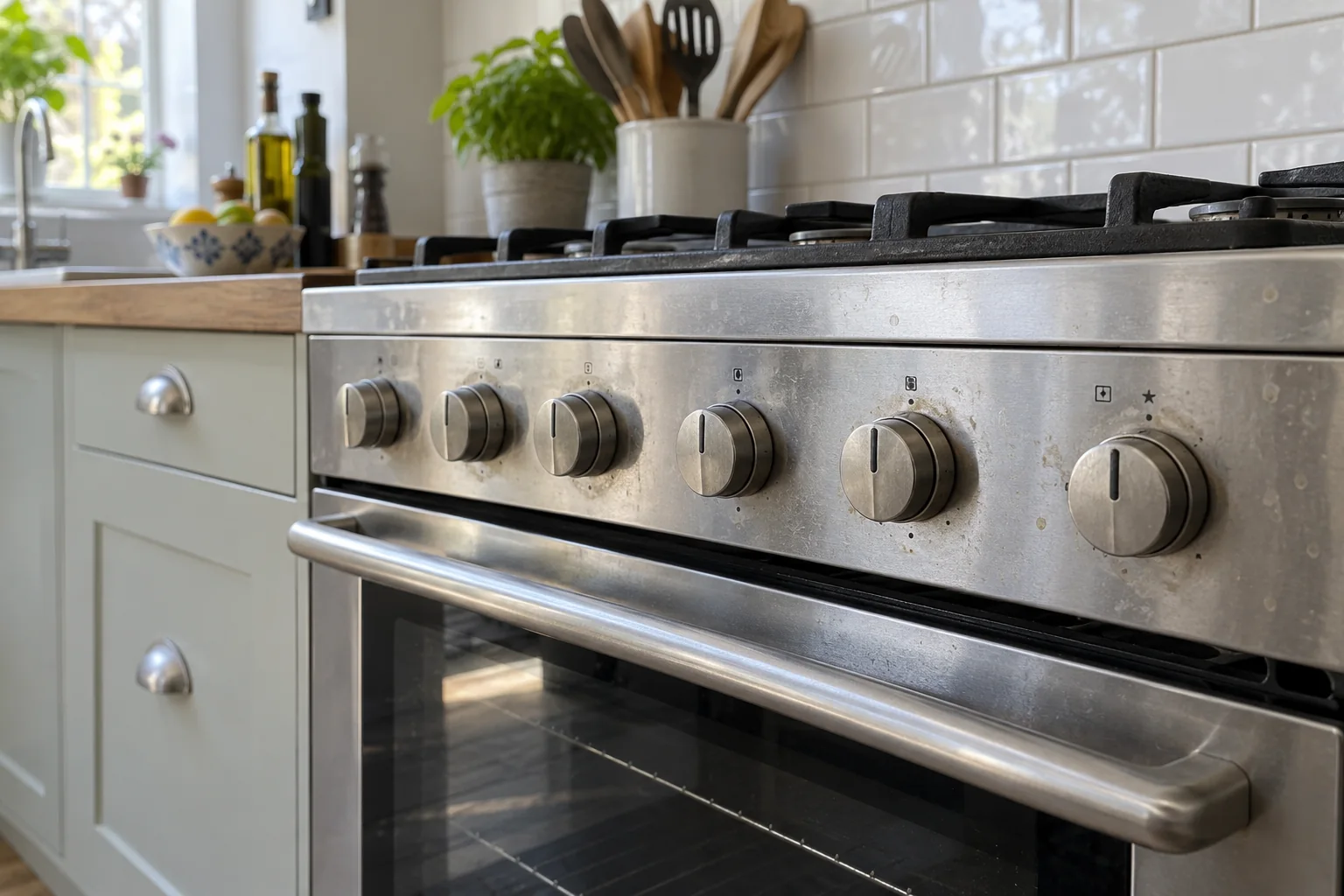
To clean a stainless steel cooker without leaving streaks or scratches, let it cool, remove loose crumbs and wipe with a soft cloth and a cleaner suitable for the particular finish. If the metal has a visible grain, move the cloth with it rather than across it. Follow with a clean damp wipe where the product requires rinsing, then dry immediately with another soft cloth. Keep spray away from knobs, displays and seams.
Stainless steel is common on oven doors, control panels, cooker hoods and hob trim, but these areas do not all face the same mess. Fingerprints on a fascia may need only a gentle wipe; hot grease on a range-cooker side can form a sticky film. The finish may be brushed, polished or coated against fingerprints. Look at the surface and the appliance manual before choosing a cleaner, since a product that is fine on bare steel may not suit a special coating or the plastic markings beside it.
Work out what you are cleaning
Check whether the panel is genuinely stainless steel or a different material made to look like it. Some cookers combine steel panels with painted trim, glass, plastic displays and chrome-coloured knobs. A single spray swept across everything may affect lettering or allow liquid behind controls. If the manual names a cleaner for the outer surfaces, start there. Otherwise choose a product labelled for the finish and test it in an inconspicuous spot as its instructions direct.
Find the grain by looking at the panel in side light. Brushed steel usually has fine lines running horizontally or vertically. A soft wipe along those lines helps lift residue from the texture and often looks more even when dry. It will not erase a scratch already cut across the finish. A glossy or coated panel may have no useful visible grain; in that case, follow the manufacturer’s cleaning advice rather than assuming it should be polished like bare metal.
Before using moisture, lift dry crumbs with a clean cloth. This is especially important on a cooker top where salt or burnt food may sit beside a steel trim. Rubbing grit across the panel can scratch it. Use separate cloths for dirty grease removal and final buffing. Reusing a greasy cloth for the finishing pass is a common reason a surface still looks cloudy.
Remove everyday marks first
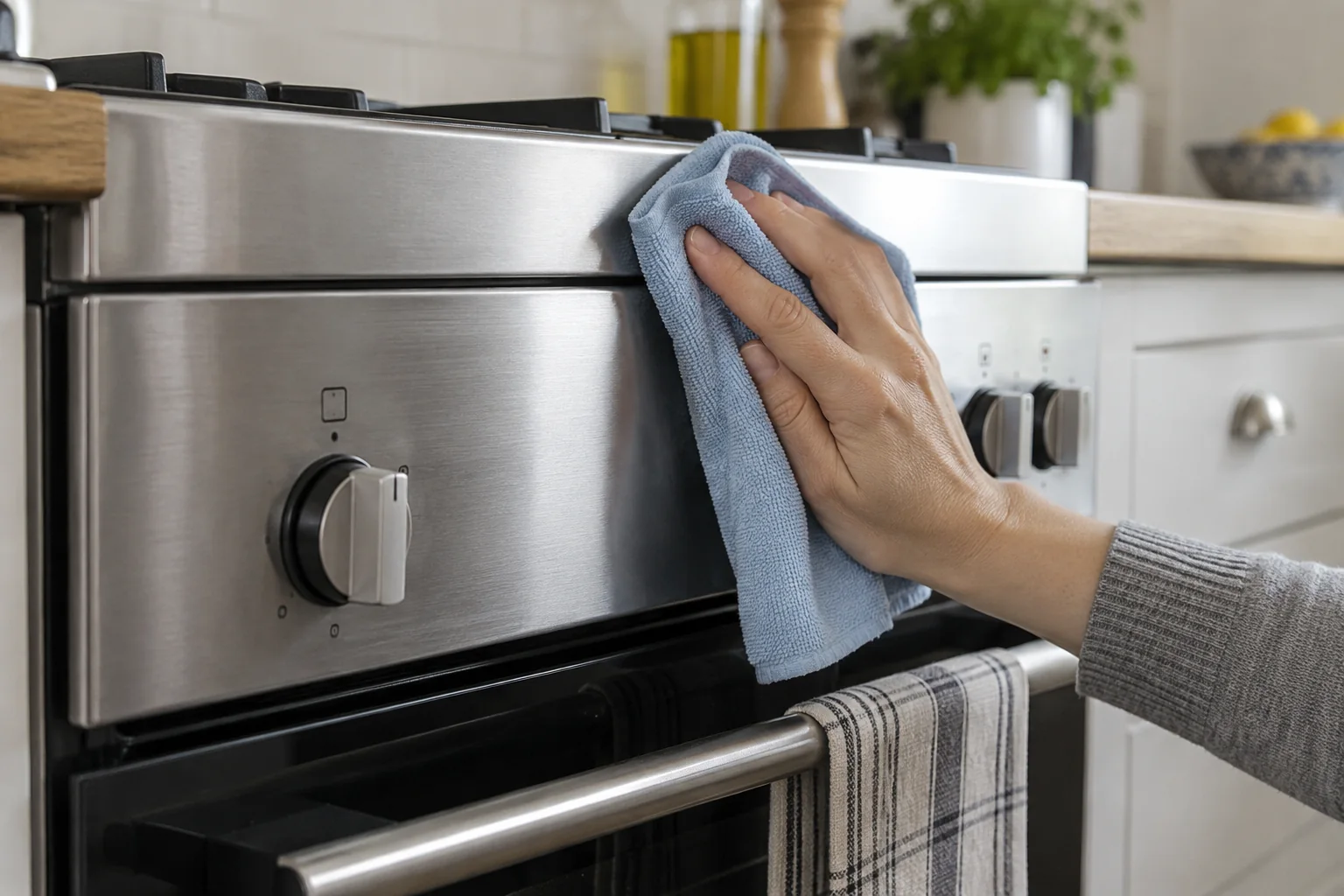
Fingerprints, water spots and light splashes often come away with a slightly damp microfibre cloth. Wipe a manageable section, moving with the grain if visible. Then dry it promptly. Letting water evaporate can leave mineral spots, particularly in hard-water areas. Do not use more product than the surface needs; a thin film of cleaner can be harder to remove than the original fingerprints.
For a sticky grease layer, use a small amount of cleaner approved for stainless steel or a mild solution the appliance maker recommends. Apply it to a cloth rather than directly onto a vertical fascia. Allow the product its labelled contact time, then lift the grease gently. Rinse or wipe away residue as instructed and finish dry. Keep liquid out of button edges, indicator lamps, door seals and ventilation slots. The panel may be washable while the opening beside it is not.
Burnt-on food near a hob can require patience. Soften what the manufacturer permits, then wipe with a non-scratch cloth. Avoid using a metal scraper simply because the substrate is metal. Stainless steel can scratch readily, and a mark on a visible cooker front may be permanent. If a hard lump remains, check whether it is on a removable part that can be cleaned separately by an approved method.
Why streaks appear after cleaning
Streaks can be leftover grease, too much cleaner, minerals from water or uneven drying. Identify which is likely before adding another product. A greasy smear usually shifts under a clean damp cloth. Water marks may be pale spots. An oily polish can make a panel look even for a moment but attract fingerprints later. Repeating the same product with the same cloth rarely fixes a residue film.
Try a clean damp cloth over a small section and dry immediately with a fresh, dry microfibre cloth. Inspect it in natural light. If that works, repeat across the panel, changing cloths when they become saturated. If the manufacturer recommends a steel polish, use it sparingly and keep it clear of food-contact areas and controls. Follow any instructions about buffing and removal. Do not assume a shiny appearance means a cleaner has been fully rinsed.
The direction of the final wipe matters on brushed steel. Random circular rubbing catches light in several directions and can make existing fine marks more visible. Consistent, light strokes with the grain create a more uniform appearance. If the panel is polished or coated, the manufacturer’s method takes precedence. Use little pressure; polishing harder does not repair abrasion.
Avoid damaging finishes and controls
Steel wool, abrasive powders and rough scouring pads can leave permanent lines. Chlorine-based products and concentrated acids can also damage some stainless finishes, especially if left in contact or not rinsed as required. Do not mix products to try to make a stronger degreaser. A safer approach is to select one cleaner approved for the surface and use it at the stated dilution and contact time.
Be wary of general tips that recommend oiling the whole cooker with whatever is in the kitchen cupboard. Some products can leave a film that attracts dust or becomes unpleasant near heat. If a manufacturer-approved polish is used, apply it only where directed and keep it away from burner openings, hot elements and food-contact surfaces. The goal is a clean, dry panel, not a coating with an uncertain reaction to the next cooking session.
Never spray directly at electrical controls or gas knobs. Dampen the cloth instead and wipe around them without pulling or forcing them off unless the manual specifically allows their removal. If a knob feels loose, a display behaves oddly or liquid has run behind the fascia, stop cleaning that area and get appropriate appliance advice. A cosmetic clean should not create a control fault.
Know what cleaning cannot fix
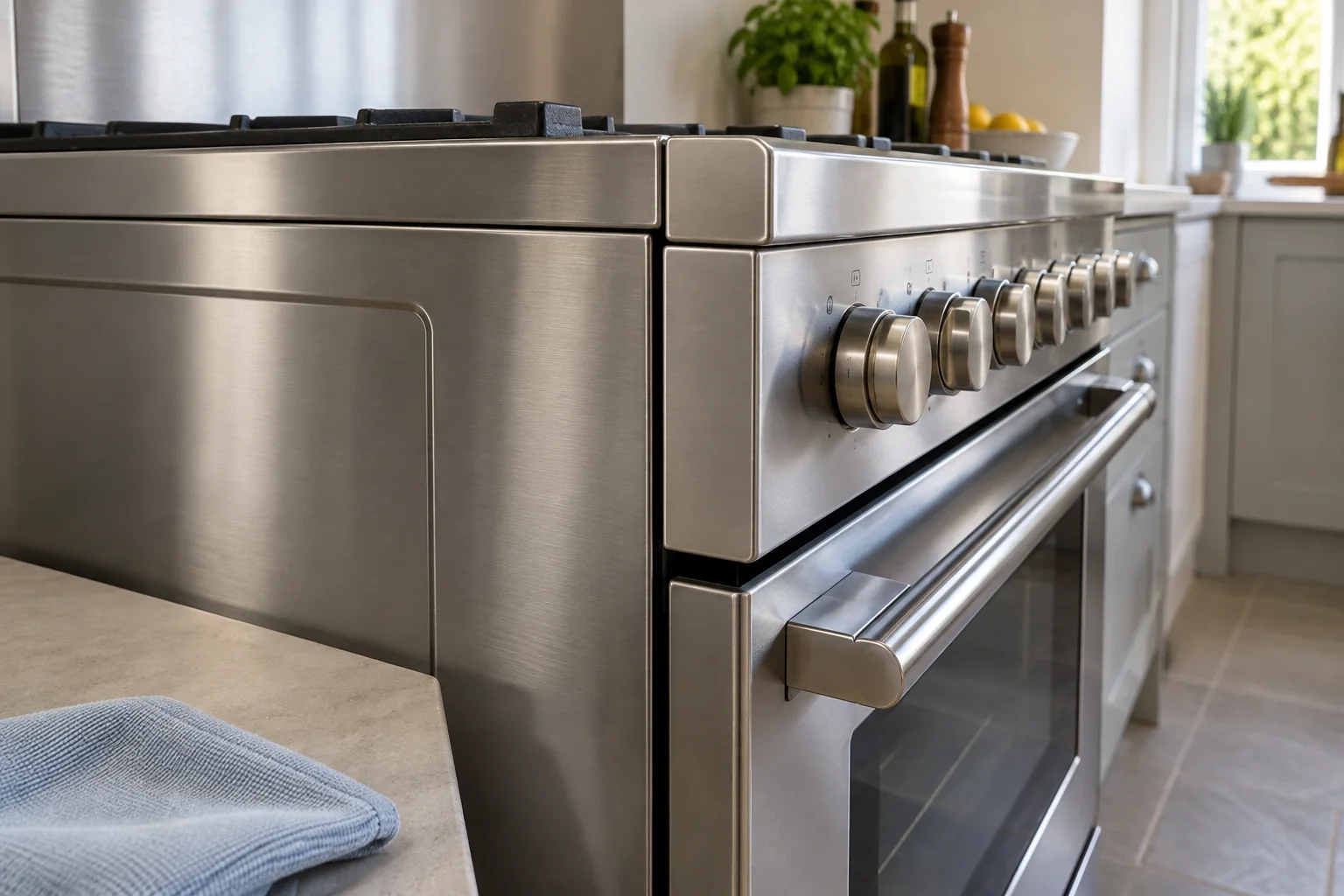
A scratch cuts the finish and remains in the same place after grease has been removed. Pitting, discolouration from heat and a damaged coating can also look like dirt. Inspect the clean, dry panel from more than one angle. If the mark is physical damage, repeated chemical treatment may worsen it. Check the appliance maker’s advice about replacement trim or specialist refinishing where appropriate.
For heavy removable grease across several cooker surfaces, appliance cleaning can be useful, while kitchen cleaning addresses the surrounding area. Confirm the finish and scope before any deep clean. The cleaner can target soil, but no ordinary wipe should be expected to erase gouges or rebuild a worn coating.
In everyday use, wipe spills when the cooker has cooled, keep a soft cloth for steel rather than sharing a gritty all-purpose sponge, and dry after wet cleaning. These small habits preserve the finish and make the next grease film easier to recognise and remove.