
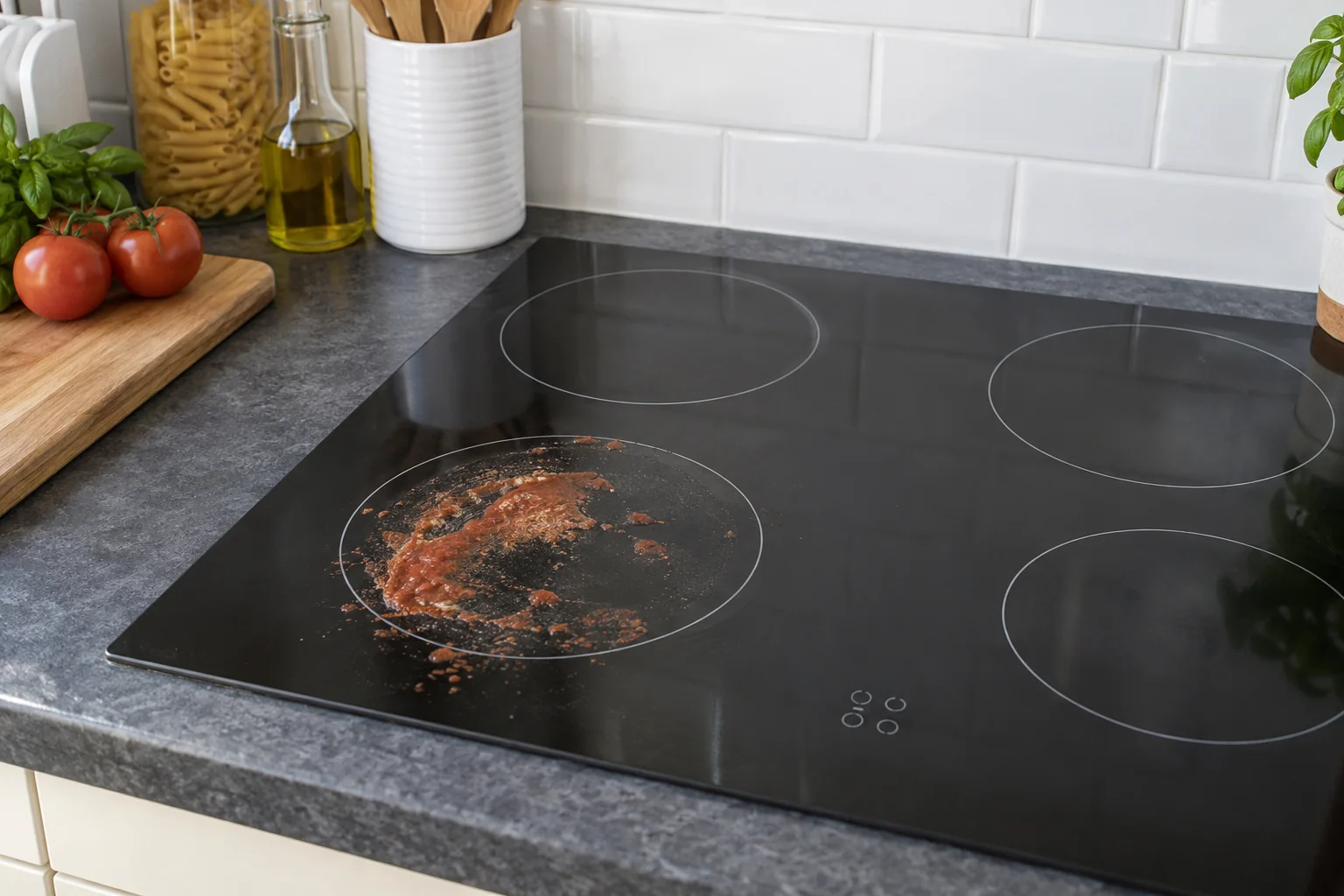
The safest response to a spill on a ceramic hob depends on what spilled and whether the cooking zone is still hot. Turn the hob off, keep hands clear of the hot glass and follow the appliance manual. Once a normal sauce, oil or starch spill has cooled, remove loose food, soften the residue with an approved method and wipe gently with a cloth suitable for glass ceramic. Sugar or melted plastic may require a different, prompt procedure specified by the manufacturer, so do not treat every spill alike.
This is where ceramic hobs can be deceptive. Their flat surface looks easy to wipe, yet a boiling pan can leave a ring that dries quickly, while a sugary drop can stick as it cools. The aim is to identify the residue before choosing a tool. Cleaning a tomato splash with the wrong scraper is unnecessary; rubbing a hard grain into the glass can create the scratch you were trying to avoid.
Make the area safe first
Switch off the affected zone and move the pan carefully. A residual-heat light should be taken seriously. Even when the controls are off, the glass may remain hot enough to burn skin or dry a damp cloth on contact. Keep children and pets clear, and do not place a wet cloth over a hot zone unless the manual expressly instructs you to do so for a particular spill. Let routine food spills cool before hands-on cleaning.
Look at where the liquid has gone. A puddle near touch controls or the hob’s edge needs care because water can travel into difficult-to-dry gaps. Absorb what you can safely reach without pushing it towards the control panel. If liquid has entered controls or the unit behaves unusually, stop using it and consult the manufacturer or a suitably qualified repairer. Cleaning the visible glass will not address moisture beneath it.
Before wiping, lift crumbs or grains with a soft, dry cloth once the surface is cool. Salt, rice and hard food fragments can act as grit under a sponge. Use a separate clean cloth for the wet stage. A cloth previously used on a roasting tray may contain particles or grease that streak the hob. Keeping these stages separate makes the final result clearer and reduces avoidable abrasion.
Tomato sauce, milk and starchy water
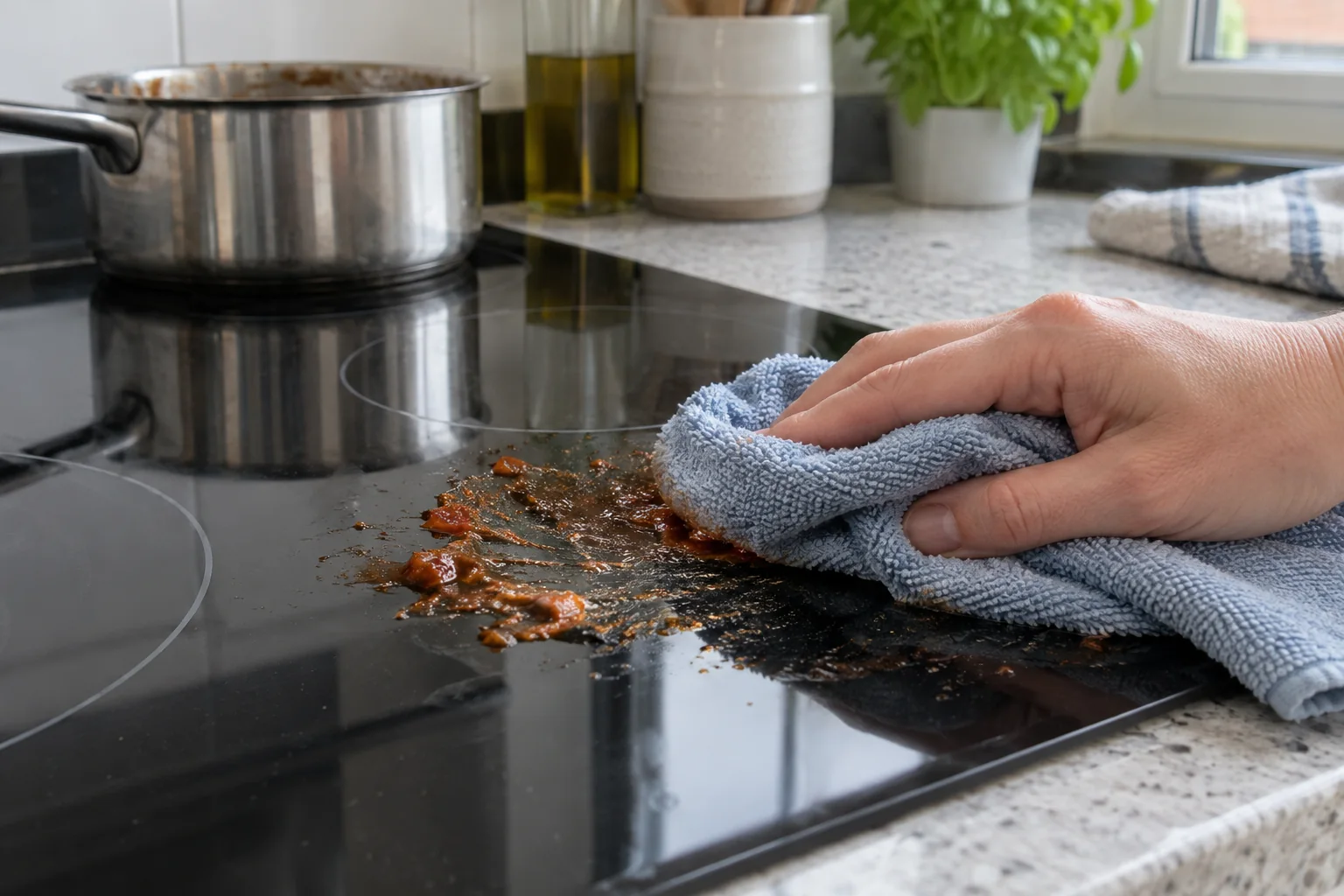
Many everyday spills leave a thin film and a raised edge after drying. A lightly damp, soft cloth can often loosen fresh residue after the hob cools. If it has set, hold a damp cloth over the mark for a short time if the manual allows, then wipe gently. Do not leave standing water around controls. Repeat rather than increasing pressure sharply. Once the food lifts, use a clean damp cloth to remove remaining film and finish dry.
Milk and starchy pan water can leave pale rings that look worse after the first wipe. A second pass with a cleaner labelled for glass-ceramic hobs may help, followed by the rinse or buff stated on the product. Follow your appliance instructions where they are more restrictive. A white mark that does not change at all after cleaning may be surface wear or a deposit that needs a specialist assessment; pouring on more cleaner will not necessarily improve it.
Tomato sauce may leave a coloured stain alongside grease. Work on the removable food first rather than chasing colour with a harsh product. A clean cloth under good light will tell you whether the surface is still sticky. If it is smooth but discoloured, check the manual for the permitted next method. Avoid improvised acidic mixtures on trim and markings. The border around a hob may be a different material from the glass itself.
Oil, grease and pan marks
An oil splash usually spreads into a thin, nearly invisible film. Wipe it with a suitable cloth and hob cleaner after cooling, then dry the surface. Check from a low angle: reflected light reveals streaks that are easy to miss from above. If the next pan is placed on a greasy zone, that residue may heat again and become harder to remove.
Pan bases can also leave metallic-looking marks. These may come from cookware rather than a food spill, and they need a method approved for the glass. Do not automatically reach for abrasive powder or steel wool. Test the manufacturer’s recommended cleaner on the affected area and stop if the mark appears to be a scratch, chip or change in the glass itself. Cleaning can remove transfer marks; it cannot fill physical damage.
If a pan boiled over heavily, inspect the outer edge once cool. A small trail under the rim may dry out of sight. Keep water away from the control area and do not lever up trim to reach it. If seepage is suspected, especially with unreliable touch controls, seek appliance advice rather than continuing to wash around the joint.
Sugar and melted materials need different thinking
Sugar, syrup, jam and melted plastic can bond to the glass as they cool. Some manufacturers advise using a special scraper immediately, while the surface is still warm, to prevent permanent damage. That is a model-specific instruction involving burn risk. Read the exact manual before taking action, use only its recommended scraper and technique, and do not improvise with a kitchen knife. If you are unsure, keep clear of the hot surface and ask the manufacturer for guidance.
A scraper blade must be clean and held at the specified angle. A nicked or dirty blade can mark the hob. Once the material has been removed and the surface is safe to touch, clean any remaining film with the approved hob product. Do not pour cold water onto a hot zone in an attempt to release a spill; sudden cooling may damage some surfaces and can spread hot liquid.
These exceptions explain why a single universal “hob cleaning trick” is unreliable. A dried vegetable sauce, a sugar spill and a melted utensil are different materials, even if each looks like a brown spot from across the kitchen. Identifying the spill and consulting the manual is faster than repairing a mistake made with the wrong tool.
Inspect, dry and prevent a repeat
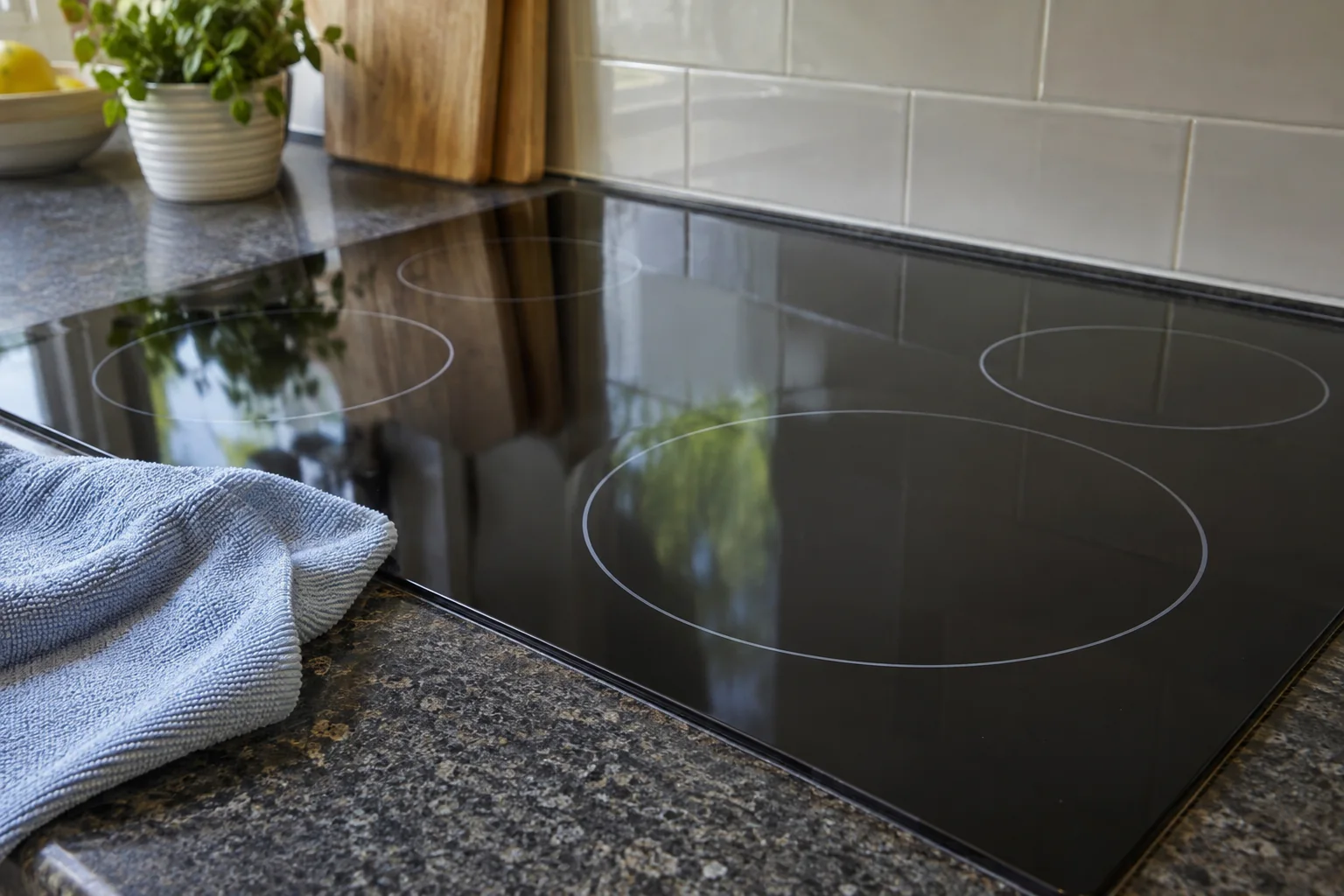
When the residue has gone, wipe away cleaner according to its label and dry the hob fully. Check it in daylight from two directions. A remaining smear may move with the cloth; a scratch will stay in place. If the glass is cracked or chipped, stop using the affected appliance and arrange appropriate repair advice. A crack is not merely a cosmetic cleaning issue because moisture can reach components beneath the top.
The next time a pan bubbles over, lower the heat or choose a larger pan rather than letting liquid escape repeatedly. Keep pan bases clean and lift cookware instead of dragging it through spills. A brief wipe after each cooking session, once the glass is cool, prevents routine residue from becoming a stubborn ring. For broader hob and cooker care, the appliance cleaning service may help with removable soil, and kitchen cleaning covers a wider area. Confirm the service scope if your concern is damage rather than dirt.
A ceramic hob is easiest to maintain when you respond to the specific spill in front of you. Cool and wipe ordinary food gently, treat exceptional sugar or melted material according to the exact manual, and recognise when a mark is no longer a cleaning job.