
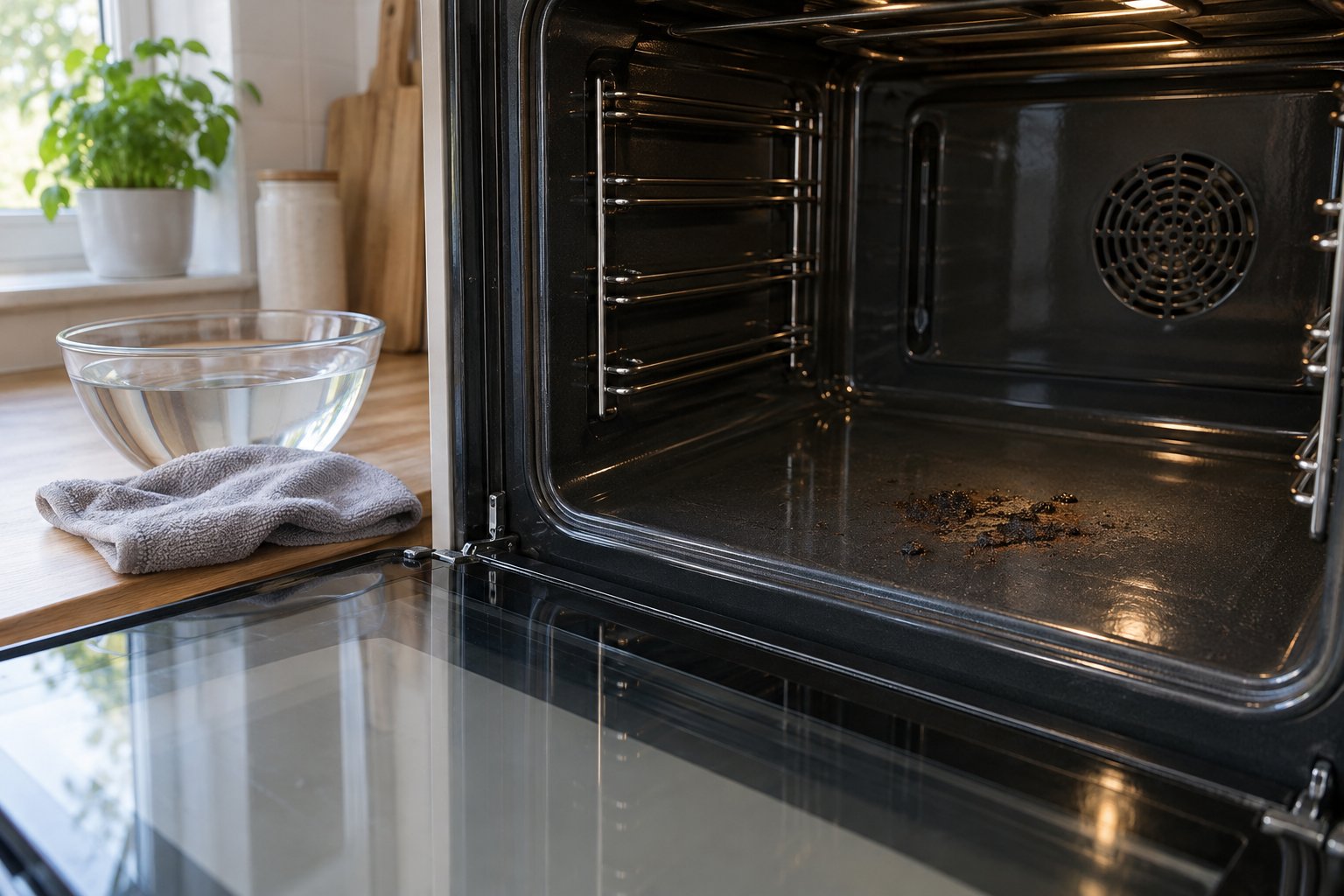
A spill on the oven floor can turn into a hard, dark patch after one more cooking session. The temptation is to scrape it off, but that can mark enamel, damage a liner or disturb a heating component. Let the oven cool completely, identify the floor surface from the appliance manual and soften the residue before you wipe. For most accessible smooth surfaces, several gentle passes are safer than one hard attack.
If the oven is smoking heavily, has a strong electrical smell or shows a fault, switch it off and seek appropriate advice before cleaning. If the only issue is dried food on an otherwise sound appliance, start with a dry cloth and warm water. Never reach into a warm cavity merely because a spill looks easy to lift.
Work out what the oven floor is made of
Most ovens have an accessible smooth enamel base, but some have removable liners, textured catalytic panels or specific self-cleaning finishes. The manual for your exact model should say which areas may be wiped and which cleaners are allowed. A surface that looks like ordinary enamel may have a coating that reacts badly to a strong product. Check before applying anything abrasive or acidic.
Also look for a visible heating element, vent, screw or drain-like opening near the spill. Do not pour water into the cavity or spray product onto an element. Do not lift a fixed panel to reach underneath it. If food has fallen below an accessible surface or into a vent, cleaning may require service access rather than a household tool.
Remove crumbs and loose pieces
Take out the cool racks and any loose tray to create space. Lay a towel below the open door to catch crumbs. Use a dry soft cloth to lift loose fragments, working towards your hand rather than pushing them into a corner. A vacuum with a suitable soft attachment may help if the maker permits it, but avoid pressing its nozzle against a finish or into a vent. Dispose of the debris before adding water, so you do not turn it into a gritty paste.
If a thick raised piece comes away with your fingers or a soft cloth, lift it gently. Do not use a knife or metal scraper to pry under a stubborn edge. A sharp tool can chip enamel or gouge a coated liner, creating a harder cleaning problem later.
Soften the patch without soaking the oven
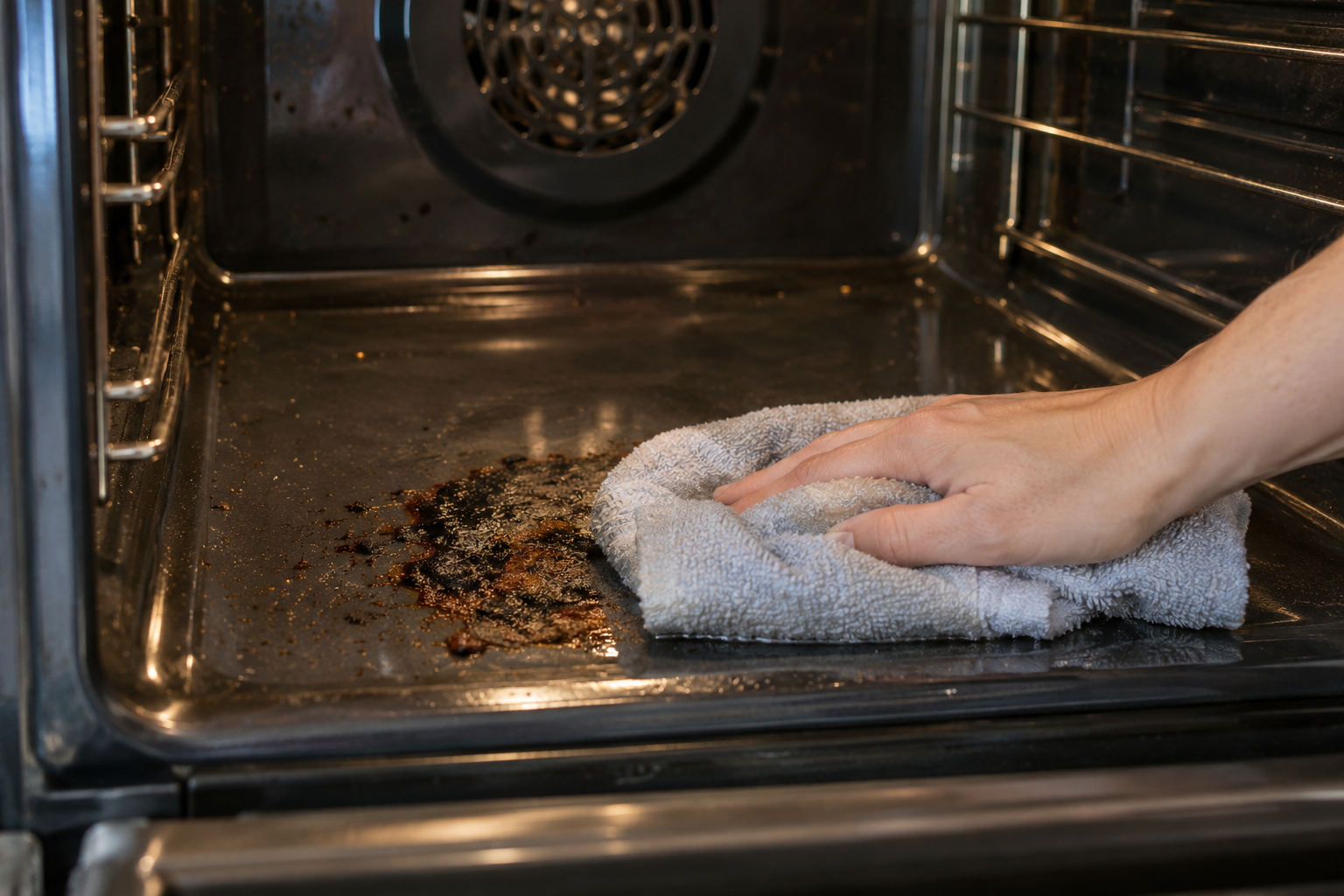
Dampen a soft cloth with warm water and wring it out well. Rest it against the burnt food for a few minutes, then lift and wipe lightly. The cloth should be damp, not dripping. Repeat with fresh warm water if the patch is still firm. On a smooth surface where the manual permits it, a small amount of mild washing-up liquid on the cloth can help with grease. Rinse the cloth frequently so that loosened residue does not spread across the floor.
Do not leave standing water around an element or at the back of the cavity. A long wet soak inside the oven is different from soaking a removable metal tray. The oven floor may meet insulation, vents or fixings that you cannot dry. Short, controlled contact gives you the benefit of moisture without flooding hidden areas.
Clean in small sections
Start at the edge of the softened deposit and wipe towards the centre. Use a non-abrasive sponge if permitted, with light pressure. Lift what comes free, rinse your cloth and return to the remaining patch. A stain may need several rounds. If the surface begins to feel rough because of the cleaning tool rather than the food, stop and reassess. Do not use steel wool, wire brushes or sharp blades on a finish the maker has not approved for them.
Some burnt-on food leaves a brown shadow after the raised material is gone. That shadow may be discolouration rather than dirt. Dry the area and inspect it under good light before deciding to do more. A sound oven floor does not need to look new to be clean enough for normal use. Chasing a faint mark with excessive force can leave a permanent scratch.
Rinse away product and dry
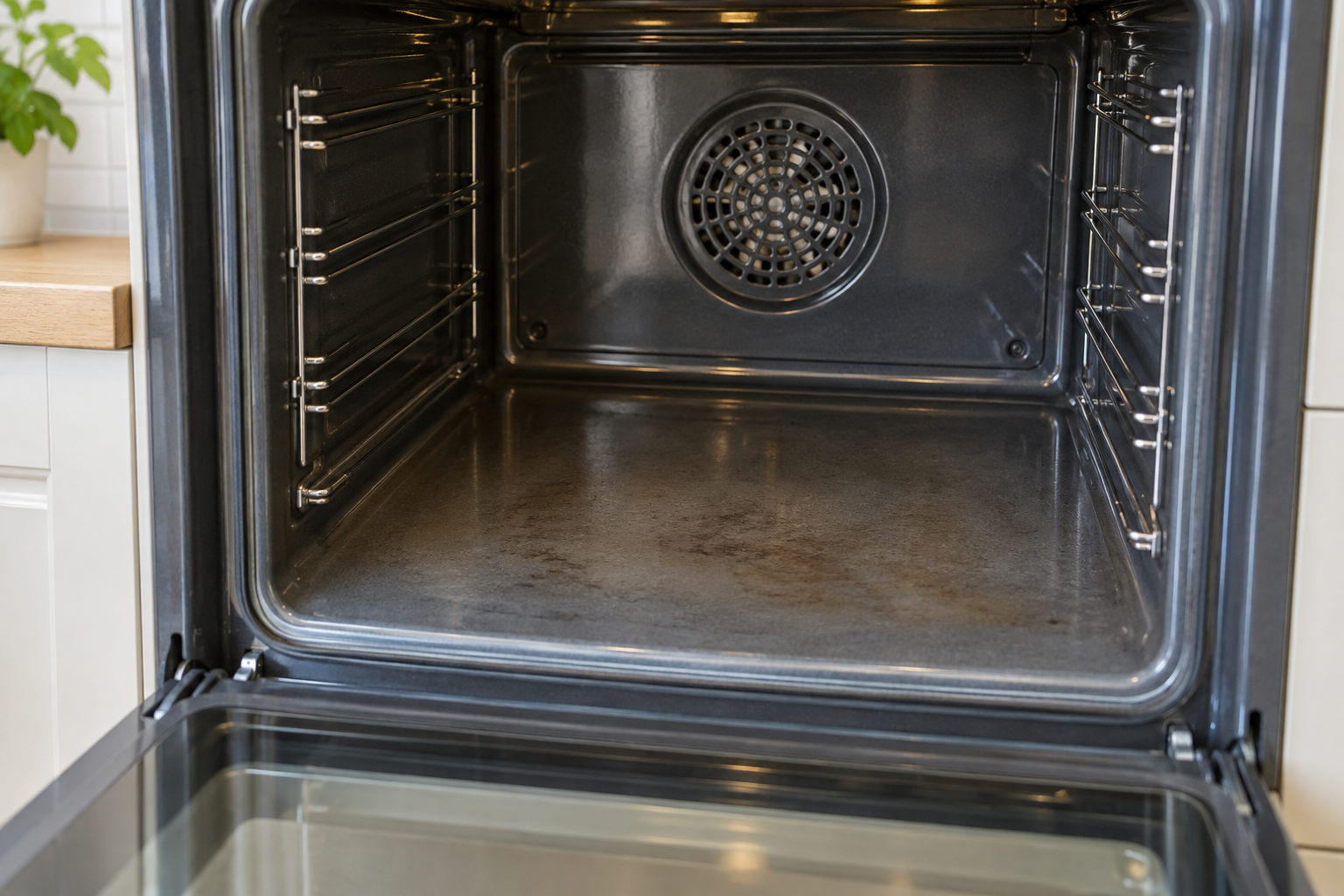
When the deposit has lifted, wipe the area with a clean cloth lightly dampened in plain water. Change the water if it becomes brown. Dry the accessible floor and adjacent corners with a separate cloth. Check that no fibres, loose crumbs or cleaner remain. Return racks only when both they and the oven floor are dry. Follow any model-specific aftercare instructions before the next cooking session.
Do not start a high-temperature cycle to burn off cleaner that you have not fully removed. If you used a commercial product permitted by the manual, follow its label exactly, including rinse and ventilation steps. Never mix it with another cleaner. If there is a persistent chemical odour on the next use, switch the appliance off, allow it to cool and review the product instructions.
Know when to stop cleaning
A chipped enamel area, exposed metal, damaged liner or residue trapped beneath a panel needs a different decision. Cleaning cannot restore a missing coating. A professional cleaner may be able to handle heavy accessible build-up, but a damaged component or oven fault requires repair assessment. Give the provider the model number and a clear description of the surface. Do not let anyone assume that all dark material is removable grease.
If the floor is coated and the manual does not permit wet cleaning, follow its self-cleaning or maintenance method instead. Some systems use a specified heat cycle, and others require replacement when worn. A generic online paste may interfere with that design. The correct advice for a smooth enamel cavity may be wrong for a catalytic panel.
Prevent the next floor spill
Choose cookware deep enough for a bubbling dish and leave room below the rim. Place a suitable tray on a shelf beneath a dish when the appliance maker allows it, rather than putting foil directly on the oven floor. A sheet of foil or liner in the wrong place may obstruct airflow, reflect heat or damage a finish. Follow the oven manual on what may be used and where it can sit.
When a dish does spill, make a note to clean it after the appliance has cooled. It is easy to forget a small drip once dinner is served, and reheating it several times makes it much harder to remove. Leave yourself a reminder on the kitchen calendar or beside the cooker if that helps. Never place a cloth or note inside the oven as a reminder; check the cavity is empty of loose items before the next use.
After cooking, let the oven cool and wipe a fresh splash before it is reheated several times. Keep racks and trays free of old grease so they do not drip during the next meal. If the whole cavity has substantial build-up, a professional oven cleaning service may help. For a small patch, patient softening, gentle wiping and a careful rinse are usually the more direct route. The aim is a sound, clean cooking surface without sacrificing its finish for a cosmetic result.