
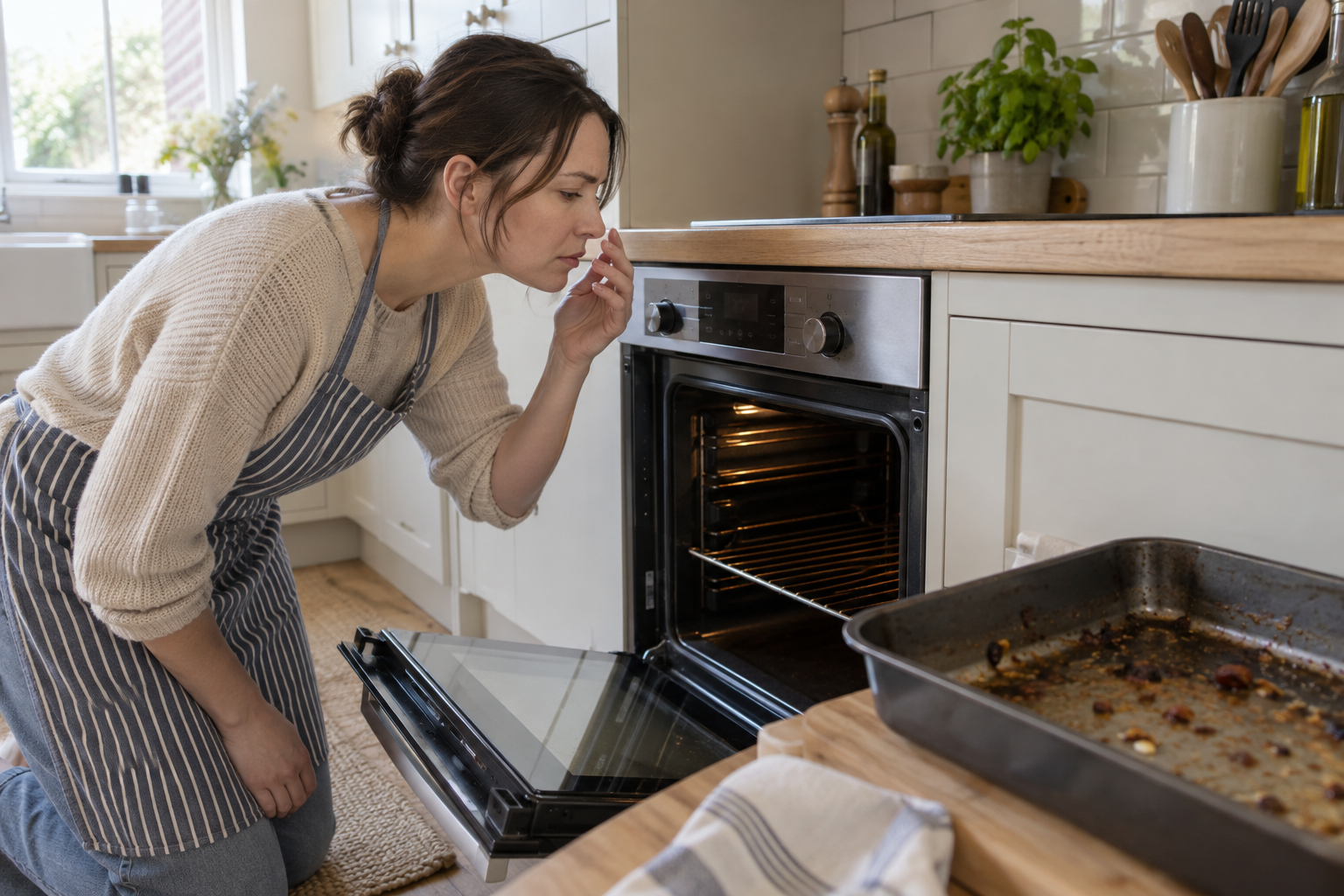
An oven that smells as it warms may simply be reheating a little cooking fat, but the type and source of the odour matter. A food-like burnt smell often points to a spill, a dirty tray or grease on an accessible surface. A sharp electrical smell, a gas smell or an odour accompanied by smoke and unusual appliance behaviour calls for a different response: switch the oven off, move away if necessary and seek appropriate help. Do not keep running an uncertain appliance to make the smell disappear.
Start by noting when the smell occurs. Is it only during preheating, after food goes in, or when the grill is selected? Does it come from inside the cavity or from behind the appliance? A brief note about what was cooked and cleaned recently can help you find a pattern. You do not need to diagnose a fault yourself; these observations simply guide a safe next step.
First, decide whether it is safe to inspect
If the smell is strongly electrical, accompanied by sparking, a tripped circuit or unusual heat at a socket, stop using the oven and arrange qualified repair advice. A gas smell should be treated as a gas safety issue: leave the area, avoid operating switches and follow the appropriate emergency guidance. Heavy smoke or flames are also emergencies. Do not open the oven door into visible flames or pour water into an electrical appliance.
For a mild cooking odour with no other warning sign, switch the oven off and let it cool fully before checking inside. Open a window if safe. Avoid reaching around a hot element or fan guard. The purpose of the check is to find ordinary, accessible food residue, not to dismantle the appliance.
Look at food and cookware
A small drip from a roasting tin can smell much stronger on its second heating than it did when it first fell. Inspect the floor, shelf rails and lower parts of the oven once everything is cool. Check whether a tray or rack brought old grease back into an otherwise clean cavity. A baking sheet can hold sticky oil on its underside where it is easy to miss. If the odour begins only after a particular pan goes in, clean that pan according to its own care instructions.
Food itself can be the source. Spices, cheese and sugary sauces can scorch near a hot element or on a tray edge. A packed oven can also alter airflow and leave one dish closer to a heat source than intended. Follow the appliance guidance on shelf positions and keep cookware clear of elements and vents. Do not put foil or a liner on the oven floor unless the manual explicitly allows it.
Check recent cleaning
If the smell appeared immediately after cleaning, check which products were used and whether the label required rinsing. A cleaner left on an accessible wall or rack may smell as the oven warms. Let the appliance cool, then wipe permitted surfaces with a clean, lightly damp cloth according to both product and oven instructions. Change the water and cloth as needed. Keep liquid away from electrical parts, vents and elements.
Do not combine products to cover or neutralise the odour. Perfumed sprays are not a solution inside a cooking appliance. If the oven has catalytic liners, a pyrolytic cycle or another special cleaning system, read the model manual before treating the surface. A method intended for smooth enamel may be unsuitable elsewhere.
Clean a reachable spill gently
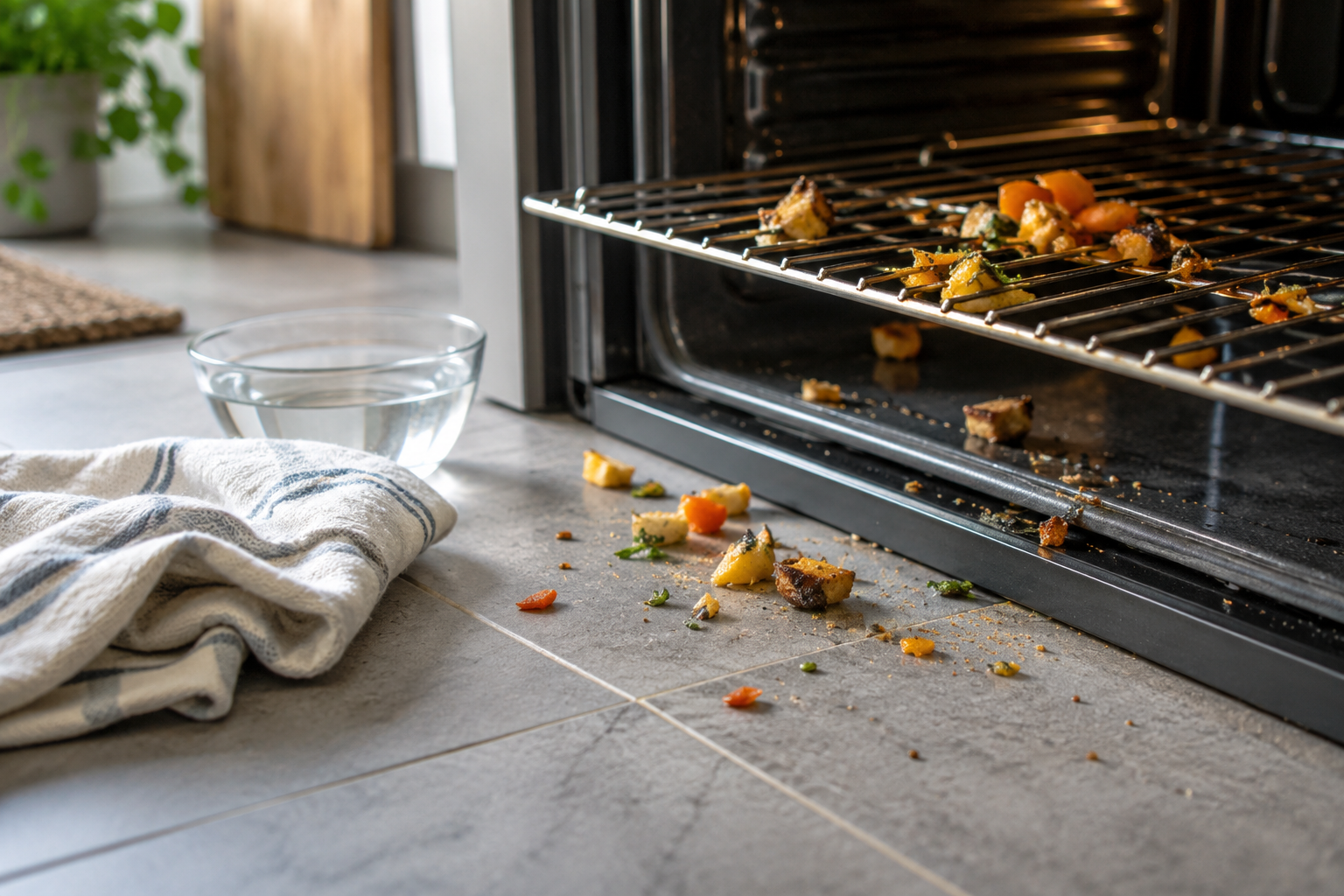
Remove loose crumbs with a soft cloth. For greasy marks, use warm water and a small amount of mild washing-up liquid if the appliance manual permits it. Work on a small area and allow a damp cloth to soften a stubborn patch rather than scraping hard. Rinse away residue with fresh water and dry accessible surfaces. A wire scourer or sharp blade can damage coatings, and cleaning around elements demands particular care. Do not bend an element aside to reach a mark.
Clean dirty racks and trays separately. Return them only when dry and free from cleaner. If you still see a deposit inside a fan housing or behind a fixed panel, do not remove the cover unless the manufacturer provides an owner procedure. A professional cleaner or technician can advise whether the area is within their scope.
What about a new oven or new part?
A newly installed appliance may have manufacturer-specific commissioning instructions, including ventilation and an initial heating process. Read and follow those instructions rather than applying a generic “burn off” routine. Check that all packaging, stickers and protective material have been removed from the areas specified in the manual before first use. If the odour is intense, persistent or appears with smoke or a fault, stop and contact the installer or manufacturer.
Similarly, a replaced component may have its own advice. Ask the person who performed the repair what is expected on the first use. Do not assume a strong smell is normal merely because a part is new. The context matters: a slight transient odour under a documented commissioning step is different from a hot electrical smell at a control panel.
Odours that need a repair assessment
If the smell comes from behind the oven, a socket, a control panel or a fan housing, cleaning the visible cavity is unlikely to solve it. New noises, a fan that fails to run, uneven heating, tripped electrics or a door that does not close properly are further reasons to stop using the appliance. Do not pull a built-in oven out or remove covers to locate the source yourself. Record the model number and what you noticed, then seek qualified help.
For accumulated cooking grease in accessible areas, a professional oven cleaning service may be appropriate. Explain the odour and any recent cleaning product use when booking. For electrical, mechanical or door faults, use the site’s oven repair information instead. A cleaner can remove residue; they should not be expected to certify a faulty appliance as safe.

Keep ordinary cooking smells under control
Once the cause is known and the oven is safe, wipe new spills after it cools instead of letting them reheat through several meals. Wash trays regularly, use suitable cookware to contain drips and keep ventilation openings clear. A small routine is easier than a major clean when grease has reached several surfaces.
If a meal spills repeatedly in the same place, consider the cookware as well as the oven. A shallow dish may slosh when moved, and a roasting tin filled close to its rim can release fat as it bubbles. Use a suitable deeper dish or smaller portion where practical. Place it on a stable shelf at the position recommended for that cooking mode, leaving the space around it that the manual requires.
There is no single smell that proves an oven is safe or unsafe. Use the whole picture: timing, location, visible residue and appliance behaviour. If cleaning an accessible spill removes an ordinary food odour, continue with routine care. If the smell returns without a visible cause, grows stronger or comes with another warning sign, switch the appliance off and have it assessed. That is the sensible boundary between home cleaning and fault finding.