
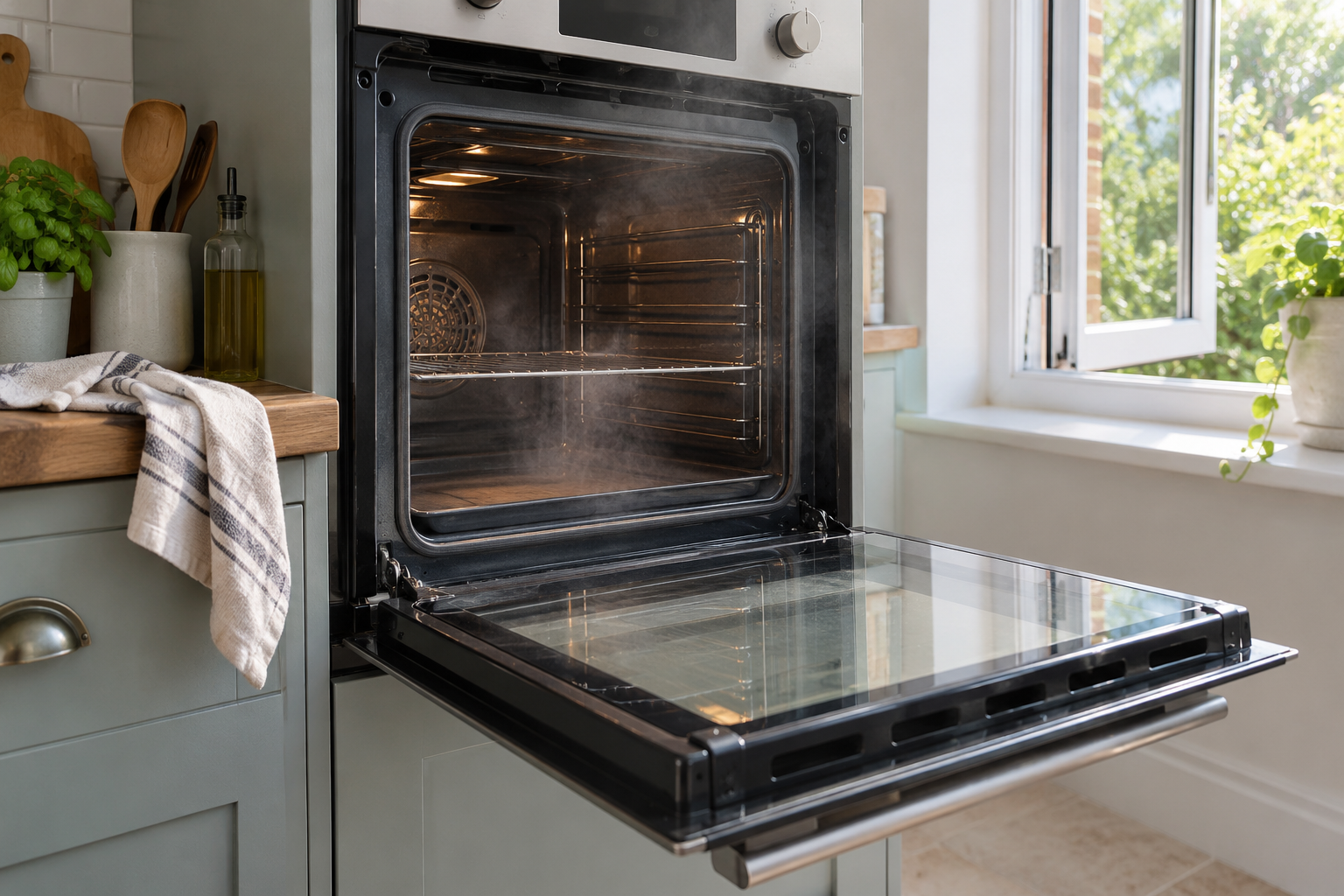
Smoke from an oven just after cleaning can mean a small patch of grease or cleaner remains, but it can also point to a separate fault. Switch the oven off, let it cool and ventilate the room before inspecting anything. Do not continue heating it to see whether the smoke will “burn away”, especially if it is thick, persistent or smells electrical. A calm check of the accessible surfaces is safer and more useful than guessing at the cause while the appliance is hot.
If there are flames, heavy smoke or any immediate danger, move people away and follow emergency advice. Do not open a door into visible flames or pour water into a hot electrical appliance. If you smell gas, leave the area and contact the appropriate emergency service from a safe place. Those situations are beyond routine cleaning.
Pause and note what happened
Before wiping anything, remember when the smoke appeared. Was it immediately after the oven started heating, or only when food began cooking? Did it come from the cavity, a vent, behind a control panel or near the plug? Was there a burnt-food smell, a chemical odour or a sharp electrical smell? These observations help distinguish residue from a fault, though they cannot prove the cause on their own. Write them down if the issue recurs. If someone else cleaned the appliance, ask which surfaces and products they used so that a repairer has a clearer starting point.
Check the cleaning product instructions. Some products require thorough rinsing or a specified waiting period before the oven is used. Others may not be suitable for a self-cleaning surface or certain components. Follow the appliance manual too. Never mix products in an attempt to neutralise a smell. Combining cleaners can produce dangerous fumes.
Let the oven cool before inspection
Wait until the door, racks and cavity are fully cool. Open a window if safe to do so and keep the room ventilated. Do not reach into a warm oven to find a smoky patch. Hot grease can stick to skin, and a hidden element may still be hot long after cooking stops. Once cool, remove food and any permitted loose racks so you can see the accessible cavity.
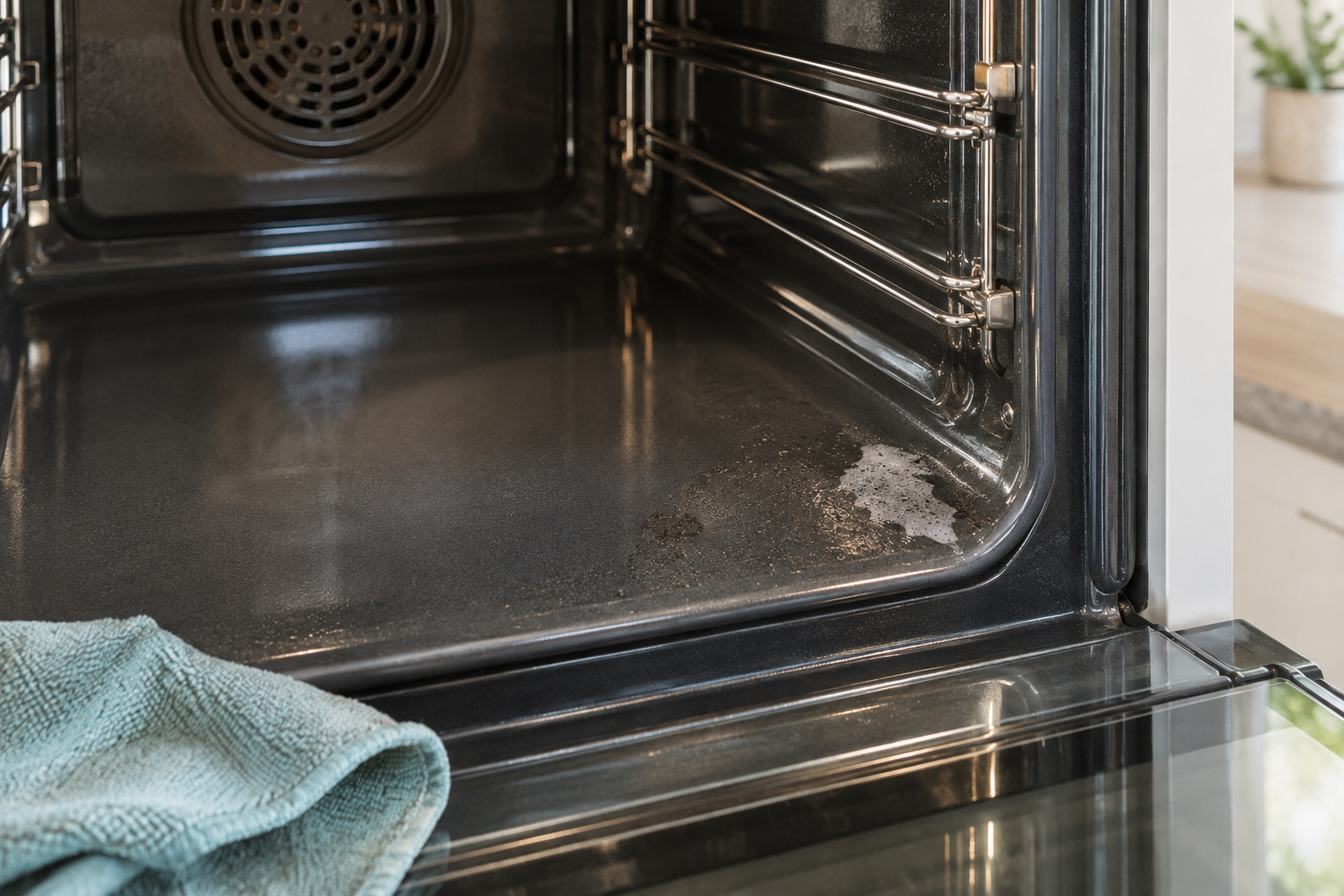
Look for dropped crumbs, pooled grease and cleaner left on the floor, walls, racks or door. A drip beneath a shelf can smoke when it reheats. Check whether a tray or baking sheet used during the cleaning process still carries product. If the oven was professionally cleaned, note exactly when the smoke began and contact the provider with the details; that is more useful than assuming every post-clean odour has the same explanation.
Check accessible surfaces for residue
Use a soft cloth dampened with water to wipe any visible residue from surfaces the manufacturer says you can clean. Work in small sections, rinsing the cloth frequently. Keep water and product away from electrical connections, vents, fan housings and heating elements. Do not remove covers or panels to chase a stain. If you cannot reach a suspected deposit without dismantling the oven, stop and get appropriate help.
If a cleaner was used, read its label for the required rinse process. A greasy or slippery feel after wiping can suggest residue remains. Repeat with a clean cloth and fresh water where the manual permits it, then dry accessible surfaces. If the oven has catalytic liners or another specialised finish, use the model-specific method; an ordinary wet wipe may be unsuitable for those panels.
Consider the source beyond the cavity
Not every smoky episode is caused by the cleaning. A dirty tray placed back inside, fat in a roasting tin or food splashing during the next meal can produce smoke. A new appliance or replacement part may have its own commissioning instructions. Check what was inside the oven and whether the smoke appeared before or after food was introduced.
Smoke from around controls, wiring, the rear of the appliance or a wall socket is different. Do not use the oven again until a qualified person has assessed it. The same caution applies if a breaker trips, a display behaves oddly, the fan makes a new noise or you notice melting, sparking or a strong electrical smell. Cleaning the cavity will not repair those faults.
Should you run an empty heating cycle?
Only follow a burn-off or post-clean heating step if the appliance manual and the cleaner instructions call for it, and only after you have rinsed as directed. Do not improvise a long high-temperature cycle to clear unknown smoke. Keep the area ventilated and monitor the oven from a safe distance during any manufacturer-approved check. If smoke returns, switch it off and let it cool. Repeated smoke is a reason to stop, not to raise the temperature.
A pyrolytic self-cleaning cycle is a separate process with its own preparation. It is not an all-purpose answer to cleaner residue. Many ovens require racks and accessories to be removed, and heavy grease should be dealt with first. Consult the model manual rather than starting a cycle in response to unexplained smoke.
When is professional help appropriate?
If the problem is clearly heavy grease in accessible areas and the appliance otherwise works normally, a professional oven cleaning service may help remove the build-up. Explain that smoke appeared after cleaning, which products were used and where you saw it. The cleaner can then judge the work without being asked to diagnose an electrical fault.
Persistent smoke after residue has been removed, smoke from inaccessible parts, tripped electrics or a door that will not seal requires repair assessment. The site’s oven repair information is the relevant route for a suspected appliance problem. Keep the oven off until the issue is resolved. Do not repeatedly test it with food; that can add fresh grease and obscure the original cause.
Prevent a repeat after the next clean
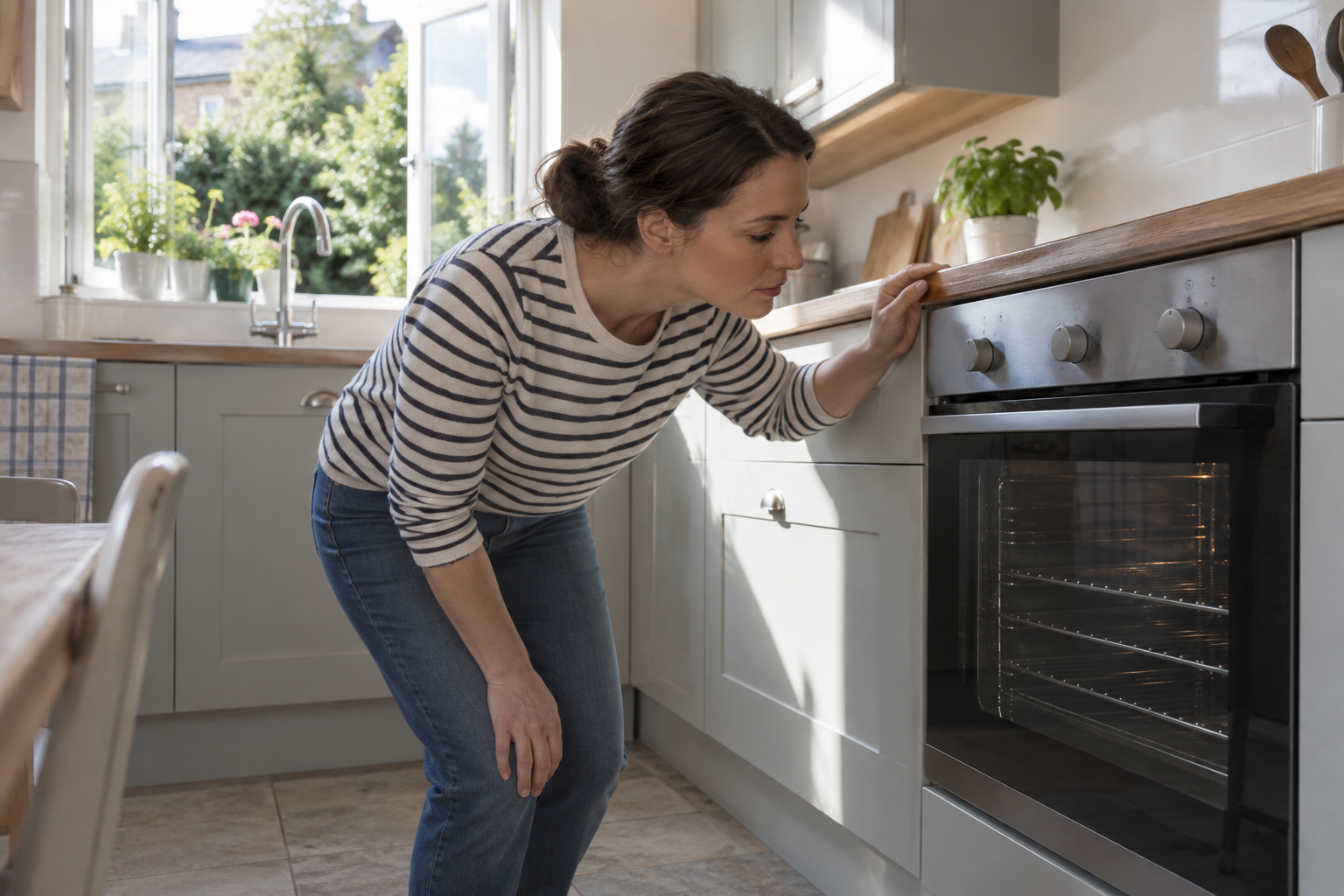
Before using the oven after cleaning, remove all cloths and loose tools, check that racks and trays are clean and dry, and rinse permitted surfaces according to the product instructions. Keep cleaner away from elements, vents and controls. Do not spray directly into narrow openings. Let accessible surfaces dry, then follow the oven maker’s restart guidance. These simple checks are easier than tracing smoke once the appliance is hot.
Keep the product container or a photograph of its label until you are confident the oven is working normally. If a smell or smoke later needs investigating, the ingredients and directions are useful to the person assessing it. Note whether a self-clean setting was used, because that changes the likely source of the smoke and the aftercare the manufacturer recommends. Do not rely on memory if several products were used on different parts.
For routine cooking, wipe spills after the oven cools so grease does not accumulate in corners. Use suitable cookware to limit drips and keep trays clean. If smoke appears again, note the timing and source, switch off and choose cleaning or repair help based on the evidence. A brief post-clean smell can be unsettling, but persistent or heavy smoke should always be treated as a signal to stop and investigate safely.