
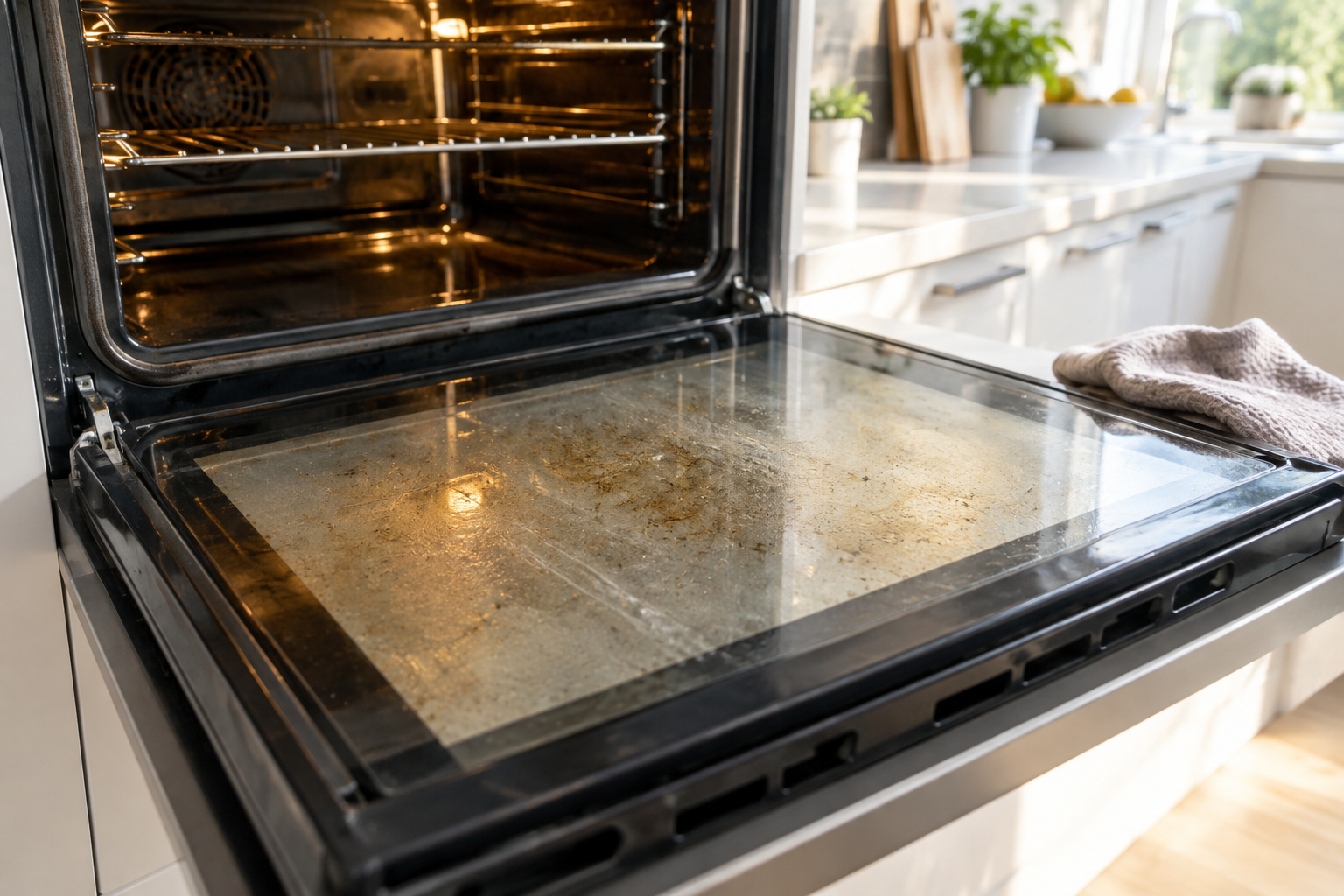
A cloudy oven door makes it harder to judge what is happening to dinner. The usual culprit is a film of cooking grease on the accessible glass, sometimes with a few stubborn brown splashes. You can often clear it with a soft cloth, warm water and patient, light pressure. The important first step is to work out which surface is dirty. Marks on the room-facing pane, marks inside the door and marks trapped between panes call for different decisions.
Let the oven cool fully before you begin. Check the appliance manual for any instructions about coated glass, removable doors or permitted cleaners. If the glass is cracked, the door does not close properly, or you see moisture between sealed panels, stop cleaning and arrange suitable repair advice. Cleaning cannot correct damaged glazing or a faulty hinge.
Find out where the marks sit
Look at the glass from both sides in good daylight. A fingerprint or cooking splash on the outer face will move or disappear when you wipe that face; a mark on the inner face requires you to open the door. If you can see a streak but cannot feel it on either accessible face, it may be between the panes. Do not assume that a narrow gap at the top or bottom is an invitation to push a tool inside. Some oven doors are designed for owner access, while others need a particular removal procedure or professional attention.
Also note the finish around the glass. A painted metal trim, stainless steel frame, rubber-like gasket and glass pane are different materials. A cleaner suitable for one can mark another. If your manual mentions a special coating on the inner glass, follow that guidance over a general cleaning tip. Keep any cleaning solution away from air vents, the door latch and electrical controls.
Gather a small, gentle kit
Use two clean microfibre cloths or other soft, lint-free cloths, a bowl of warm water and a small amount of mild washing-up liquid if the manual permits it. A soft sponge can help with grease, provided it has no abrasive scrubbing face. Put a towel beneath the open door to catch drips and protect the surrounding floor. Work with a damp cloth rather than pouring water onto the door. The aim is to loosen a thin grease film, not soak the frame.
Avoid metal scourers, wire wool, sharp blades and hard scrapers. Even if they lift one patch quickly, they may scratch the glass or damage a coating. Avoid mixing cleaning products, and never combine bleach with other cleaners. Strong oven cleaner should not be put on door glass or trim unless the appliance maker expressly allows it. If you use a commercial product, check both its label and the oven manual, wear any recommended protection and follow the stated contact time.
Clean the outer face first
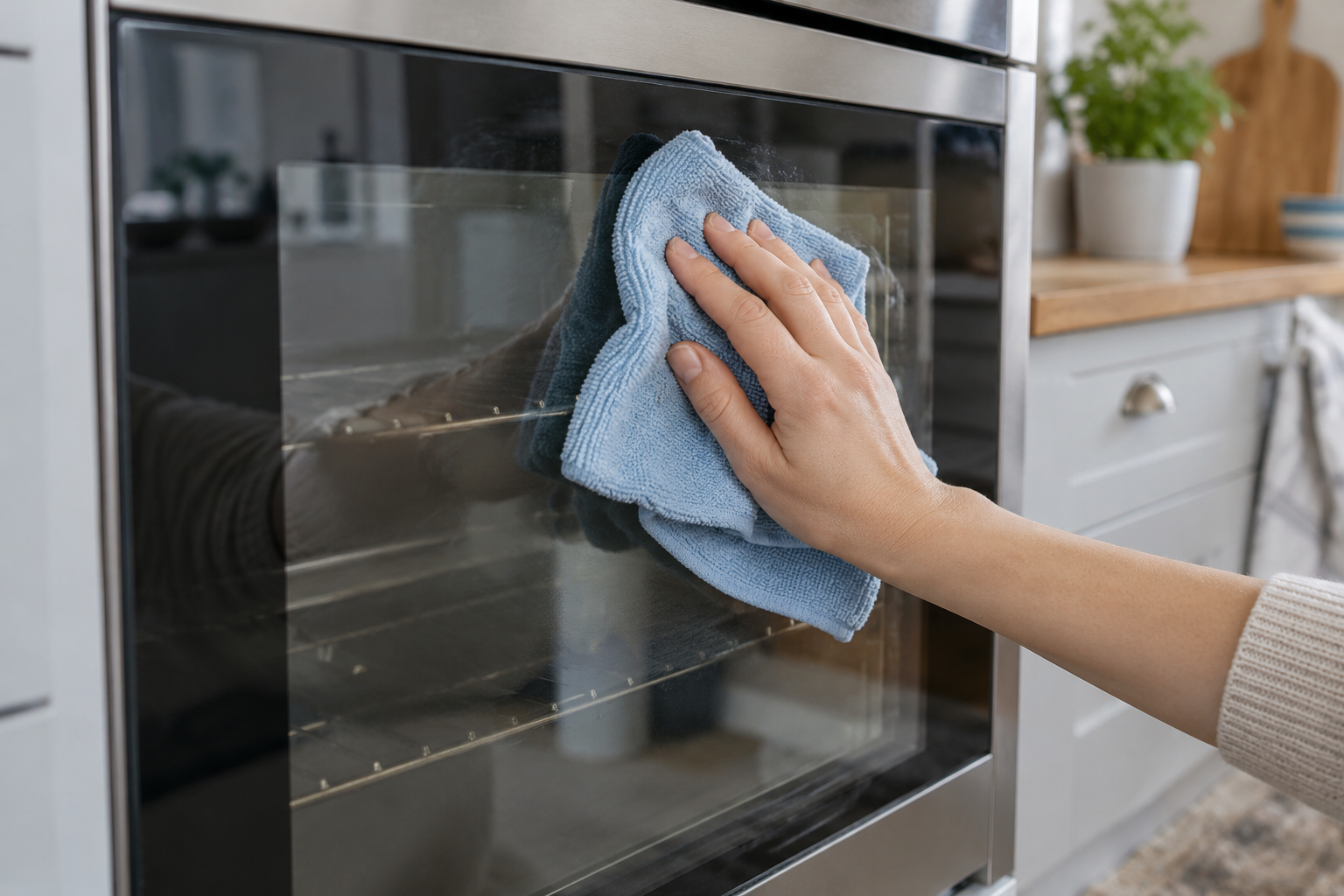
The outside is usually the simplest surface. Dampen a cloth in warm water, wring it out well and wipe away fingerprints and loose dust. For greasy hand marks, add a drop of washing-up liquid to the damp cloth and work across the glass in overlapping passes. Do not spray directly at the control panel or into seams. Follow with a second cloth dampened with plain water so that no soapy film remains. Dry with a clean, dry cloth while the surface is still slightly damp; this makes streaks easier to see and remove.
If the door has decorative trim, wipe it separately using the method suitable for that finish. Rubbing one cloth repeatedly from greasy glass across stainless steel or painted edges simply spreads residue. Pay attention to handles, where skin oils build up, but avoid forcing liquid into handle fixings.
Soften grease on the inner glass
Open the cool door and remove loose crumbs with a dry, soft cloth. Lay a cloth dampened with warm water over a small stubborn patch for a few minutes, keeping it away from vents and the gasket. This gives grease time to soften. Lift the cloth, wipe gently and repeat rather than increasing pressure. A small amount of mild washing-up liquid on a damp cloth may be enough for most everyday splashes. Rinse that cloth frequently so that you are lifting grease rather than redistributing it.
Work in sections from the top towards the lower edge. The bottom of the glass often needs more attention because cooking juices can run there. Use the corner of a soft cloth around accessible edges, but do not push a cotton bud or tool through an opening into the door. If a residue remains hard and raised after several gentle passes, check the manual before trying any other product or technique. A persistent stain is less costly than a scratched or weakened pane.
Take care around the door seal and edges
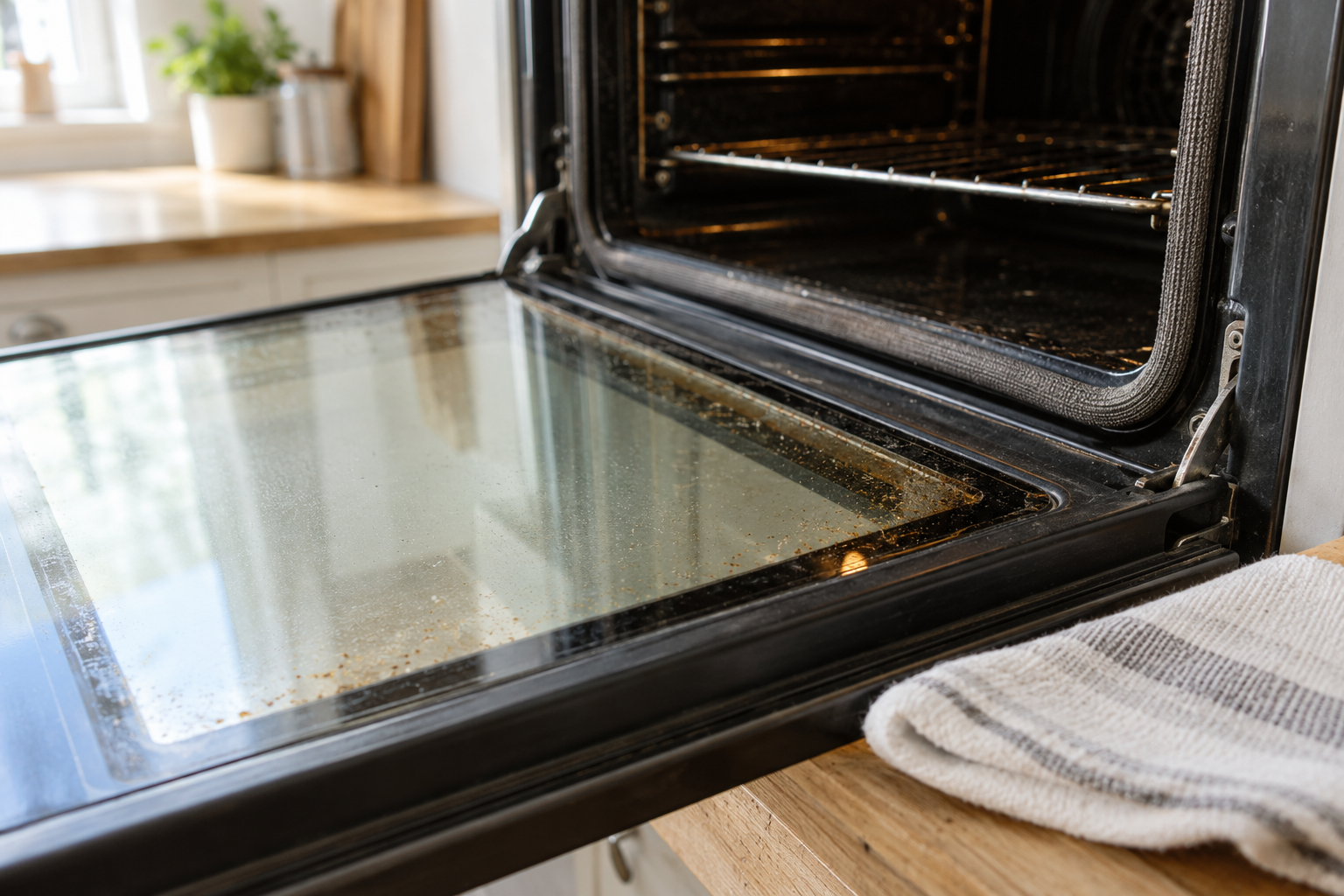
The flexible seal helps the door close correctly. Do not pull it out to reach a stain or scrub it with a stiff brush. If you can see crumbs alongside the seal, lift them with a dry soft cloth. Wipe accessible surrounding surfaces lightly and dry them. A seal that is loose, split, brittle or hanging out of position may need replacement; cleaning will not restore its shape. The same applies if the door needs lifting or pushing to close.
Grease at a corner can be frustrating because the glass meets trim and the cloth cannot reach the last millimetre. Resist the urge to prise the trim away. An oven door is a fitted assembly: screws, hinges, glass panels and insulation have a particular order. Incorrect reassembly can leave the door unsafe or unable to retain heat. If the stain really is inside the assembly, use the manufacturer’s instructions or ask a qualified technician.
Rinse, dry and inspect
After the grease has lifted, use a fresh cloth lightly dampened with plain water to remove cleaner residue from both glass faces. Change the water if it becomes cloudy. Dry the pane and adjacent frame with a separate lint-free cloth. Look from a low angle in daylight: streaks become more visible when the light catches them. A final dry buff is often all that is needed. Make sure the door and any accessible seal are dry before closing the appliance.
Check that the door closes smoothly and that no cloth fibres remain near the seal. If you removed shelves to give yourself space, return them to their proper positions. Do not run an oven merely to dry a wet door. If there is a persistent chemical smell when you next use it, switch it off, allow it to cool and check for remaining cleaner according to the product and appliance guidance.
What if the glass still looks dirty?
First, make sure the mark is on a face you can reach. A streak between panes cannot be removed by polishing the outer surface more vigorously. Next, consider whether the patch is baked-on food, mineral residue from repeated wet wiping, or damage to a coating. They may look similar at a glance but need different handling. Check the oven manual before changing products. Do not keep scraping at a cloudy patch that might be etched glass.
For a door with heavy grease, a professional oven cleaning service may save time and help with the rest of the appliance at the same visit. Explain the type of oven, the location of the marks and whether they are between the panes when you enquire. If the door is damaged, loose or failing to seal, ask about repair rather than booking cleaning as a cure. The site’s oven repair page is a more relevant starting point for a mechanical fault.
Keep the glass clearer between deep cleans
A quick wipe after a cooking session, once the oven is completely cool, prevents fresh splashes from hardening through repeated heating. Deal with a spill before the next long roast if you can reach it safely. Use a damp soft cloth, then dry the glass. Do not line the oven floor or place foil where the manufacturer forbids it simply to catch drips; that can interfere with airflow or heat distribution. Instead, use suitable cookware and a tray placed on a shelf when appropriate.
For routine care, consistency matters more than force. A few minutes spent on a cool, accessible pane is easier than a long session after grease has baked on many times. Keep a separate soft cloth for the glass so that grit picked up from racks or trays cannot scratch it. If you are unsure about the door’s construction, leave the panels assembled and seek model-specific guidance. Clear glass is useful, but safe glazing and a properly closing door matter more.